The fact that I am now fascinated by further travels has nothing to do with Europe possibly being boring. Absolutely not. Thanks to Europe (and in particular Bella Italia), I have developed such a passion for travelling and writing travel blogs. The most beautiful city for me in Italy is by far Florence. Not Rome. Not Venice. No, Florence, or Firenze, as the Italians so smoothly let it roll off their tongue. The cradle of the Renaissance, so as an artistic soul I simply cannot help but feel at home here. That is why I want to write an Italian travel blog at least once (and fear not: there will be more to come) and take you along in the question: What to do in Florence?
What to do in Florence Italy?
The Americans among us are probably scratching their heads right now. Does she mean Florence in Oregon, Alabama or South Carolina? Sorry, guys, but none of the three. No doubt they are beautiful cities, but I really am talking about the Italian city, the capital of the region of Tuscany. To make it easier, I will sometimes alternate with Firenze. That makes things a bit clearer.
Florence is a city steeped in history and art. Once the powerful home of the Medici family, it nurtured masters such as Michelangelo, Leonardo da Vinci and Botticelli, leaving behind treasures like the Uffizi Gallery and the breathtaking Duomo. Its historic centre is a UNESCO World Heritage Site, with landmarks such as Ponte Vecchio and Palazzo Vecchio drawing visitors worldwide. Florence has also served as a cinematic backdrop, featuring in films like A Room with a View, Hannibal and Inferno (based on the book by Dan Brown). Today, travellers flock not only for its art and architecture but also for its romantic piazzas, charming Tuscan cuisine and stunning views from Piazzale Michelangelo. So, what to do in Firenze? Enough stuff, I would say, but let me make it easy for you. Here are my 25 personal favourites.
(In my opinion) the most beautiful cathedral of the world
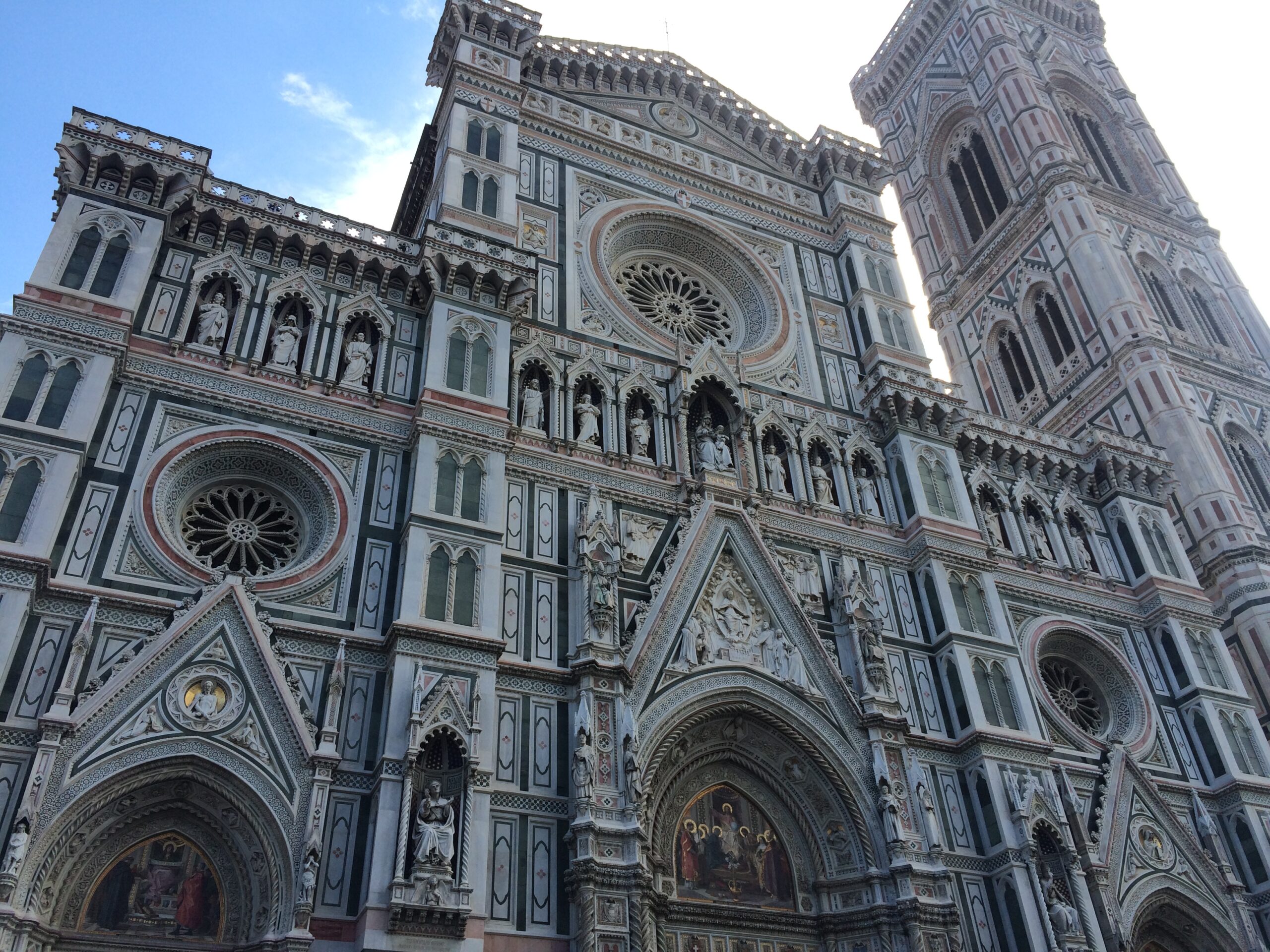
Maybe it is something like your first love, the one you can never let go of, but that is what happened to me with the Cathedral of Florence. Il Duomo, or the Santa Maria del Fiore. I didn’t use to visit churches very often on holiday (because as a teenager that is really not cool and I already had it tough enough as a bookworm), but thanks to my best friend I discovered this beautiful cathedral during our school trip to Italy (and since then I have had to visit the local churches and cathedrals on every trip).
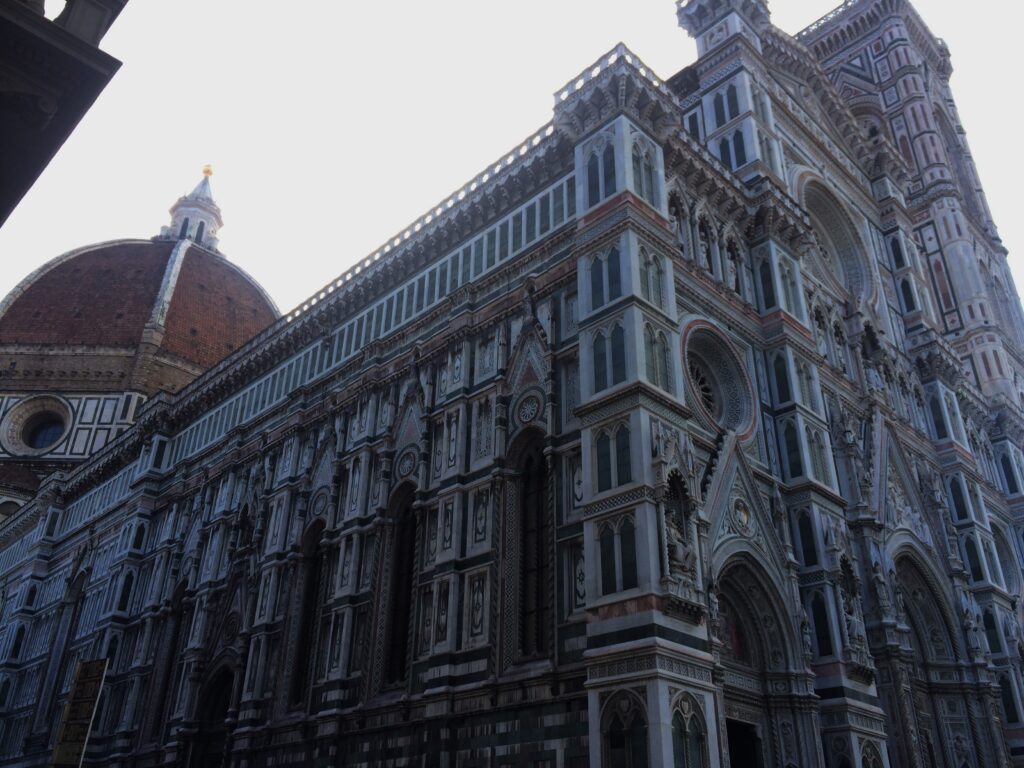
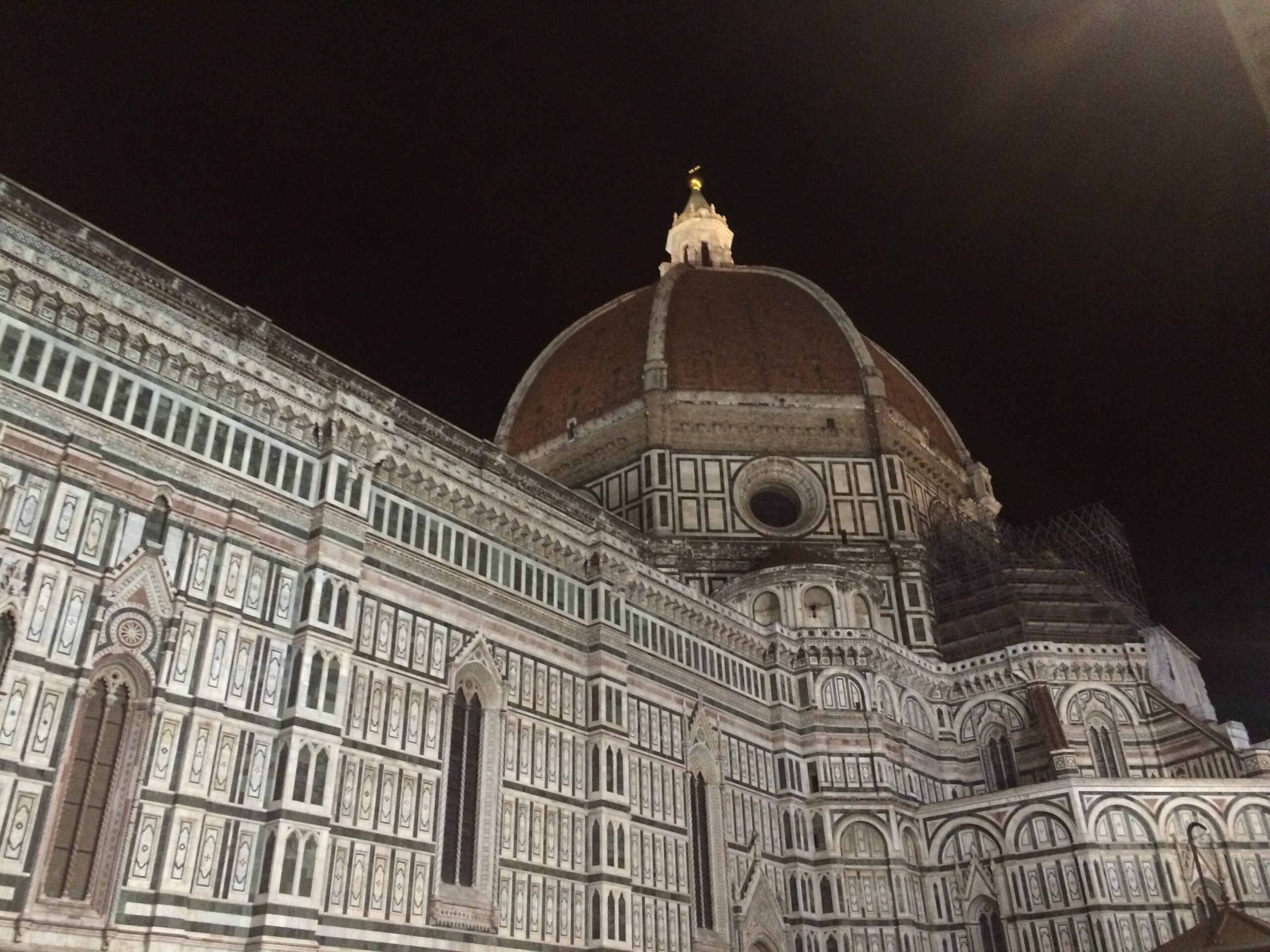
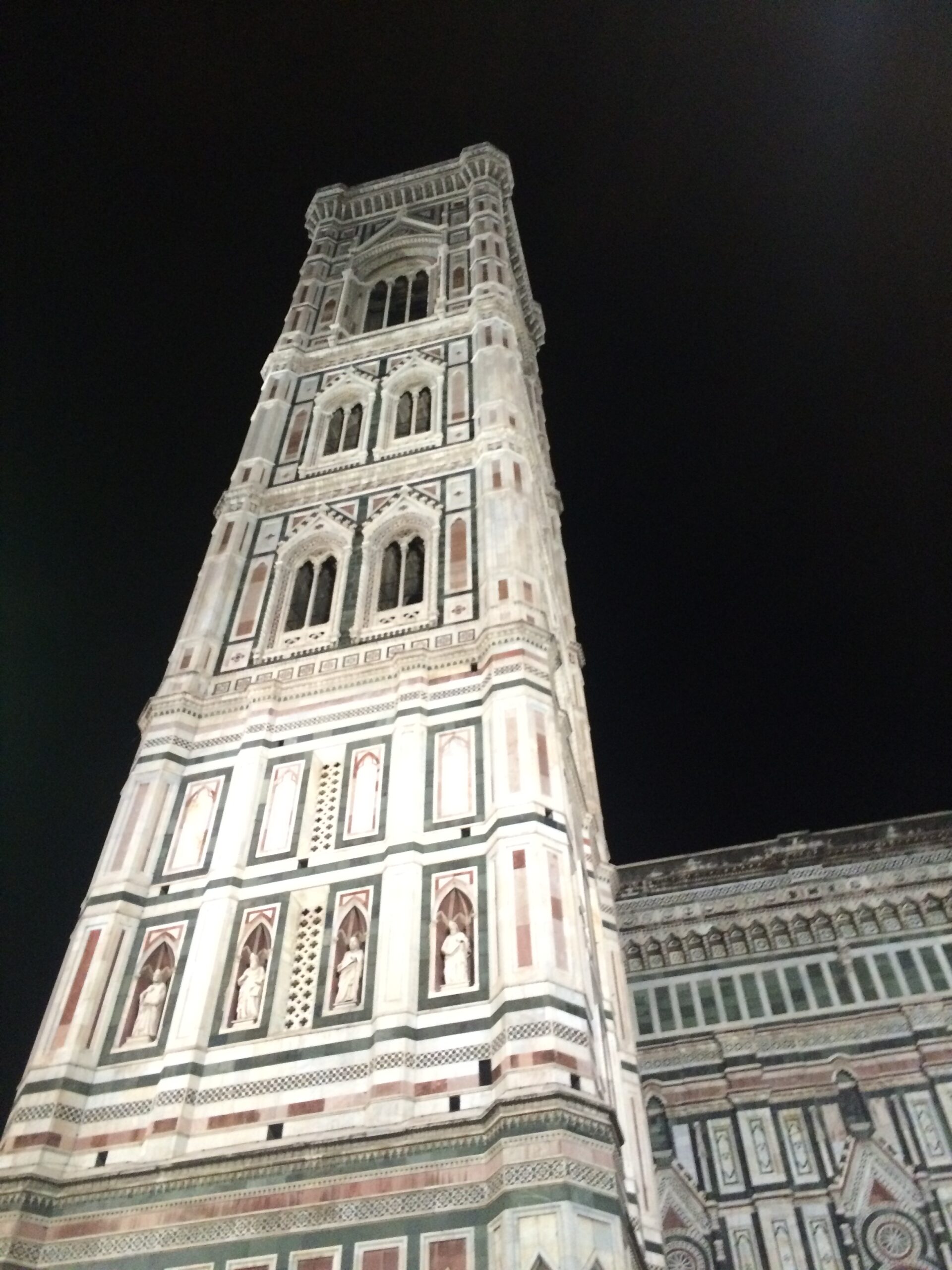
The Cathedral of Florence lies in the middle of the city, yet dominates the skyline from every direction. Especially Brunelleschi’s dome, 115 metres high (which you can climb with a ticket), and the adjacent tower (Giotto’s 82-metre campanile) are recognisable landmarks in Florence. Honestly: the beauty of this cathedral, in my opinion, is mainly on the exterior. The façade of the cathedral really draws attention with all its details and I can look at it for hours without getting bored. The interior, however, disappointed me somewhat: in that case, St. Paul’s Cathedral in London or St. Peter’s in Rome are far more beautiful inside.
Insider’s tip: come back in the evening as well, once the sun has gone down. The Santa Maria del Fiore is beautifully illuminated in the dark.
Look behind you!
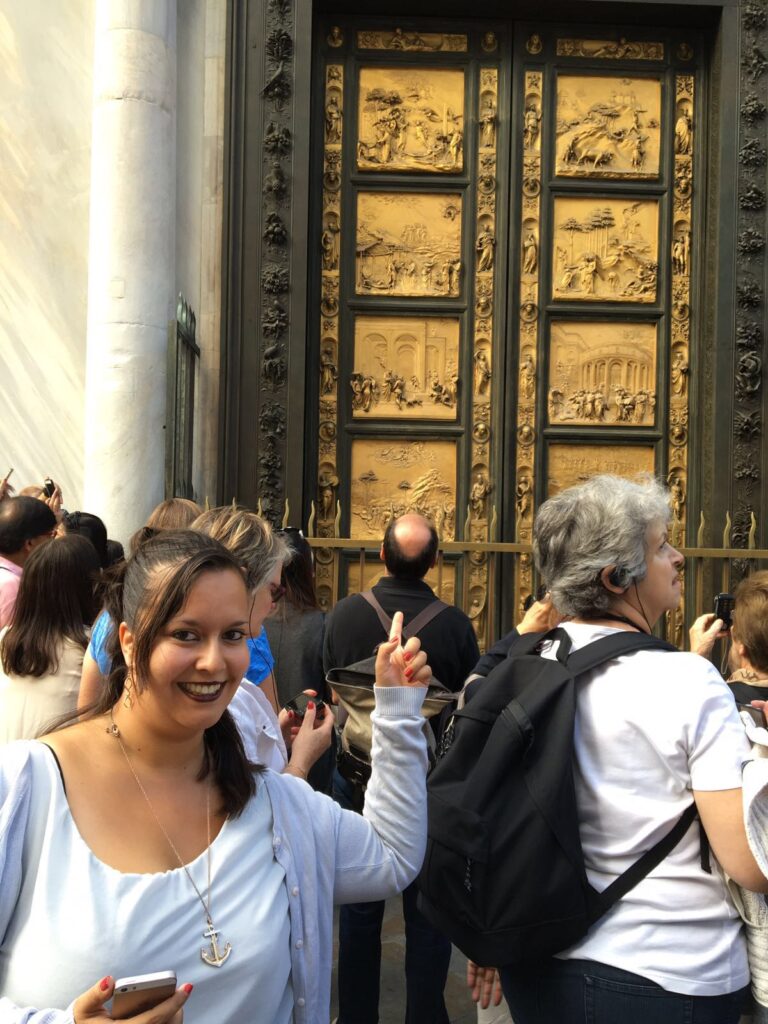
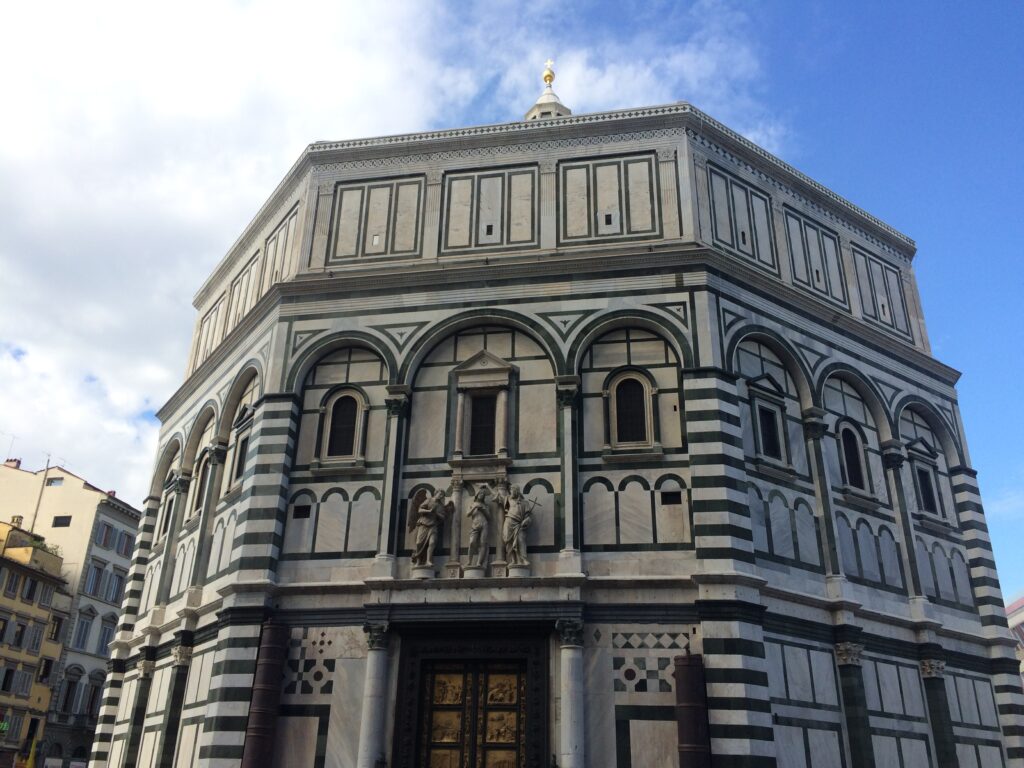
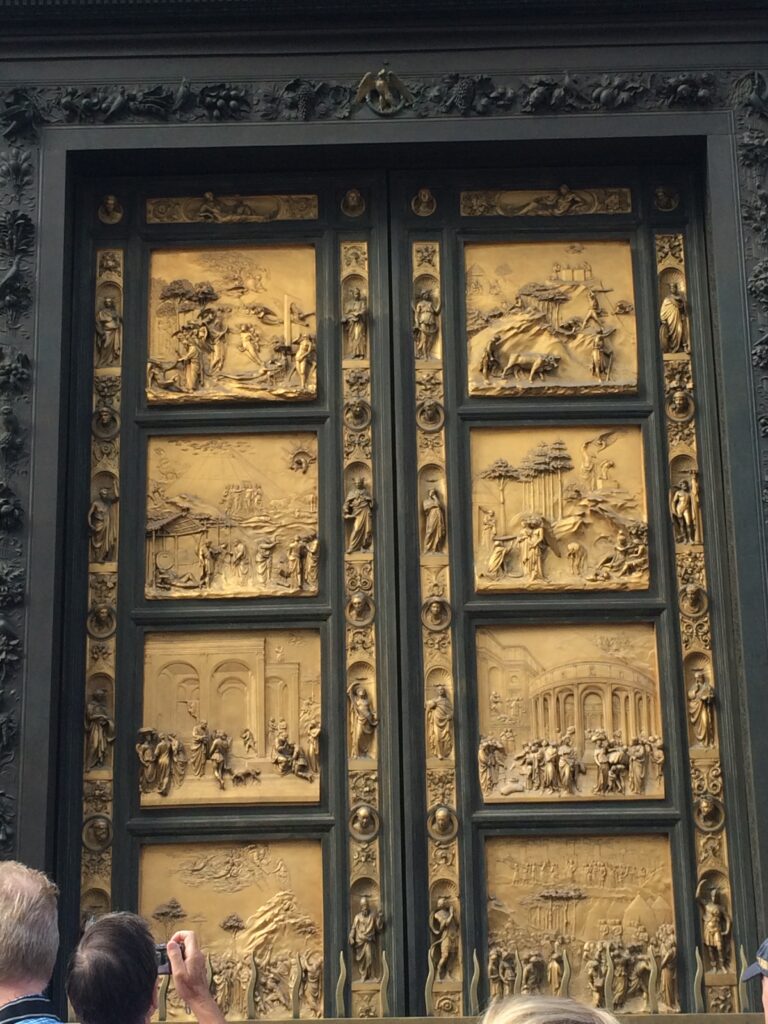
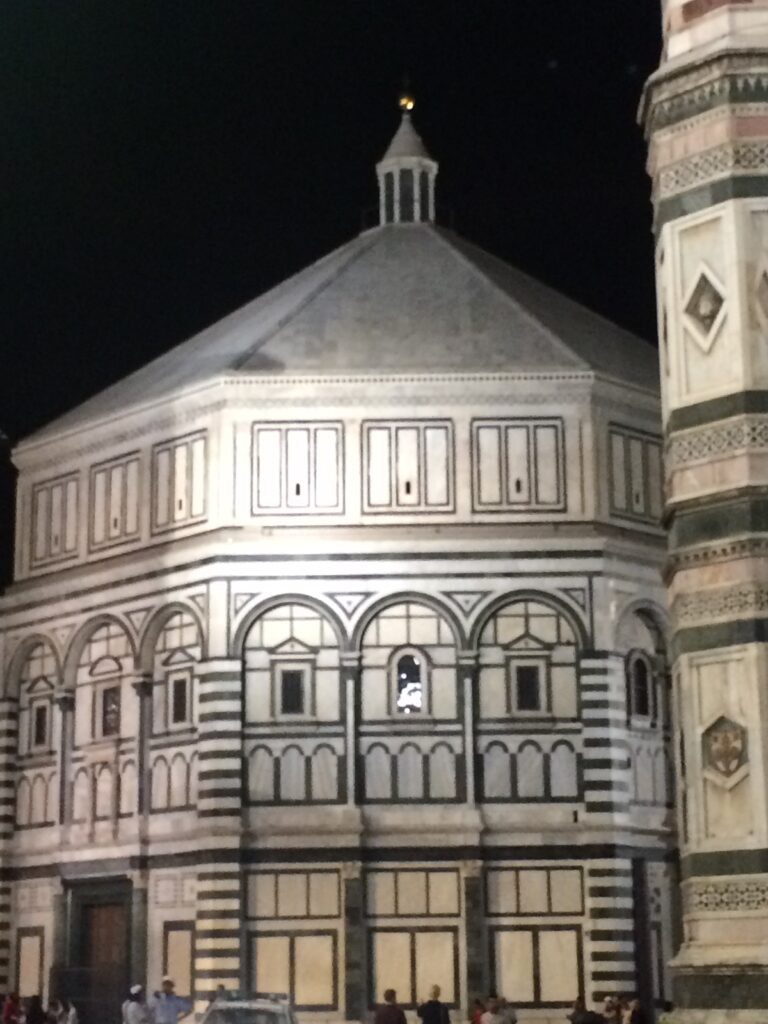
I understand you may raise an eyebrow at what I am saying now, but there is another sight to be found on the Piazza del Duomo. The Baptistery of San Giovanni is a baptistery and lies directly opposite Il Duomo. The exterior is crafted in the same style as the cathedral itself, but the shape is different (octagonal) and the interior is more impressive than the cathedral itself. In the film adaptation of Dan Brown’s Inferno (with Tom Hanks, Felicity Jones and Omar Sy) you already get a small glimpse of what you might expect if you were ever to pay a visit to the baptistery. The door directly opposite the Cathedral is called the Gate of Paradise, and it is the largest one, designed by Andrea Pisano.
Fun fact: The baptistery was already there before even a single stone of the cathedral was laid. The Baptistery is therefore one of the oldest buildings in Florence.
The creative working-class neighbourhood of Florence
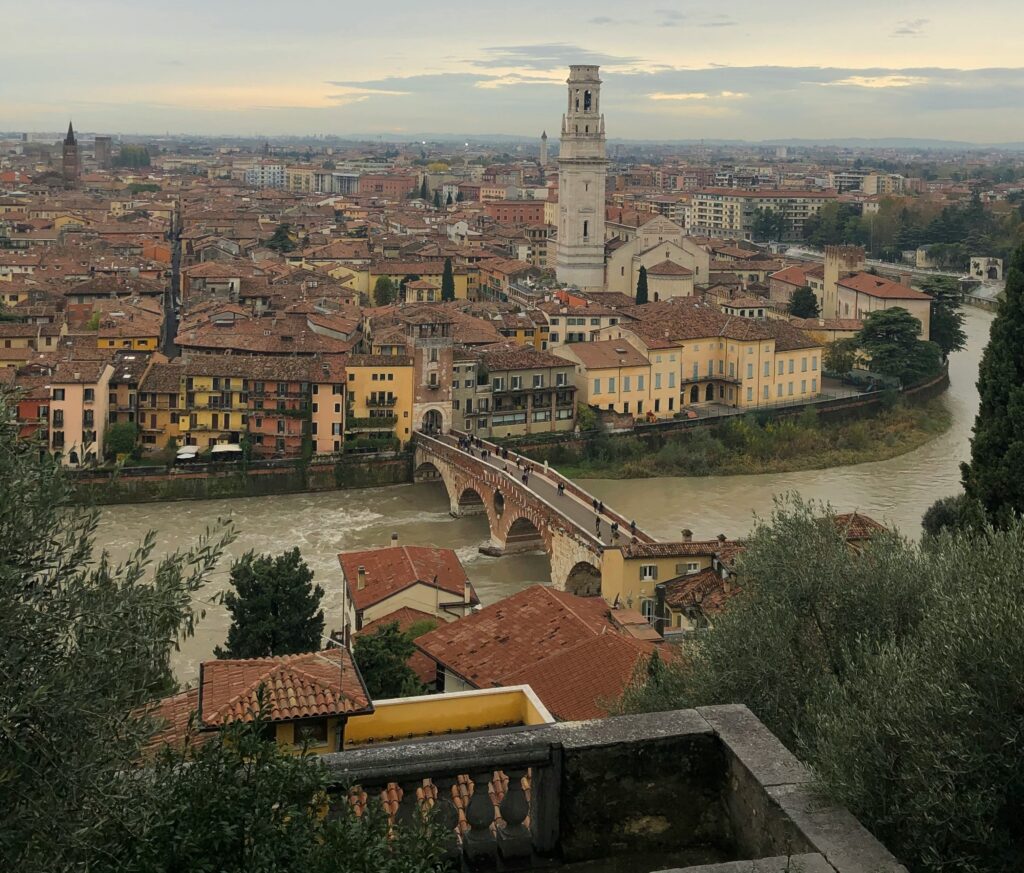
Well, Florence is quite a small city, if you compare it to, for example, London. That’s why it is always rather busy when you visit. Are you looking for more peace to enjoy the Italian beauty around you? Then visit the neighbourhood on the other side of the Arno River. Literally: Oltrarno. For many years, this was truly the working-class district of Florence. Many artisans and artists also lived there, and there was an informal atmosphere.
At present, you probably know the district because of Piazzale Michelangelo, the Boboli Gardens or Palazzo Pitti. However, in Oltrarno you can still see artisans at work and enjoy an Aperol Spritz in a place where locals still go.
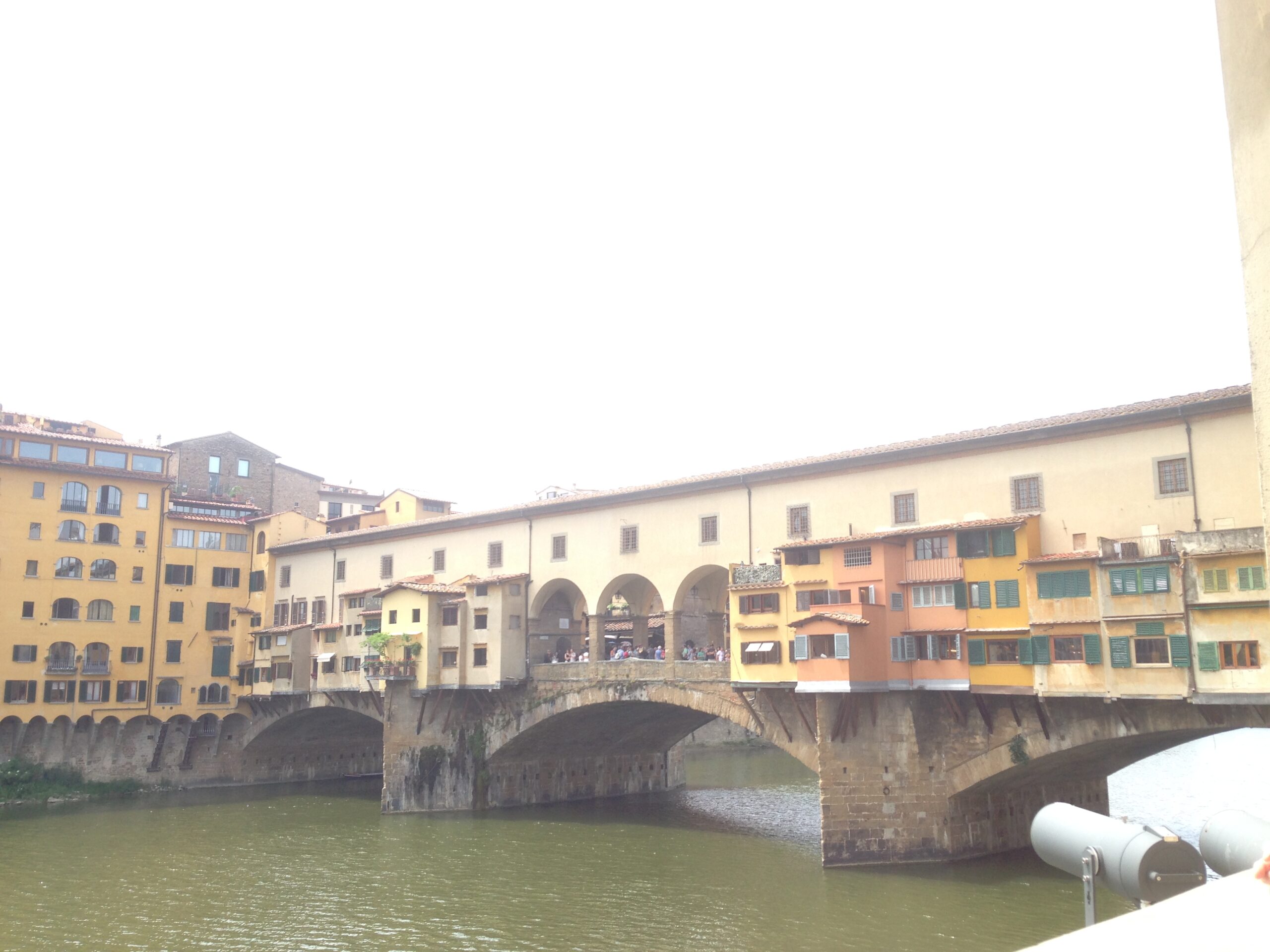
Tip: Enter the district via the Ponte Santa Trinita, from where you have a wonderful view of the Ponte Vecchio.
Palazzo Pitti: fashion capital of Italy?
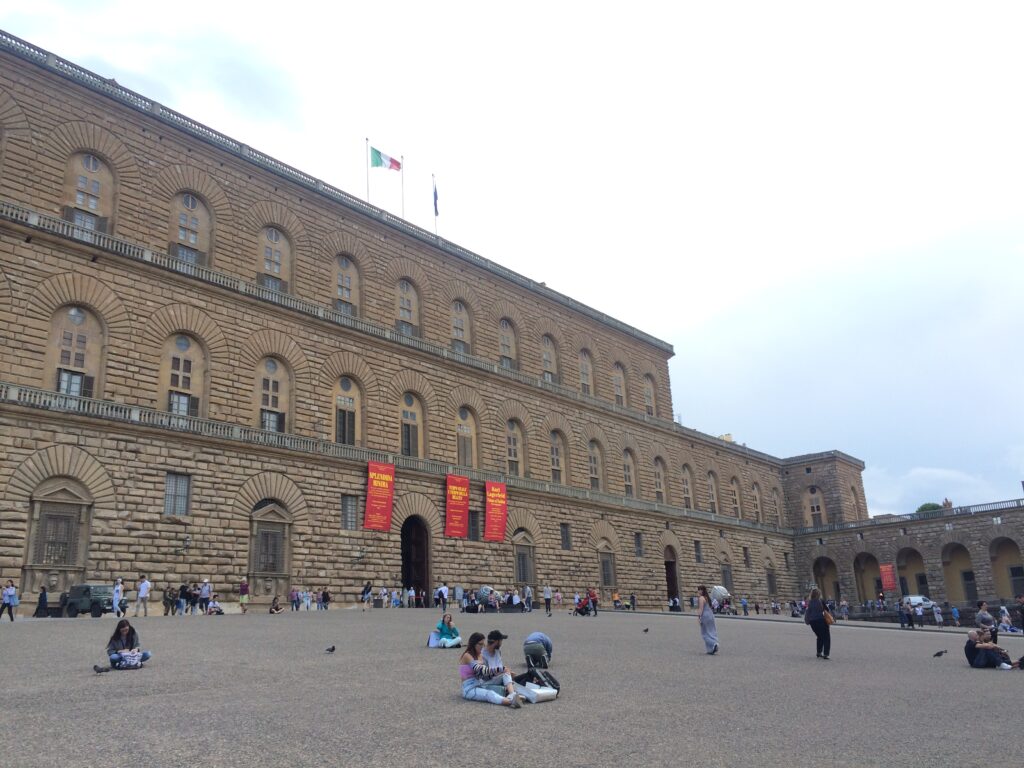
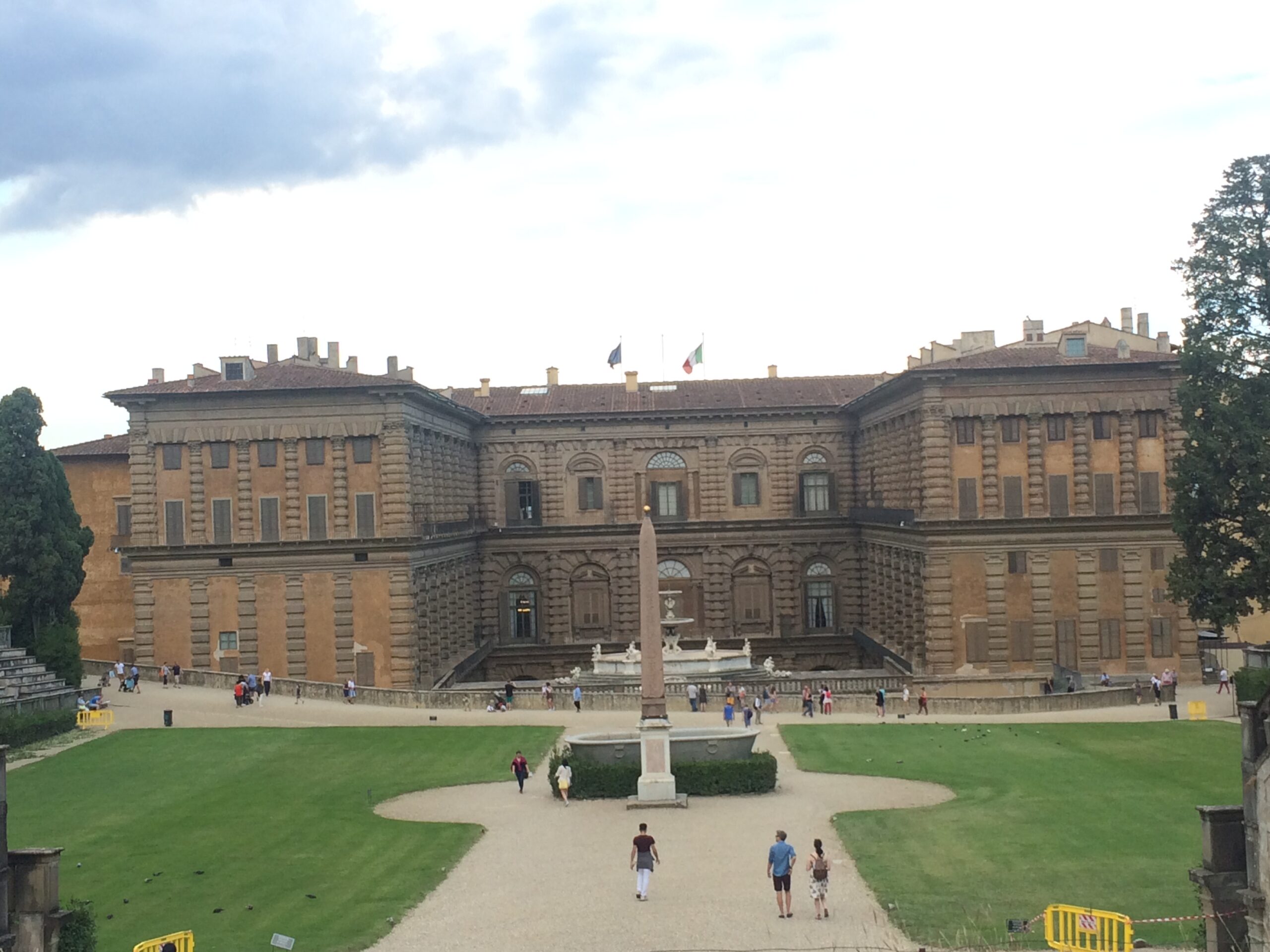
In Oltrarno lies the Palazzo Pitti, which was once home to the famous Medici family (yes, the one from the television series). But why is it called Pitti, you may ask? That’s correct, because it was first the residence of the Pitti family. When they could no longer afford it, the Medici took over the residence. It is now a museum with paintings, but also a lot of fashion. Visitors can explore the Palatine Gallery, which displays masterpieces by Raphael, Titian, Caravaggio, and Rubens, all set in lavishly decorated rooms once used by the Medici family. The palace also includes the Royal Apartments, showcasing period furnishings and the lifestyle of Florence’s ruling dynasties.
Recreate Robert Langdon’s escape
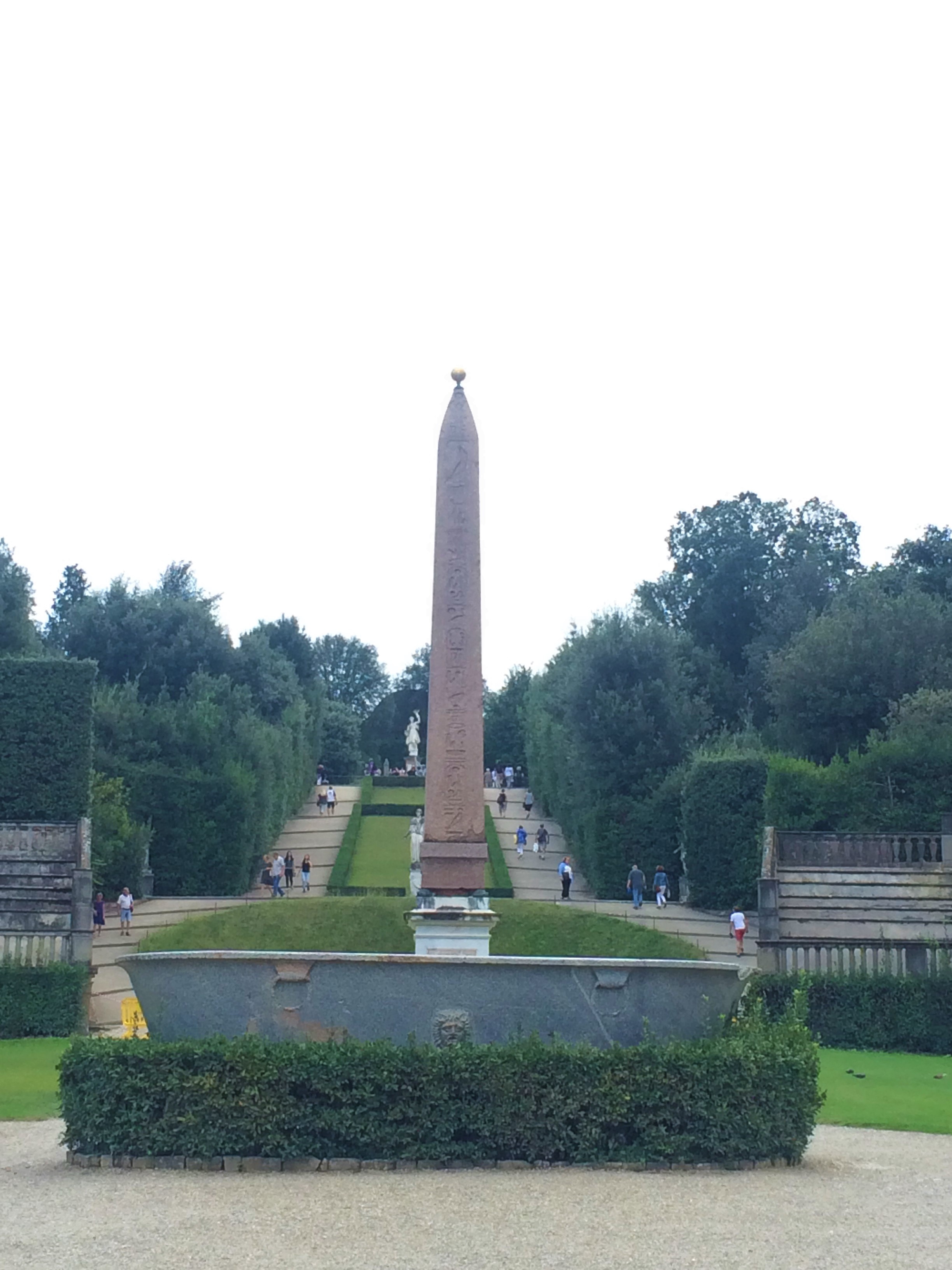
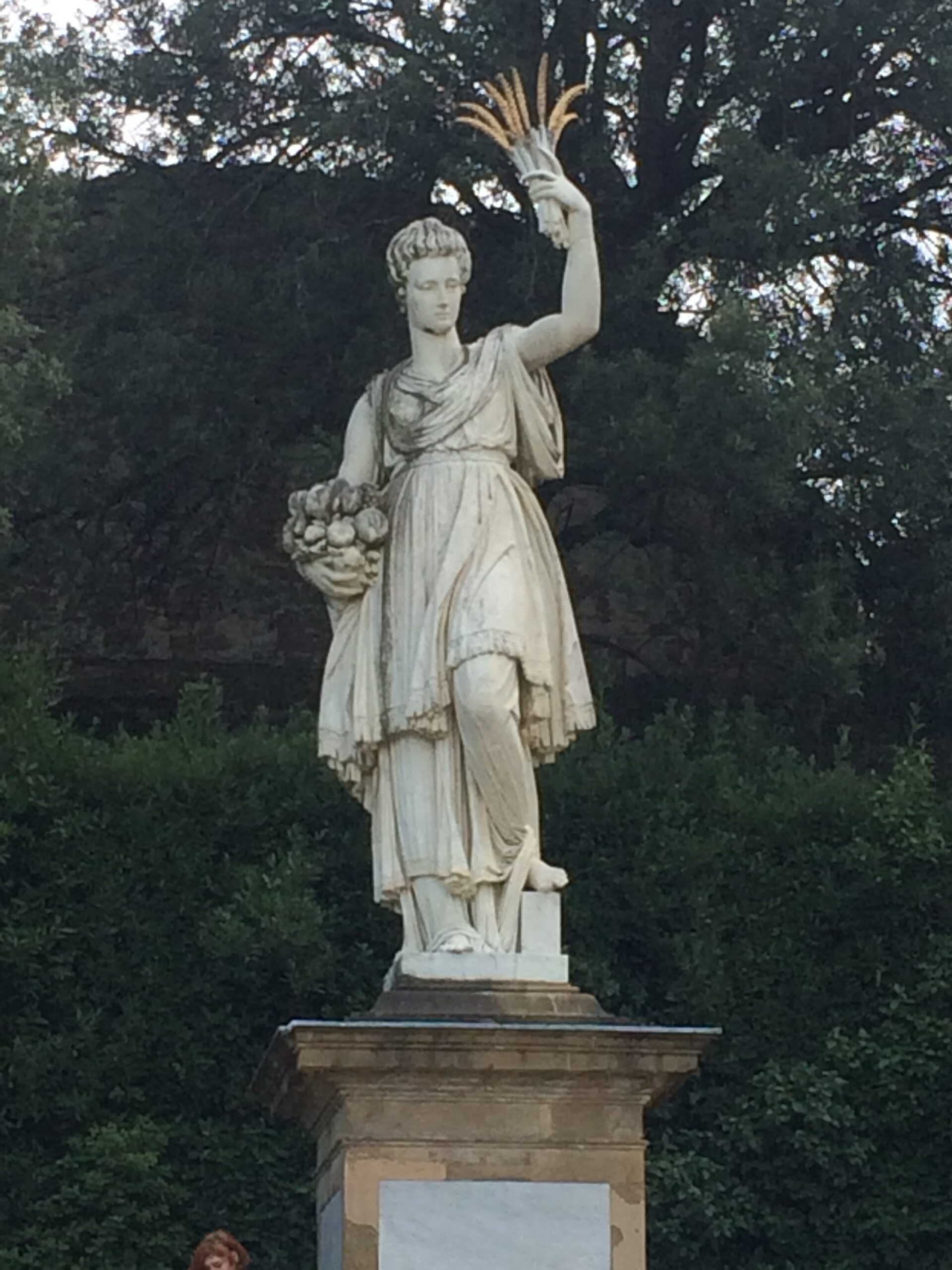
Behind the Palazzo Pitti lie the Boboli Gardens. Anyone who is a fan of Dan Brown’s books or the film Inferno knows the thrilling escape scene of Robert Langdon through these gardens, via the Vasari Corridor, to the Palazzo Vecchio. Well, I can tell you: not everything in films is a lie. This actually exists. The Boboli Gardens, however, are full of impressive statues, fountains and grottos, making the gardens themselves a true must-see in Florence. The Giardino Boboli consists of three sections: the Baroque, the English and the horticultural section (in the latter you will find many olive trees).
Fun fact: The Boboli Gardens were considered so beautiful that they served as inspiration for many gardens throughout Europe. The most famous example: the gardens of Versailles.

Seeing the Florence skyline
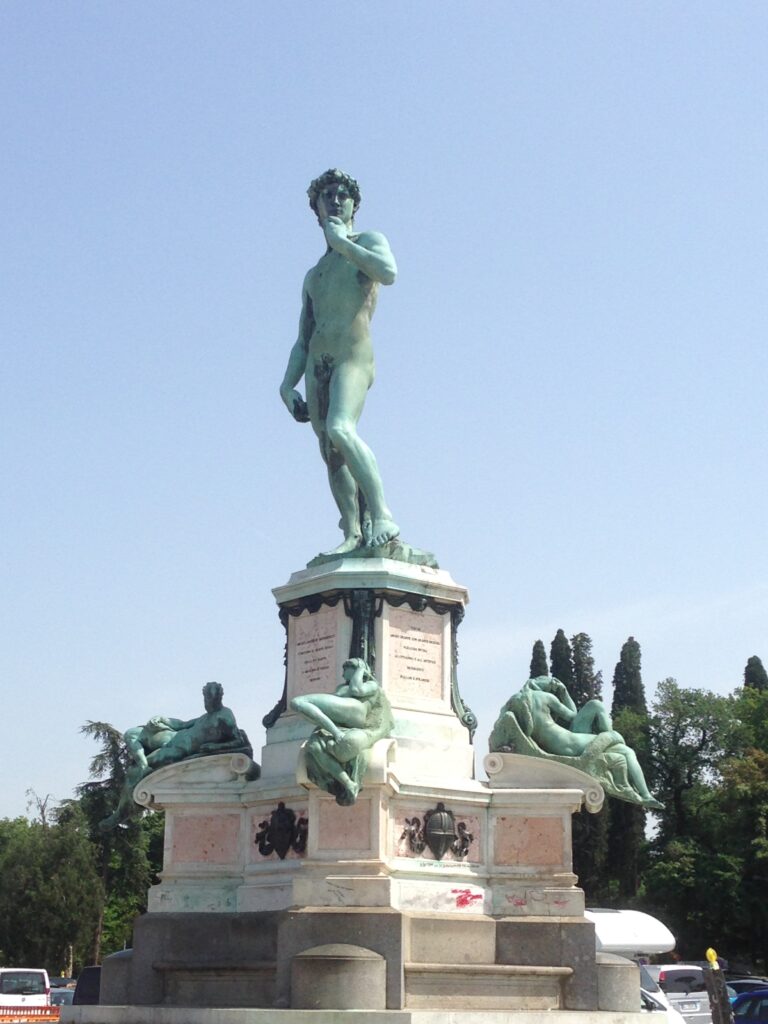
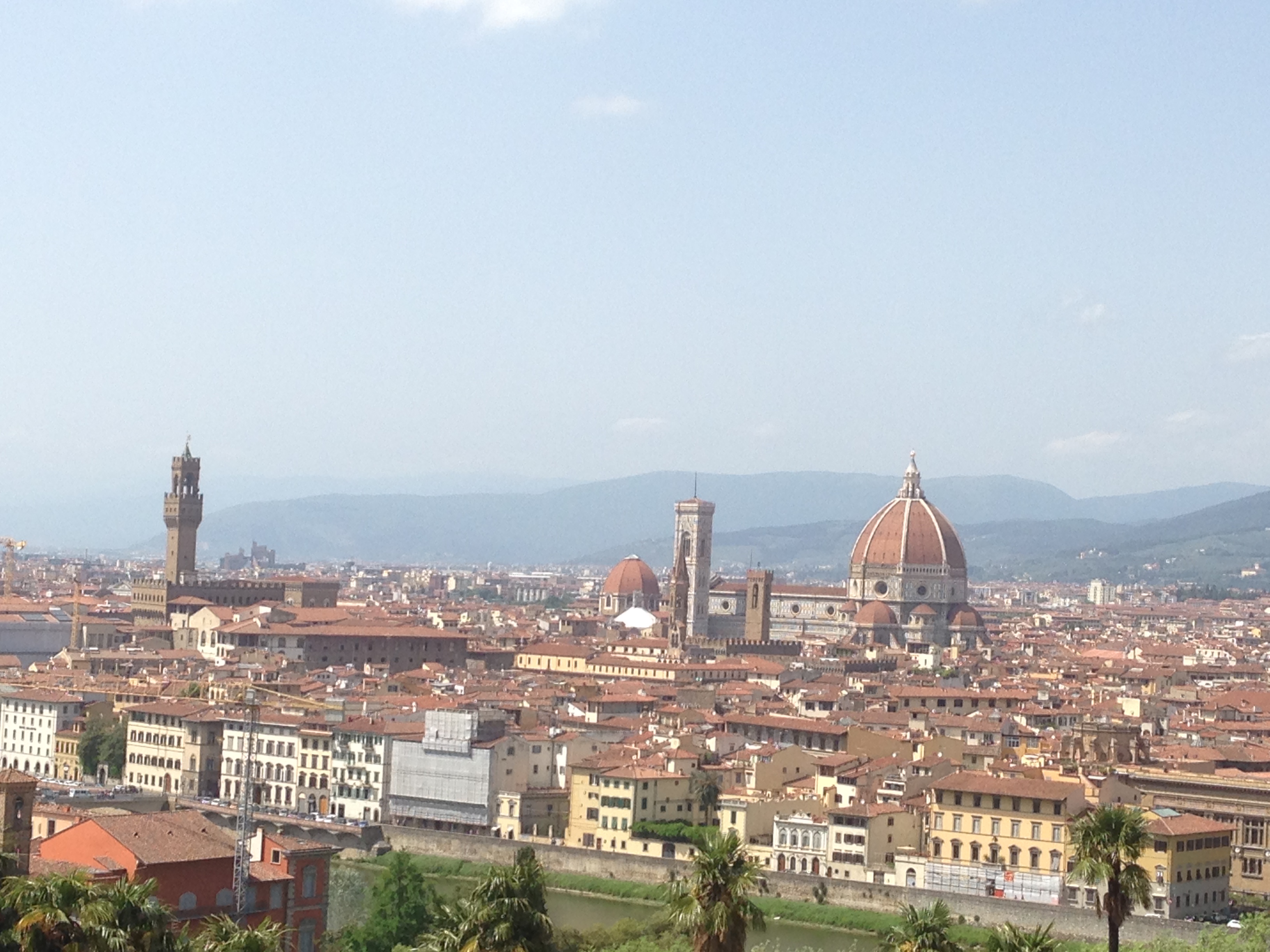
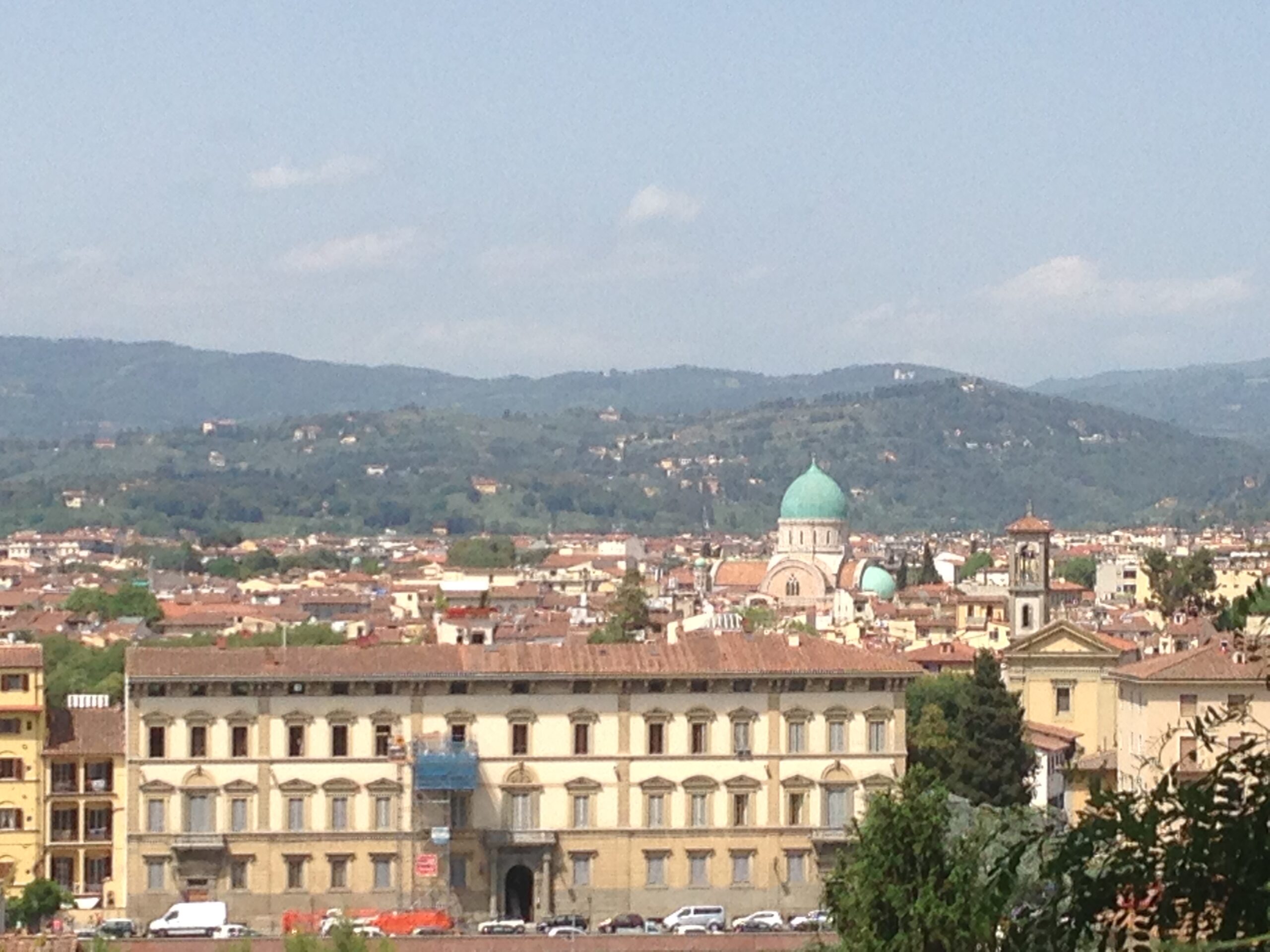
Florence has no skyscrapers from which you can see the city from above, nor will you find a Washington Monument with a viewing platform. To enjoy the skyline of Florence, however, you can travel to Piazzale Michelangelo. This square lies on a hill and offers a 360-degree view of Florence and the nearby Tuscan hills. The square is not named after Michelangelo for nothing: you will find various replicas of Michelangelo’s works there, including the David.
Cross-eyed David
The real David by Michelangelo can be found a little further in Florence, in the Galleria dell’Accademia. The statue is no less than five metres high, and Michelangelo started working on it when he was only sixteen years old. A true inspiration for future artists! This art school has collected a large number of statues from which art students could draw inspiration. In addition to statues, in the museum you will also find:
- artworks created by students of the Accademia
- a large collection of paintings by Florentine artists
- religious prints from the Middle Ages
- Russian icons
Funny: although for many it is a symbol of Florence and of beauty, others think David looks a little cross-eyed. Well, everyone sees something different in art, right?
The outdoor statue hall of Firenze
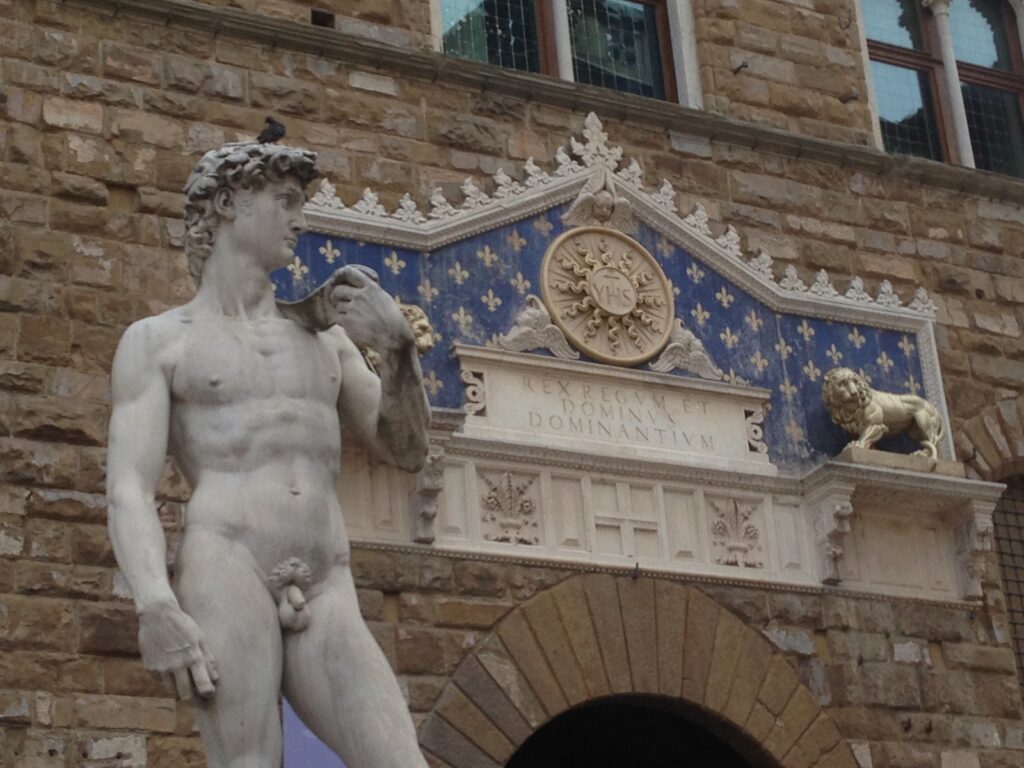
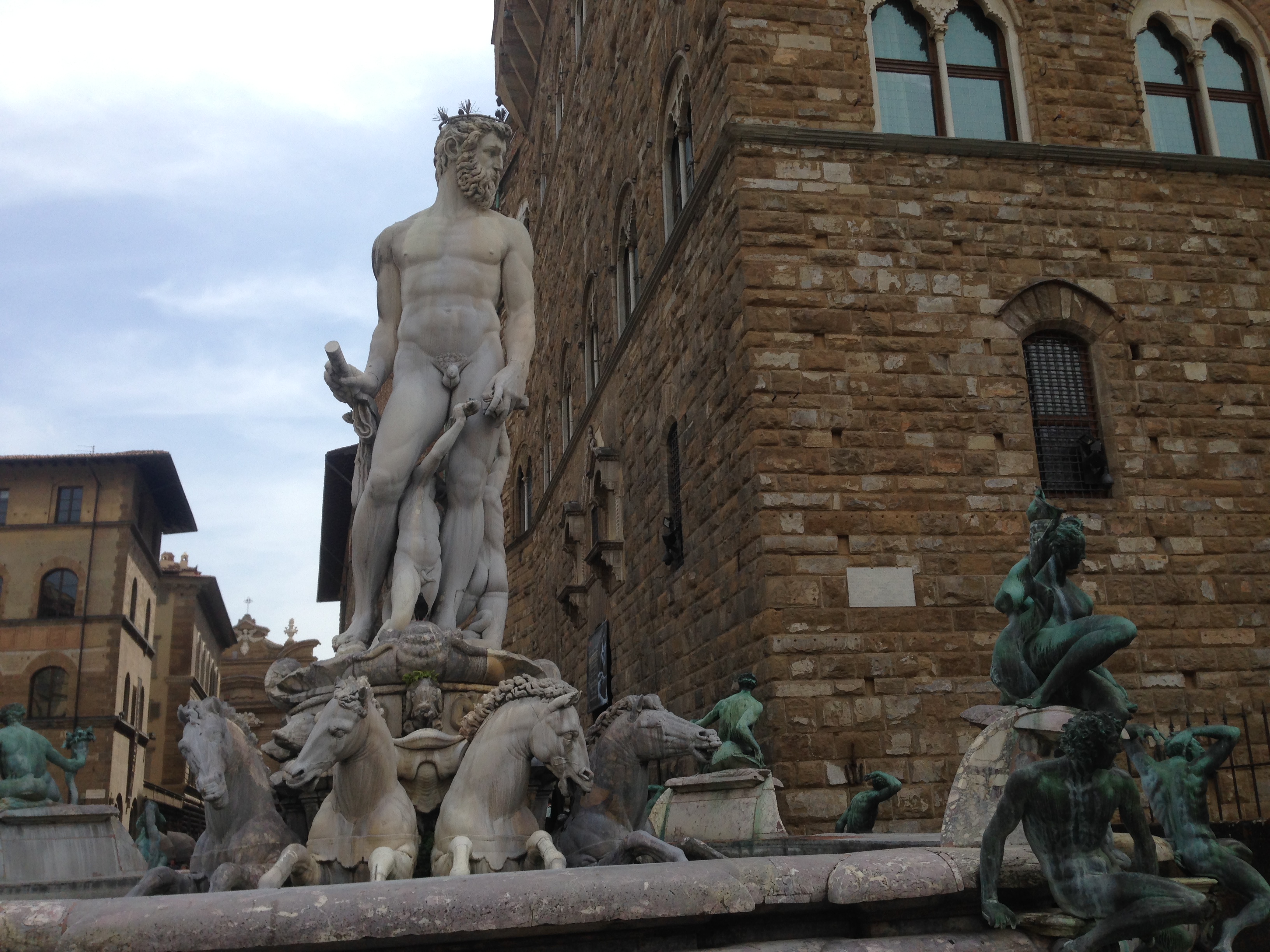
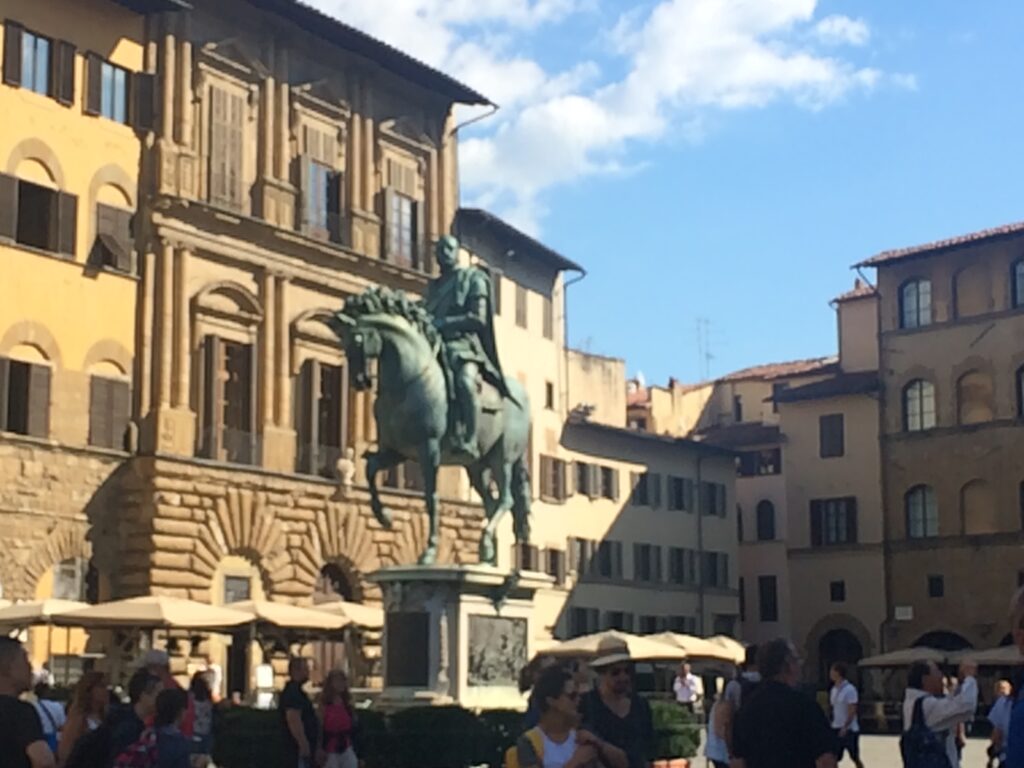
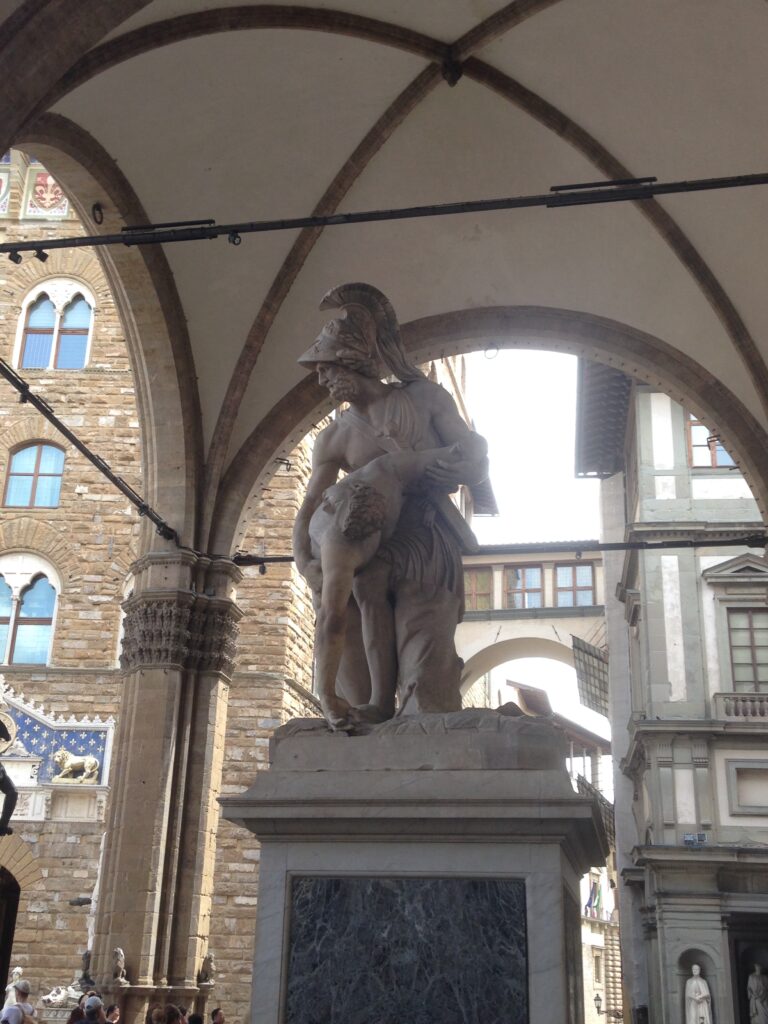
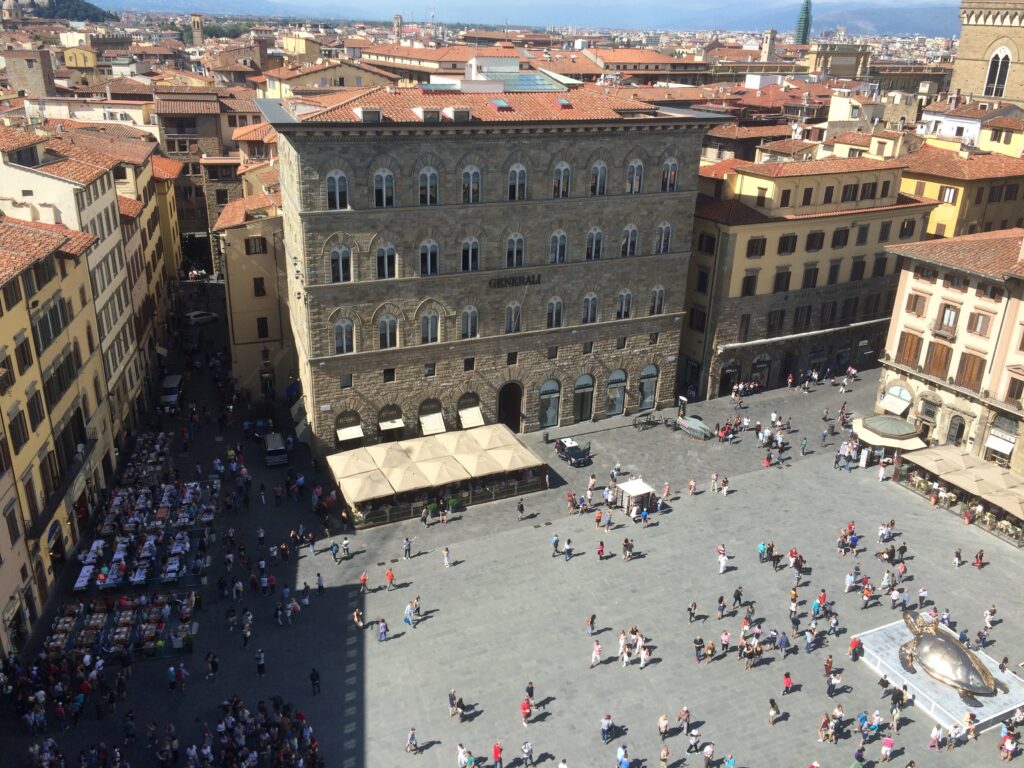
The Piazza della Signoria is probably the most famous square in Florence. Not only is the famous Palazzo Vecchio located here with a replica of David, but you will also find the beautiful Neptune Fountain and several other stunning sculptures, like an outdoor museum. The statues are housed in a loggia and among them is the well-known sculpture of Perseus holding Medusa’s severed head.
Did you know? The Neptune Fountain depicts a statue of the sea god Neptune. However, the face of the sea god is actually that of Cosimo de’ Medici. Cosimo’s face greets you once again in the bronze equestrian statue on the square.
Important filming location of Inferno
I linger a little on Dan Brown’s Inferno (I am a true fan girl and at the moment I divide my free time between writing this article and Brown’s latest book The Secret of Secrets), but the Palazzo Vecchio also plays an important role in Inferno. The Palazzo Vecchio has played a role for the city of Florence since its creation: it was first the seat of political power in the city and still functions as the town hall of Florence today.
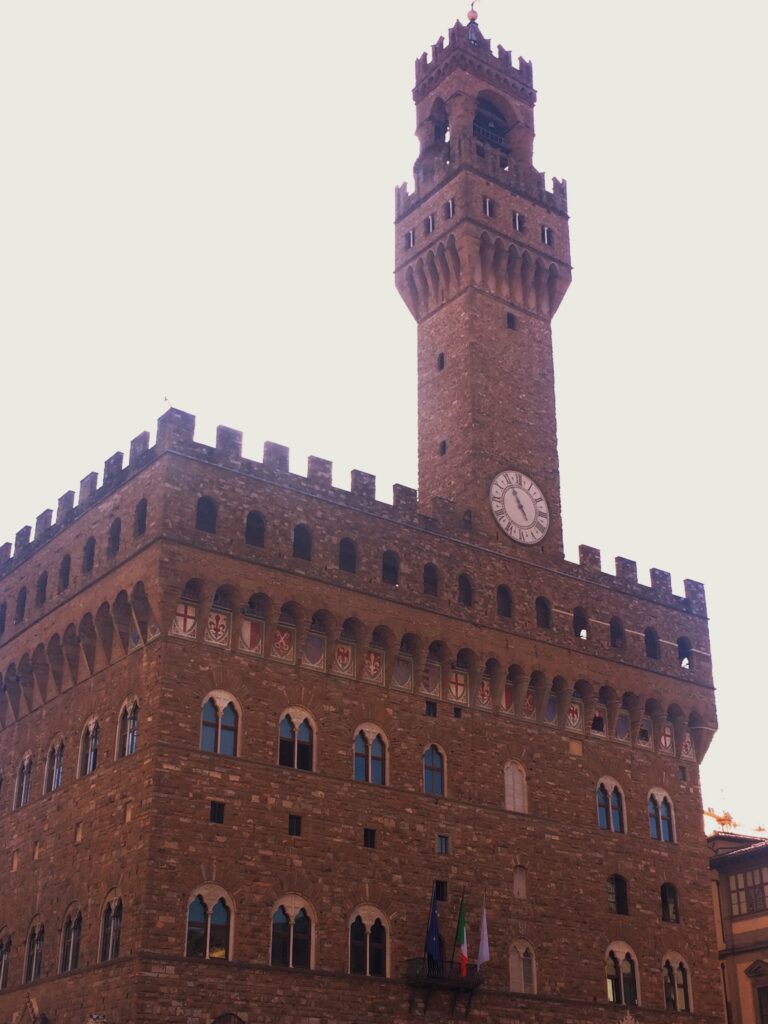
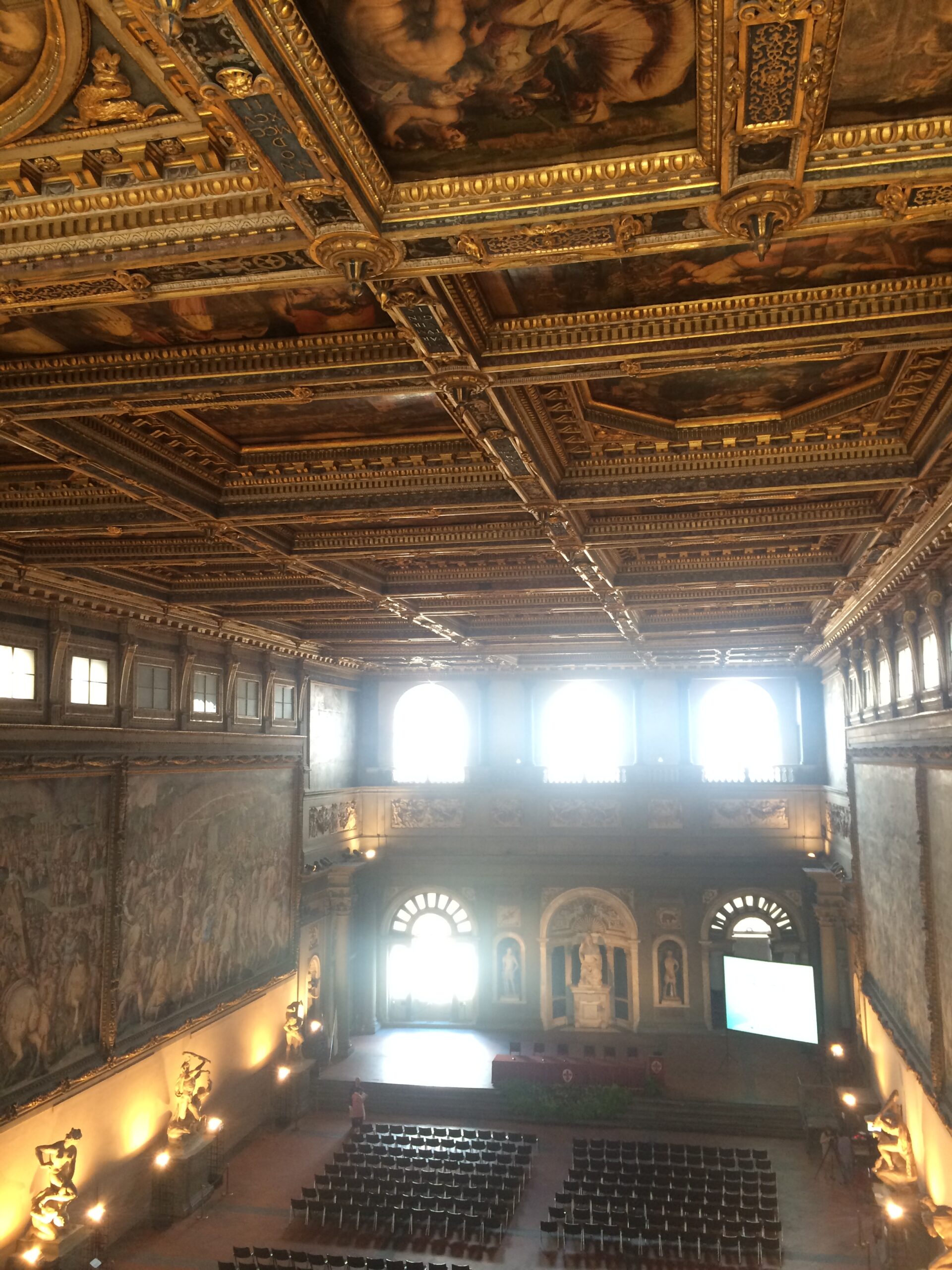
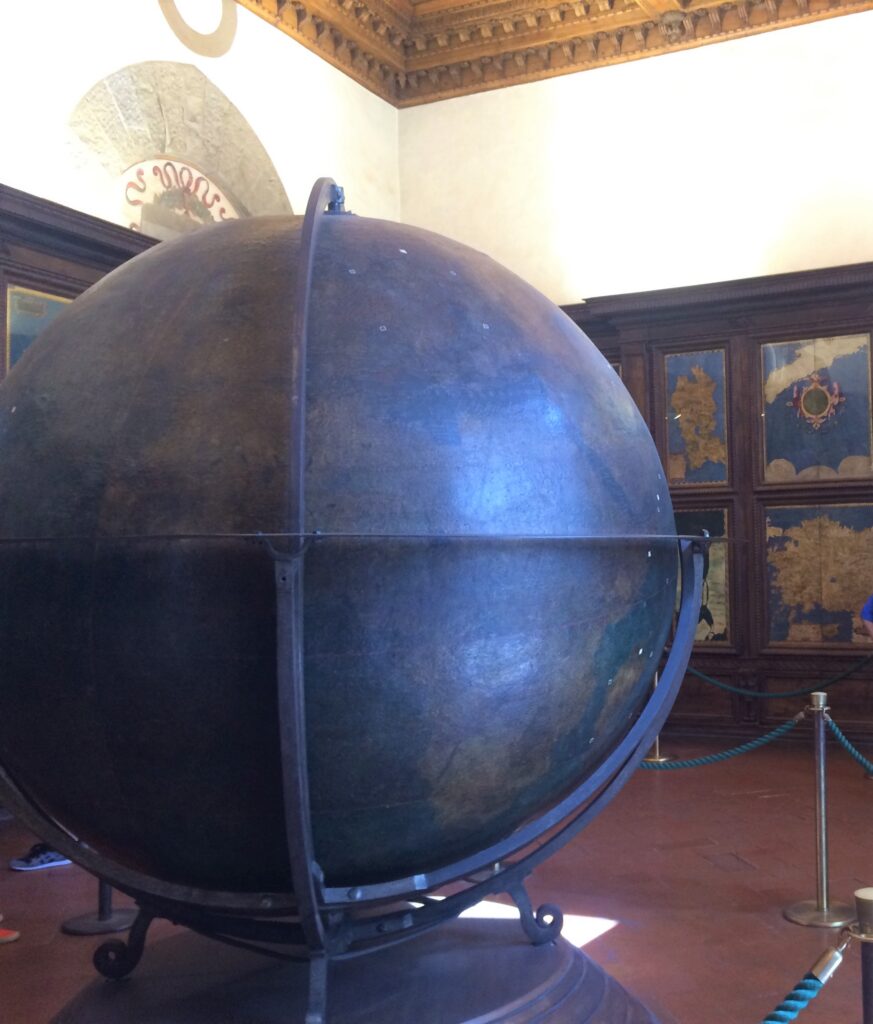
As a tourist, you can enter the town hall for a fee. Something I can truly recommend, because the entire building can be considered a museum. You will find the artistic treasures of the Medici and the famous chambers: the Salone dei Cinquecento, the Cappella di Eleonora, the Sala dei Gigli and the Sala delle Mappe.
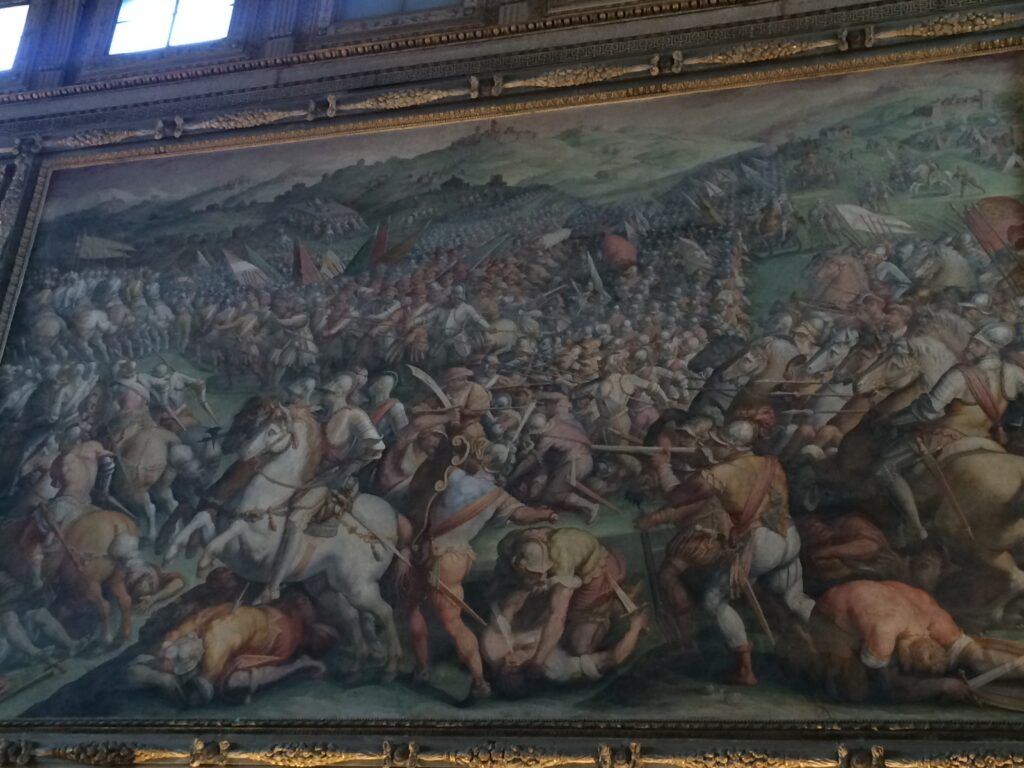
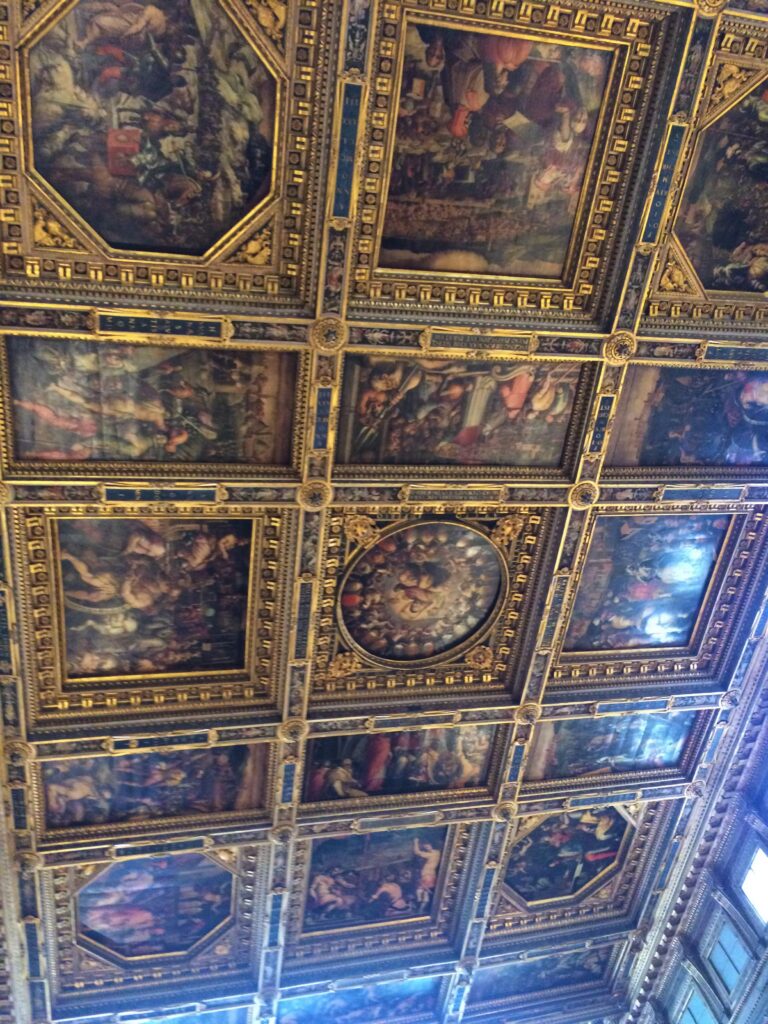
The so-called “Hall of Five Hundred” (Salone dei Cinquecento), completed in 1495, was both designed and decorated with frescoes by Giorgio Vasari. In earlier times, this vast chamber served as the meeting place of the Great Council, which could seat exactly five hundred members. Its most striking feature is the richly decorated coffered ceiling, divided into numerous painted panels (through which the agent falls to her death in the movie Inferno). At the very centre lies the most renowned of them all: Vasari’s masterpiece, The Apotheosis of Cosimo I.
House of great artists
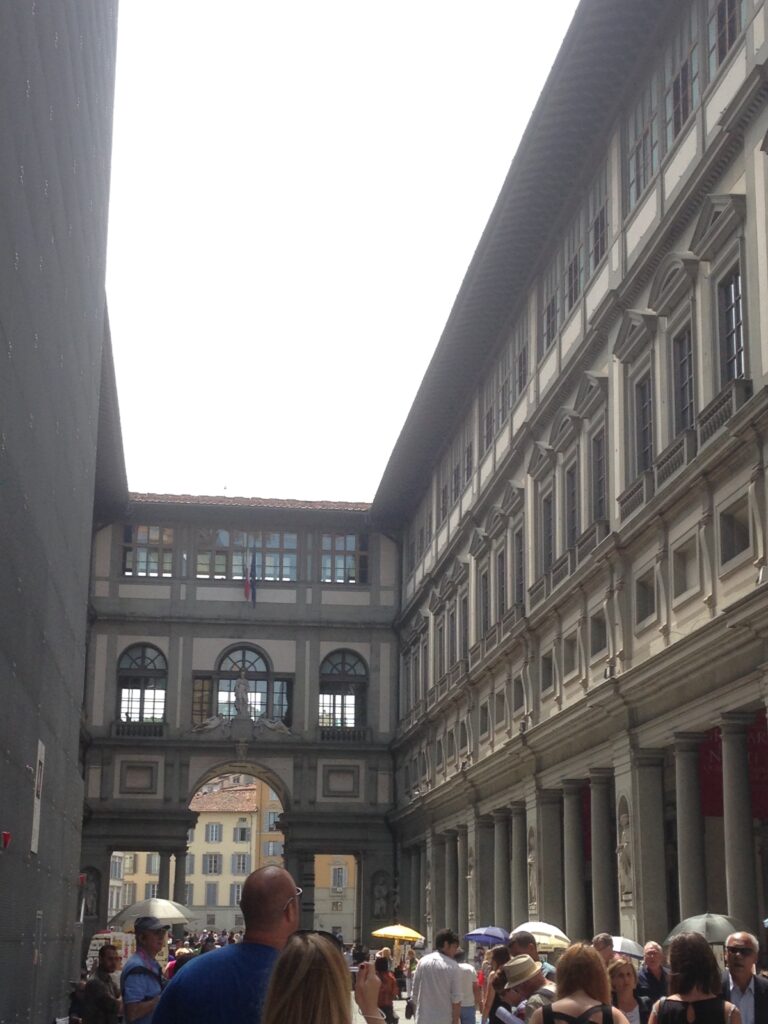
The Galleria degli Uffizi is one of the largest museums in the world. Here you can admire famous works by Botticelli (The Birth of Venus), Caravaggio (The Head of Medusa), Leonardo da Vinci, Michelangelo and Rembrandt. Make sure to plan plenty of time for this, as the museum consists of no less than 45 rooms spread over two floors. It is also wise to reserve tickets in advance, as the queues for the museum are considerable. Unfortunately, for that very reason, I still haven’t been inside. And although the queue winds through a beautiful gallery with many street vendors, I think your time is better spent than waiting for entry.
The most famous attraction in Florence?
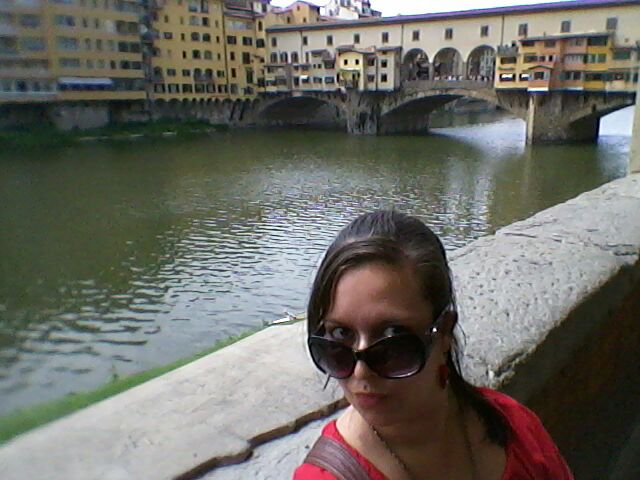
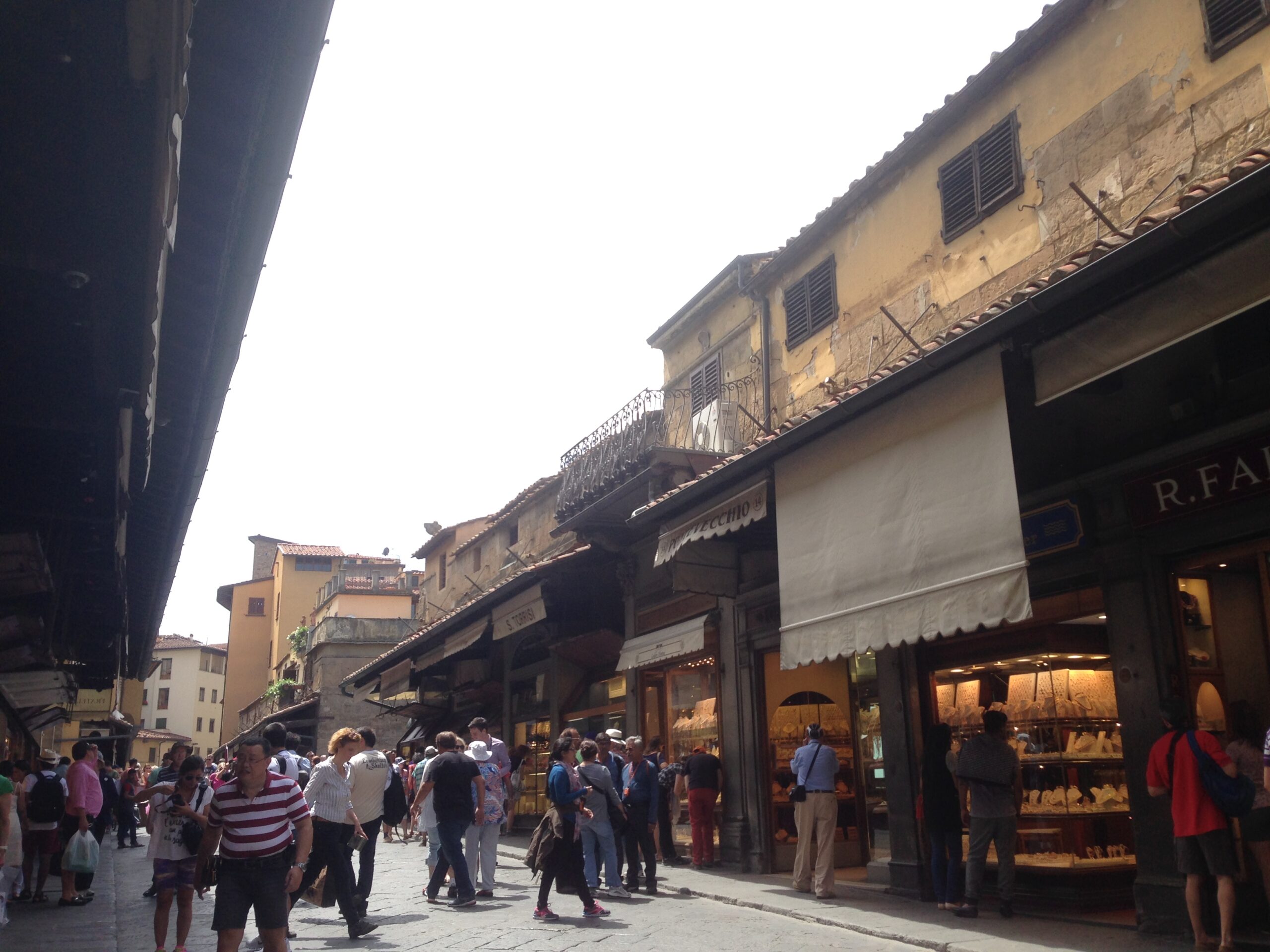
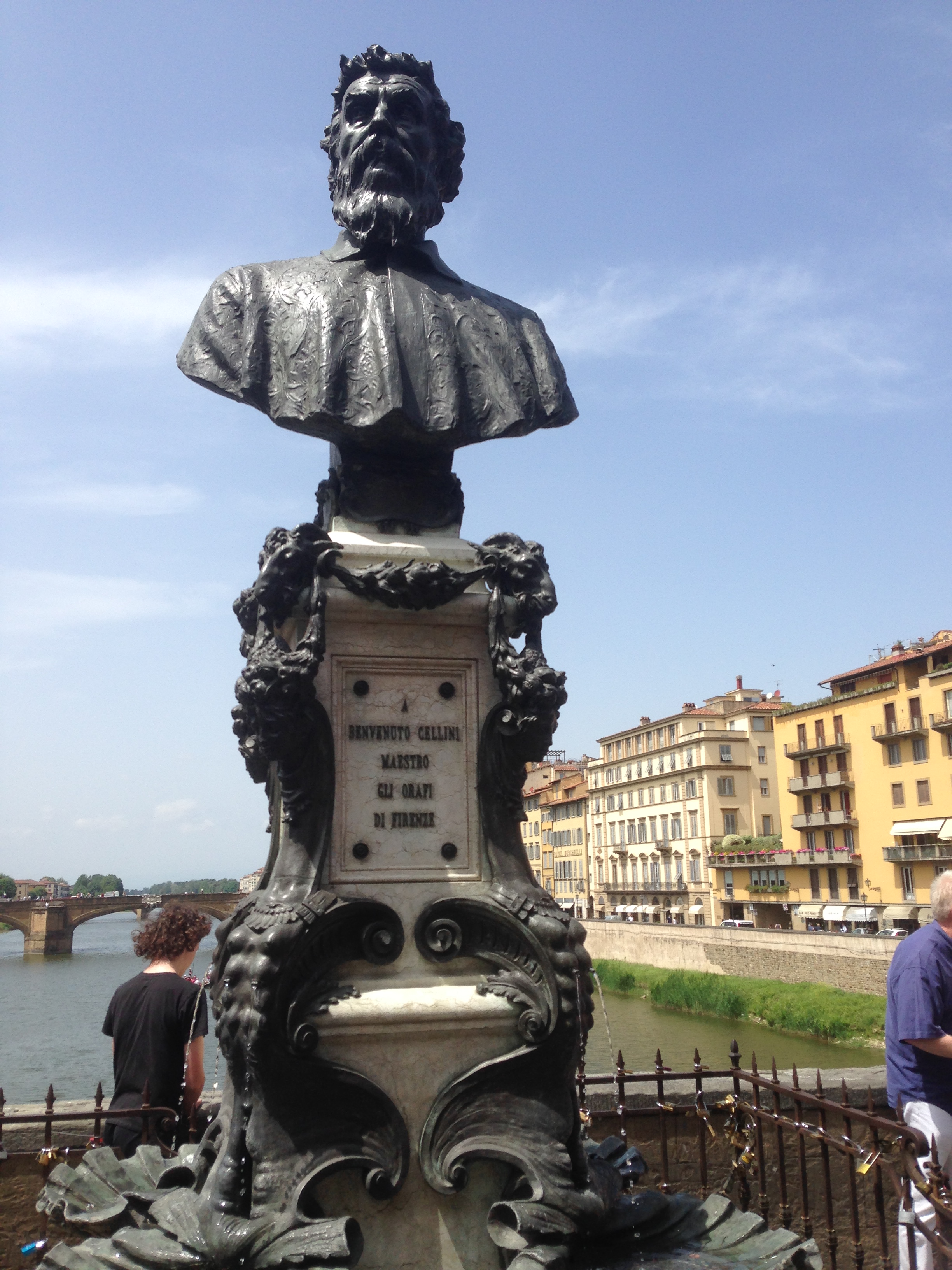
I think the Ponte Vecchio is the most famous sight in Florence. And how could it be otherwise? You simply cannot miss the bridge. What has existed since the 10th century AD is still there today: only the building material has changed (from wood to stone in the 14th century; that is when the first shops also settled on the bridge). At first, only butchers and tanneries established themselves on the Ponte Vecchio. However, their businesses polluted the Arno at a rapid pace and Cosimo de’ Medici decided it was enough. He moved them out and allowed gold- and silversmiths to take their place. They can still be found on the Ponte Vecchio today.
The (not so) secret Vasari Corridor
The Vasari Corridor is an elevated passageway in Florence, built in 1565 by Giorgio Vasari for the powerful Medici family. It stretches for nearly a kilometre, connecting the Palazzo Vecchio with the Palazzo Pitti and the Boboli Gardens. The corridor allowed the Medici to move safely and privately between their residences and government offices, without having to mix with the public.
_in_Florence,_Italy_(2).jpg)
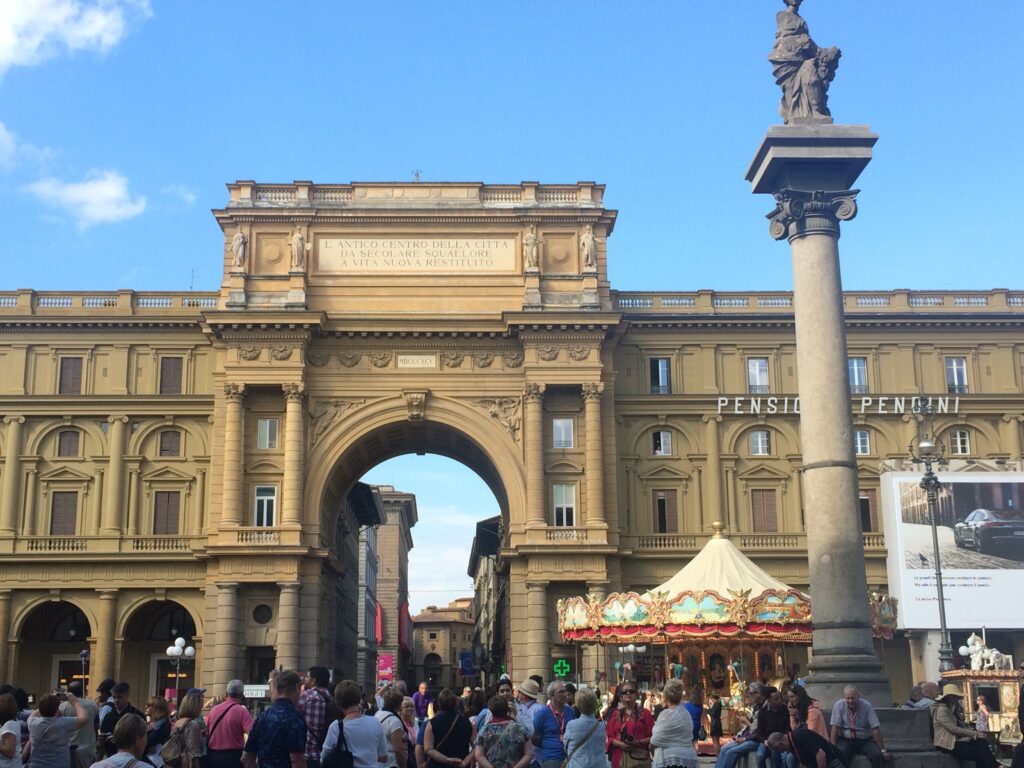
The Piazza della Repubblica is the official centre of Florence. This neat, rectangular square is enclosed by the Vittorio Emanuele II triumphal arch and on the square you will find a carousel and the Colonna della Dovizia, or also known as the Column of Abundance. This is the point where the Roman Forum once stood, at the intersection of the cardus maximus and the decumanus maximus. The column you see today was erected in 1431, though the statue crowning it is a replica. The original figure is preserved inside the Cassa di Risparmio bank on Via dell’Oriuolo.
Here, piggy, piggy
Fontana del Porcellino or the little pig fountain is actually more of a statue than a fountain. Once, water flowed from the snout of the little pig, which sellers at the market could use. Now it is just a cute bronze statue from 1612. If you rub its snout or give it a kiss (very hygienic), you will be blessed! Placing a coin in its mouth also helps… provided the coin falls through the hole in its mouth, of course.

The burial place of St. Minias
If you have ever been to Florence, you probably already know the Basilica San Miniato al Monte. It cannot be missed: its façade can be seen throughout Florence because the church is located on a hilltop. The façade is made up of white, black and green marble slabs that together form a harmonious geometric pattern. This façade served as inspiration for the famous Renaissance architect Brunelleschi.
The Basilica San Miniato al Monte is also the oldest church in Florence. As early as the time of Charlemagne, a place of worship stood here, but the current structure was built between the 11th and 13th centuries. Remarkable is the floor, richly inlaid with animal motifs. The elevated choir, made of marble, is also striking. This choir is located above the 11th-century crypt, where the body of the martyr Saint Minias rests, after whom the church is named. In the crypt, you can also admire frescoes of saints, which are probably among the oldest surviving wall paintings in Florence. They date back to the early 13th century.

Italian food and wines in the Mercato Centrale
Are you fond of food and wine? Then you must definitely go to the market halls of Florence. The Mercato Centrale is an atmospheric place full of market stalls with fresh vegetables, fruit, bread, cheese, homemade pasta and many more Tuscan delicacies. You are sure to run into one or more food vloggers here!
Tip: all that food makes you hungry, doesn’t it? Then head to the top floor where you can try out the tastiest dishes!
#/media/File:Mercato_centrale_di_san_lorenzo_01.jpg)
Meet Dante Alighieri
The Piazza di Santa Croce is one of the most famous squares in Florence and is located right in front of the Basilica di Santa Croce. For centuries, this square was a meeting place for markets, festivals and public events. Today it is still used for festivals and concerts. On the square itself, there is also a monument in honour of Dante Alighieri, the poet of the Divine Comedy. In addition, the historic football match Calcio Storico Fiorentino is played here every year, a tradition dating back to the 16th century.

The burial place of famous Italians
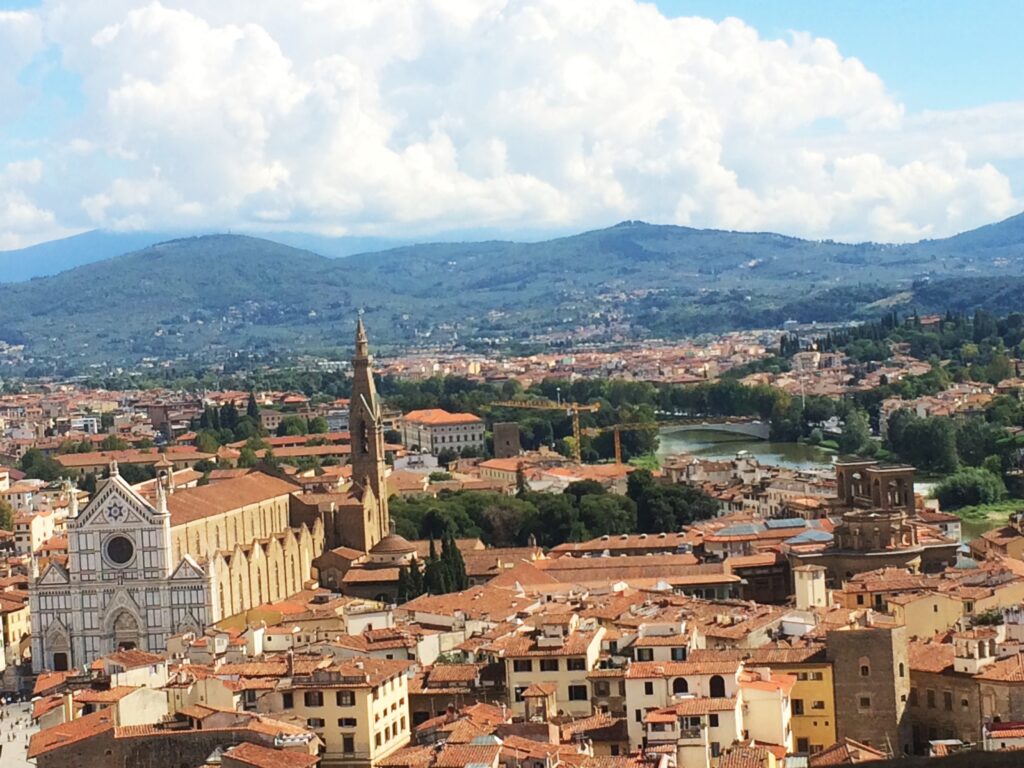
The Basilica di Santa Croce is the largest Franciscan church in the world. Inside you will find beautiful frescoes by Giotto and the tombs of famous Italians such as Michelangelo, Galileo Galilei and Machiavelli. Must-sees in the church also include: the frescoes by Taddeo Gaddi in the Cappella Baroncelli, the Annunciation relief by Donatello and frescoes by Giotto.
Did you know? The construction of the skeleton of this church took almost a century! The largest part was finished in 1385, but the bell tower and decoration of the façade had to wait a little longer. This was only completed in 1863.
Final resting place of the Ruccelai family
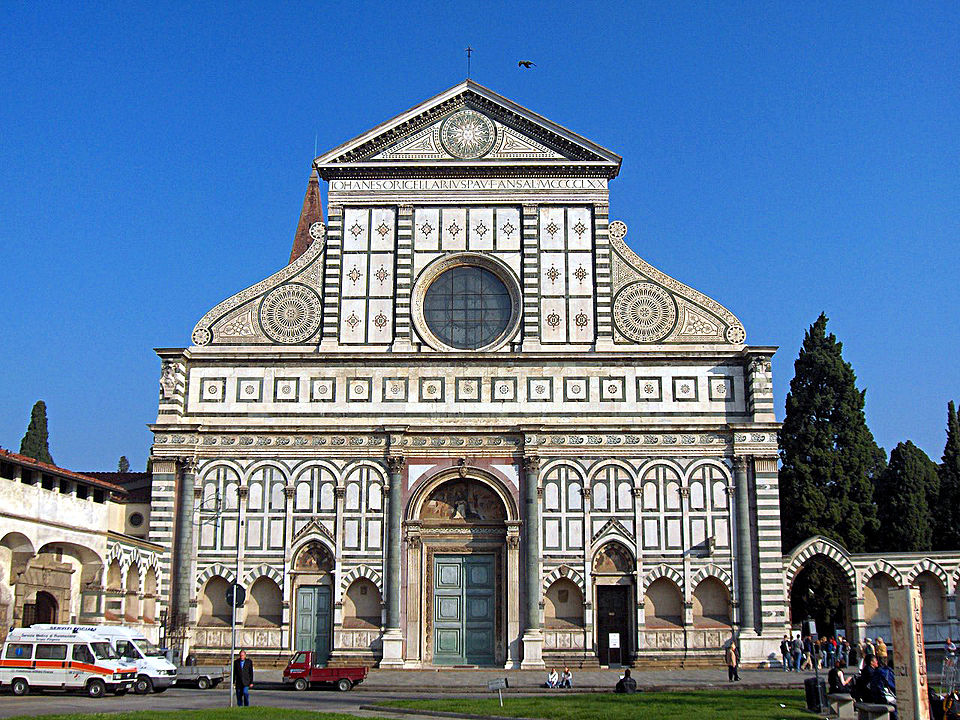
The Basilica Santa Maria Novella is a Dominican church from 1460 with a Renaissance white and green marble façade. The church is known for the family tomb of the Ruccelais. This family helped finance the façade. A must-see is also the ‘floating’ crucifix by Giotto from 1290. If you miss that, perhaps you should make an appointment at the optician when you get back. Furthermore, you can admire the frescoes in the main choir chapel, the cloisters with the tombs, and the striking green frescoes that depict the story of creation.
Tribute to the Medici’s
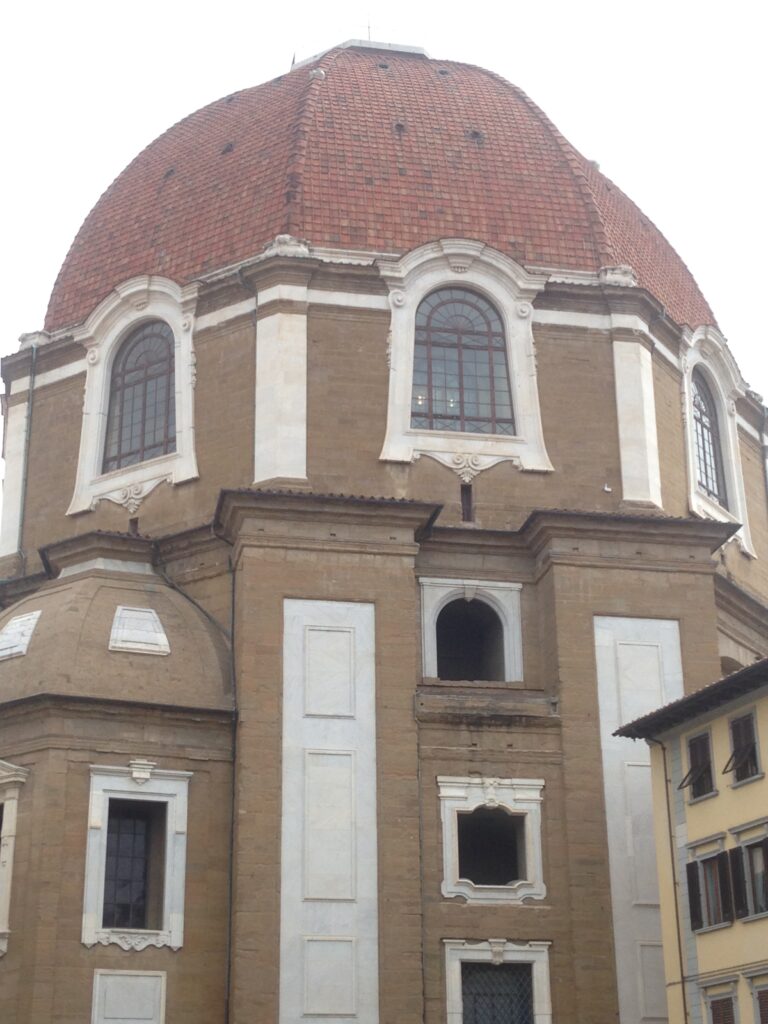
The Basilica San Lorenzo is one of the largest churches in Florence. The basilica is known for the tombs of the Medici and of Donatello. Construction began in the 15th century and was carried out thanks to the many donations of the Medici. That is also why a chapel carries the name of this famous art family: the Cappelle Medicee. The Sagrestia Nuova is especially famous and important because of the tombs that Michelangelo created here for Lorenzo II and Giuliano de’ Medici.
Museum in a former monastery
The Museo di San Marco is housed in the former San Marco monastery. The art from the monastery and the religious objects of the Franciscan monks are now displayed in this museum. Famous frescoes you can admire include: frescoes by the monk Fra Angelico, frescoes by Poccetti (which hang in the famous cloister), and freestanding paintings in the pilgrims’ hospice.
_2.JPG)

Dedicated to the most famous scientist of all time
Since we are on the subject of great museums in Florence, I also highly recommend the Galileo Galilei Museum. The name of the museum already gives it away, but this museum is entirely dedicated to the scientist Galileo Galilei. Gelileo is best-known for his telescopes and astronomical discoveries. The most famous part of the museum is Galileo’s own private instruments, such as his two most renowned telescopes.

Regional sculptures
Housed in the former Palazzo del Bargello, where the magistrate was once based, the museum has since 1859 provided insight into art that no longer fit into the Uffizi. Here you will mainly find sculpture from Tuscany and Florentine sculptors. Names such as Michelangelo, Donatello and Verrocchio have their art here.
#/media/Bestand:Il_Bargello.jpg)
Art collected through the centuries
The Palazzo Medici-Riccardi is also a former palace that has a new purpose no: it functions as a museum. The Medici family were great fans of art and ruled Florence for no less than 300 years: plenty of time to collect an immense amount of art. A part of this collection you’ll find in the Palazzo Medici-Riccardi. The Hall of Mirrors is very special to walk through, but the highlight is without a doubt the mural by Benozzo Gozzoli. The mural is located in the chapel of the museum.


Appearances can be deceiving
Away from the museums and back to the churches. There is still one church I forgot: the Basilica di Santa Maria del Carmine. Although the façade does not look like much (due to a devastating fire in 1771), I strongly recommend visiting the church because the sacristy, the Capella Corsini and the Brancacci Chapel certainly deserve your attention. Here you will find 15th-century frescoes by several famous painters: Filippino Lippi, Masolino and Masaccio. In particular, the fresco called “The Expulsion of Adam and Eve from Paradise” is immensely popular.
#/media/File:Piazza_del_Carmine,_veduta_sulla_chiesa_del_carmine.jpg)
#/media/File:Firenze,_il_carmine,_interno_(2017)_01.jpg)
Buying grain in a church?
The Chiesa di Orsanmichele does not look very inviting from the front either, but not only is the museum at the back of the church worth a visit, the church also has a unique origin story. It was originally a covered grain market. However, the market burned down (these fires in Florence seem to be quite a thing) and built into a church. Until the 16th century, you could still find grain on the ground floor of Orsanmichele, and even now you can still see grain chutes.

A tower that has withstood the test of time
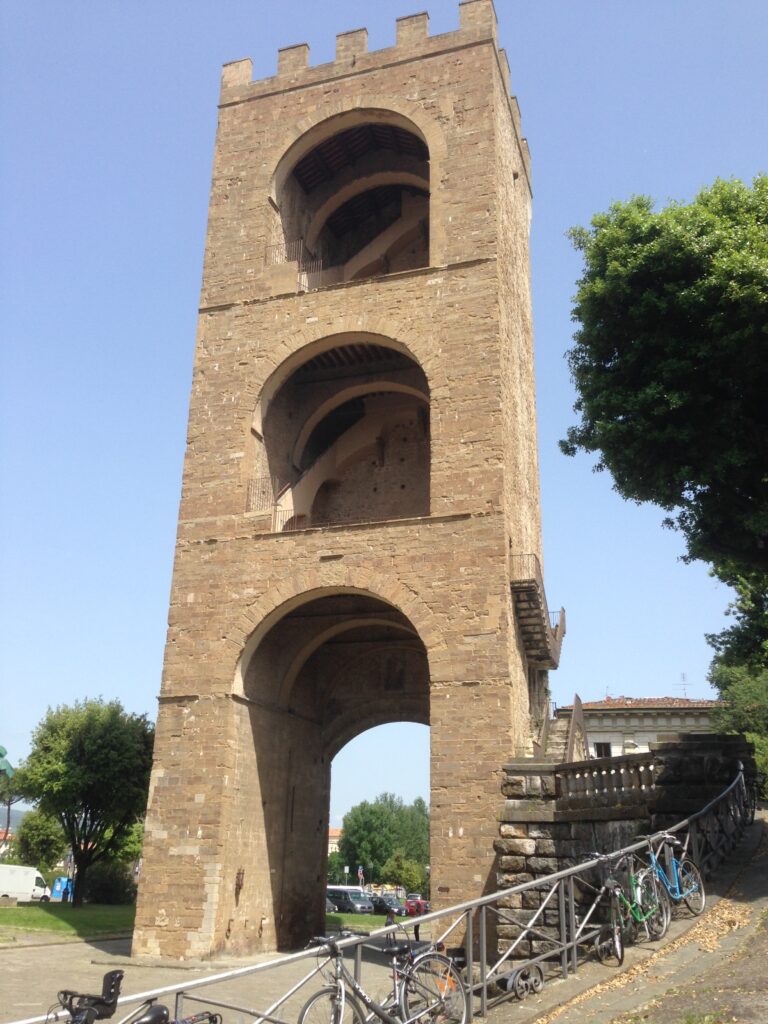
The Torre di San Niccolò was part of the former city wall surrounding Florence. The tower dates back to the 14th century and is the only one of all the watchtowers to have retained its original height. Above the arch you will find a famous fresco: Madonna and Child.
Which place do the Medici and Galilei have in common?
Forte di Belvedere is a star-shaped fort. Bernardo Buontalenti designed it. It origins from 1590 -1595. It is located here, because it offered a perfect view over the entire city. Strategically, it was therefore very important. Should the city be attacked, the Medici could also take refuge here. The fort, however, was also a base for Galileo Galilei, who studied the stars from here. Belvedere was connected to both the Palazzo Vecchio and Palazzo Pitti.
#/media/File:Forte_di_Belvedere,_bastione.jpg)
So, what to do in Florence? Discover it yourself!
Florence is not, for me, just a city to tick off your bucket list; it is a place that gets under your skin and steals your heart. Whether you spend hours wandering through the artistic treasures of the Uffizi, watch the sunset from Piazzale Michelangelo, or simply enjoy a cappuccino in a lively piazza: Florence always leaves you longing for more. It is a city where past and present flow into one another, where every street whispers a story, and where you make new discoveries each time you return, no matter how often. So, if you are still in doubt: believe me, Florence is not just a travel destination, it is an experience you carry with you forever. Do not hesitate any longer and book a trip to the Tuscan capital to discover for yourself what there is to do in Florence.
Natasja Bartholomé
Author & Travelblogger