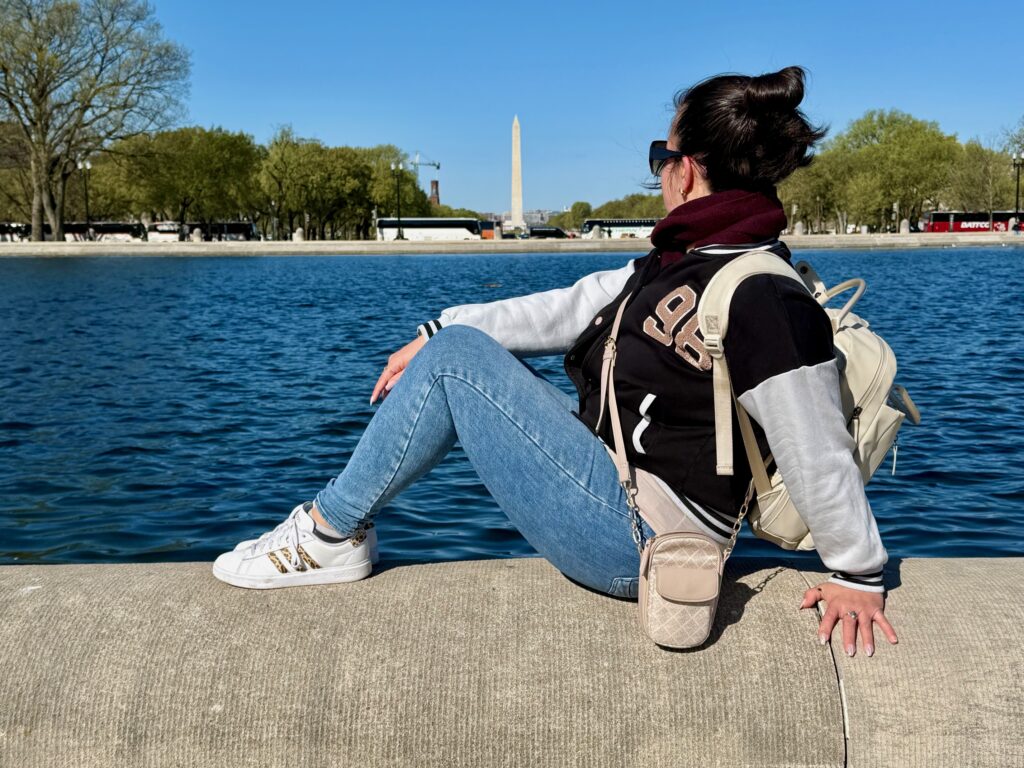
When I heard from a former colleague that you could easily travel from New York City to Washington DC (even a day trip was possible), I decided on my second visit to NYC to take a trip to the capital of the United States. I had already seen in several blogs that you should allow yourself a bit more time in Washington DC, so my travel companion and I decided to stay three nights in Washington before heading back to NYC. I can recommend the US capital to everyone because it has a very different vibe than, for example, NYC. Yet you cannot deny that this city is also of crucial importance to the US, albeit in a political sense. So what is there to do in Washington DC? I will explain it to you here, so put on your walking shoes and explore Washington DC with me!
Everything that’s in this article
- 1 What to do in Washington D.C.?
- 2 Here comes the president
- 3 Meet your favourite senator
- 4 Walhalla of books and art
- 5 360° view of the National Mall
- 6 Great artists in Washington DC
- 7 Night at the museum in Washington DC
- 8 56 states of America?
- 9 Look with President Lincoln over the Reflecting Pool
- 10 Remember both men and women of the Vietnam War!
- 11 Freedom is not free
- 12 A memorial amidst blossoms
- 13 It’s all about the dog really
- 14 A stone full of hope
- 15 Margraten is nothing compared to this
- 16 He’s hiding, but he’s there
- 17 The Grand Central of DC
- 18 Touch a real stone from the moon
- 19 History and college life combined
- 20 The highest point of Washington DC
- 21 An oasis of peace in the capital
- 22 A Catholic service in a baseball stadium
- 23 Walking over tree tops
- 24 White Guilt, Black Pride
- 25 A lonely castle in DC
- 26 The Ritz? No, it’s the Washington Post
- 27 Smithsonian’s department of animals
- 28 Historical and genealogical documents of all times
- 29 Broadway of Washington DC?
- 30 Statues of war heroes
- 31 Most heavily guarded place in DC
- 32 So, what is there to do in Washington DC?
What to do in Washington D.C.?
Washington, D.C., the capital of the United States, is located along the Potomac River between Maryland and Virginia. It is not part of any state but is a federal district, officially known as the District of Columbia. Founded in 1790, it was designed to serve as the nation’s political centre, housing the three branches of government: the White House (executive), the U.S. Capitol (legislative), and the Supreme Court (judicial).
The city is famous for its iconic monuments and memorials, including the Lincoln Memorial, the Washington Monument, and the Martin Luther King Jr. Memorial. It is also home to the Smithsonian Institution, the world’s largest museum complex, offering free admission to visitors. Most of these famous must-sees are on or nearby the National Mall: a large, open park area stretching about two miles from the U.S. Capitol to the Lincoln Memorial. And yes, it is indeed very, very large. Bigger than we had expected beforehand, but still, on a sunny, dry day, a must-visit in America’s capital.
Here comes the president
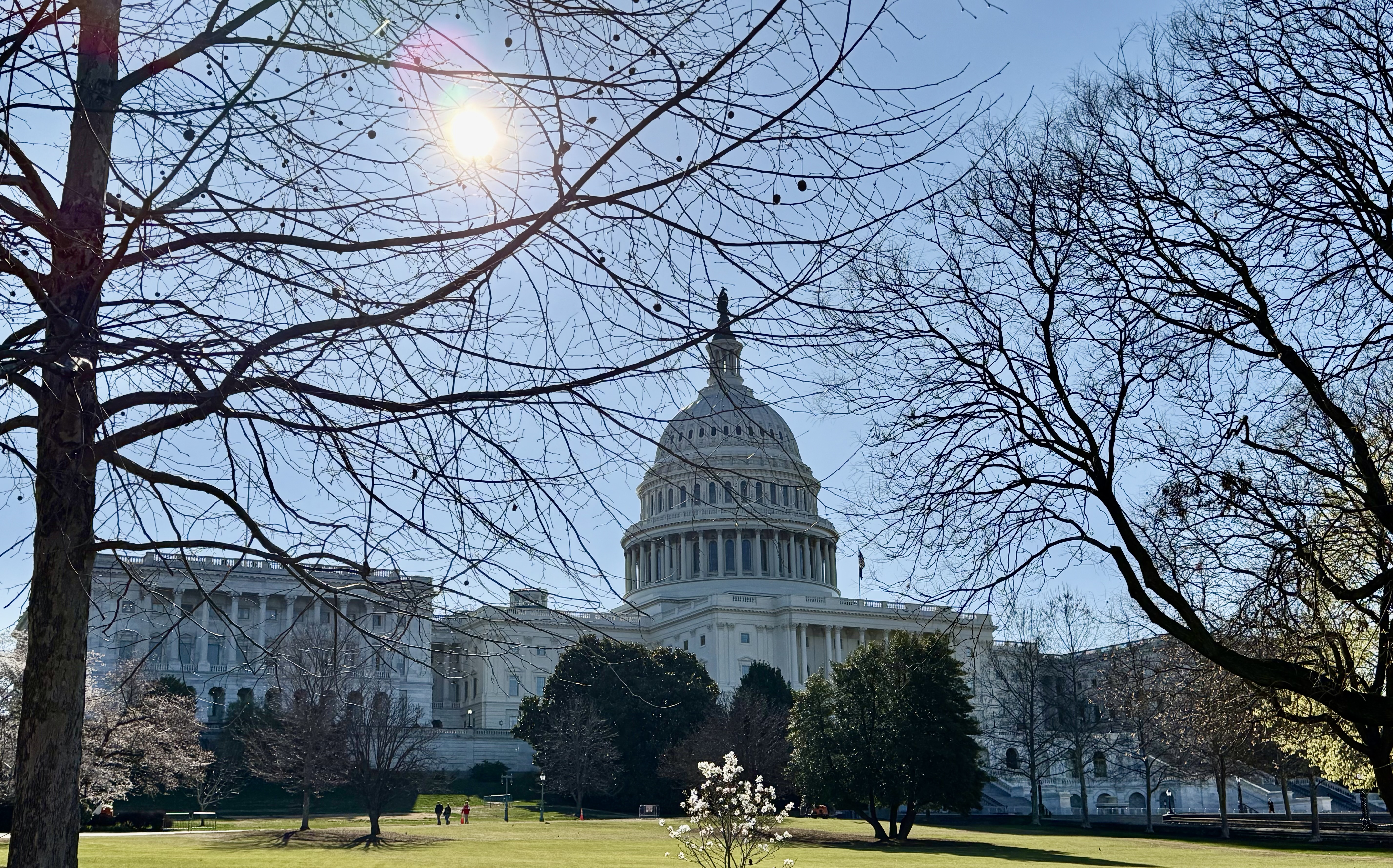
If you say Washington D.C., you naturally say: White House. This is without a doubt the most famous attraction in Washington D.C. In every movie featuring an American president, you will see a shot of the White House and the Oval Office. On the news too, when it comes to American politics, you often see a journalist standing in front of the White House gates, with demonstrations going on or important leaders in meetings inside.
However, I had not imagined it to be so large (that became a bit of a mantra for us in Washington: I had not expected it to be so big). The White House has six floors and consists of 132 rooms. President George Washington ordered its construction, but his successor, John Adams, was the first to move in.
Note: As a tourist, you cannot visit the White House itself, but you can go to the visitor centre opposite, where you can watch a film that gives you a virtual tour of the White House. For photos without the fencing, you need to walk a little further along the National Mall. From the hilly area there, with a good zoom, you can get a perfect shot of the back of the White House.
Meet your favourite senator
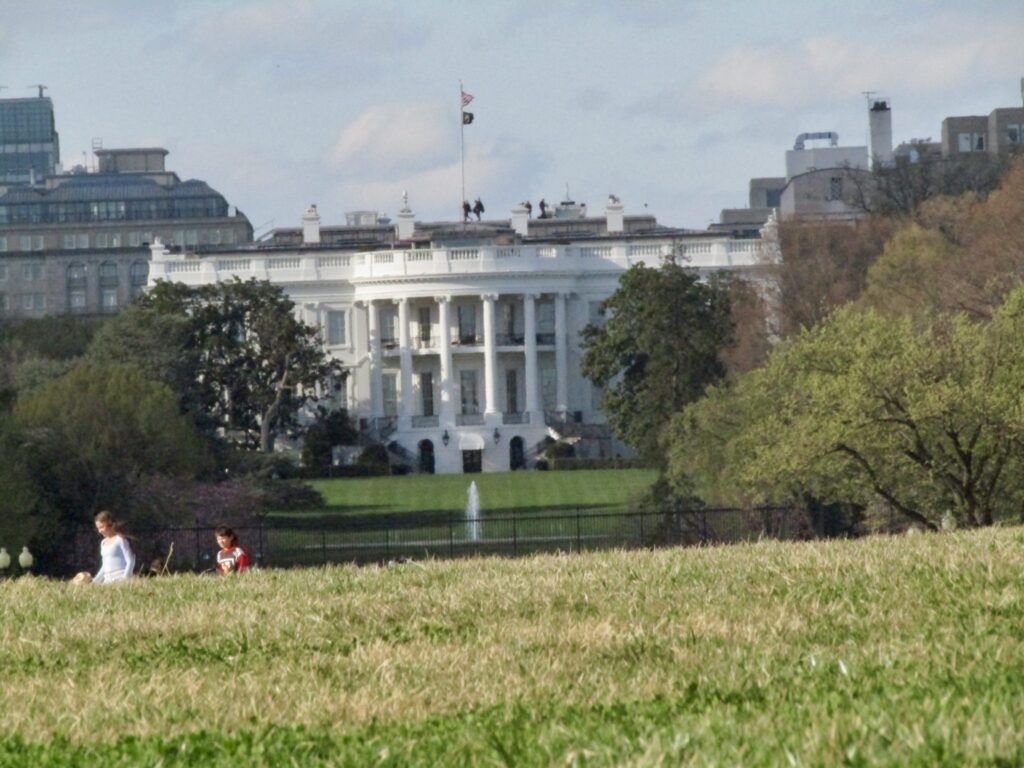
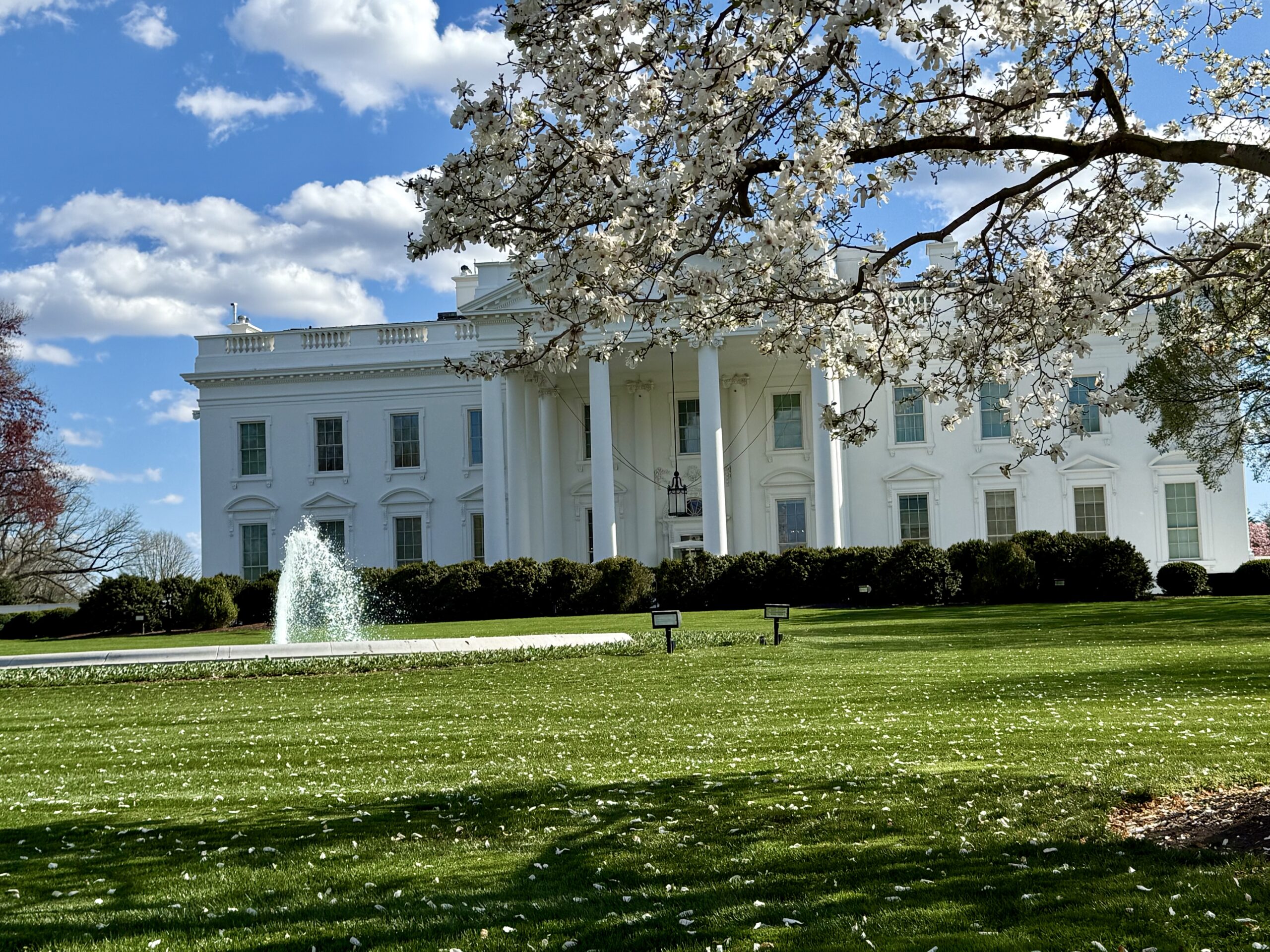
Another famous sight in Washington, D.C.: the Capitol. This building, about 88 metres high, is free to visit! However, we had to come back a second time because the first time there was such a long queue at the door and you cannot reserve a time slot in advance. But the long wait is worth it. Although you can only enter the Capitol itself with a guide (a free tour that lasts about an hour), you do get to see all the important places – all while the senators are simply at work. We were there just after Trump had been inaugurated, and that atmosphere still lingered in the building: you can almost feel its political importance.
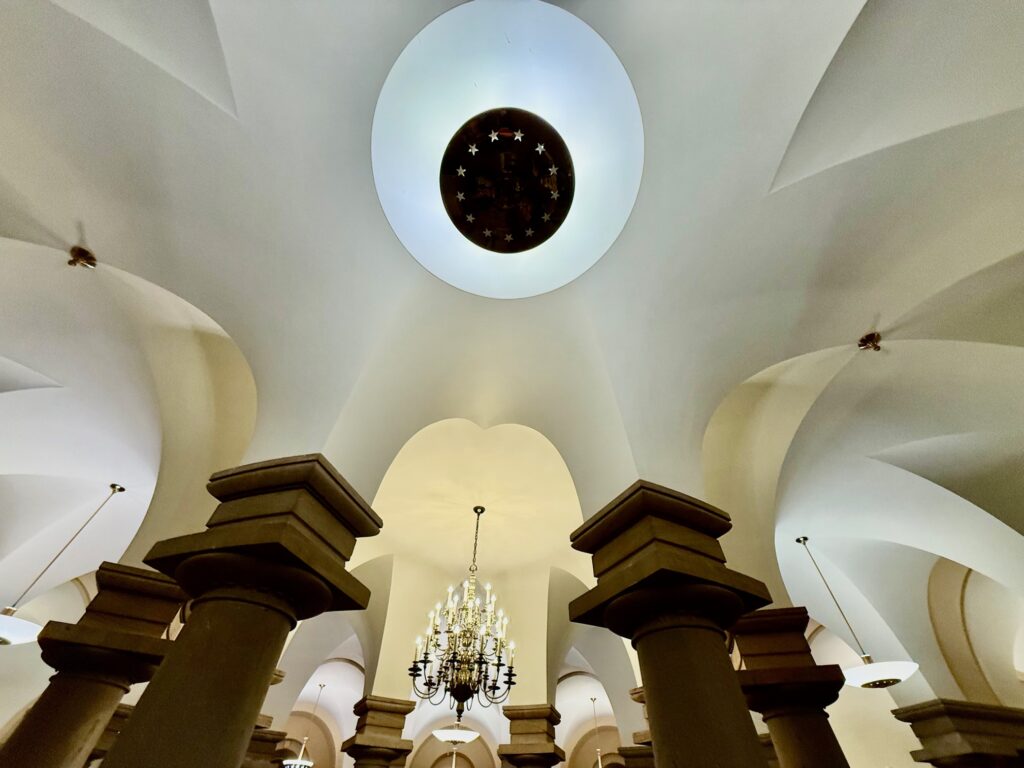
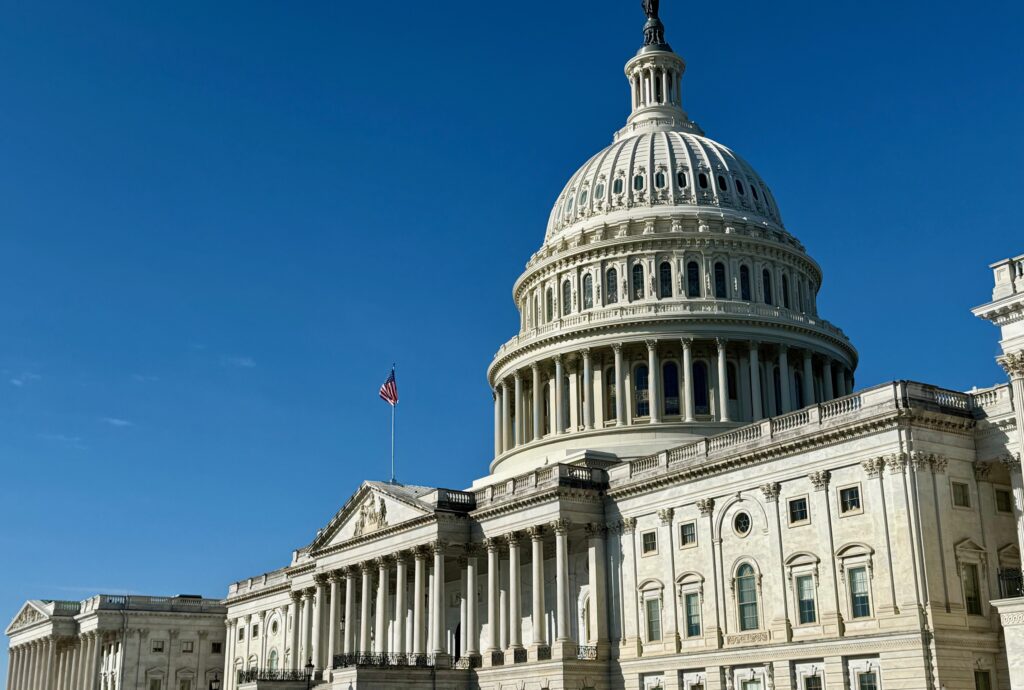
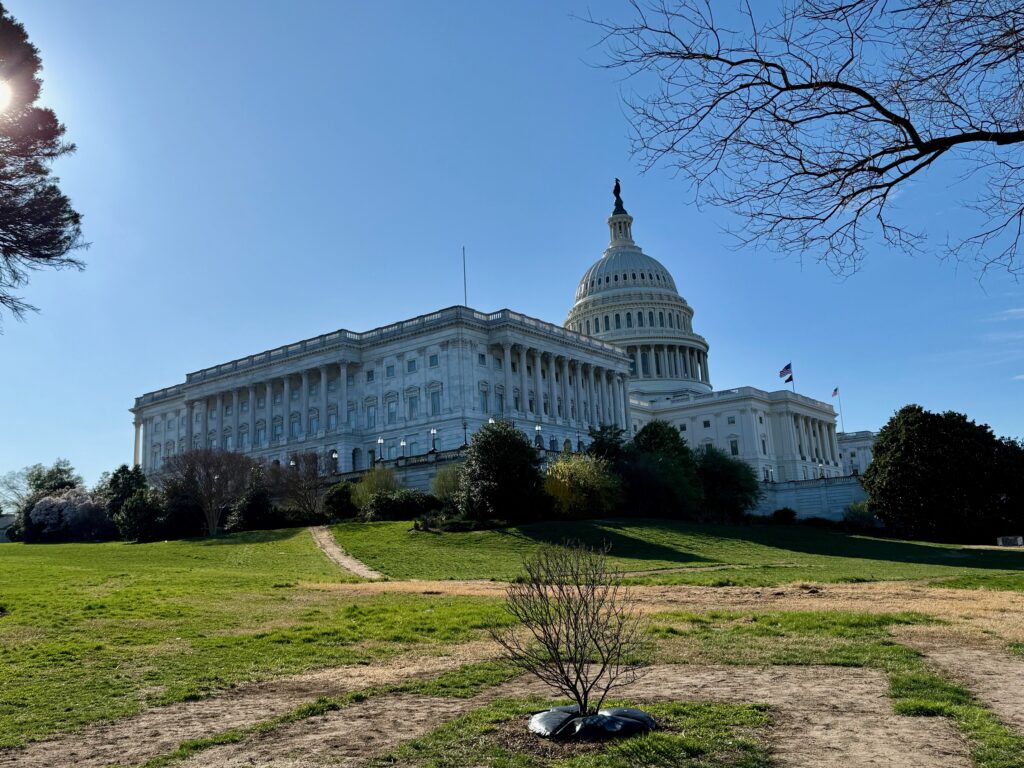
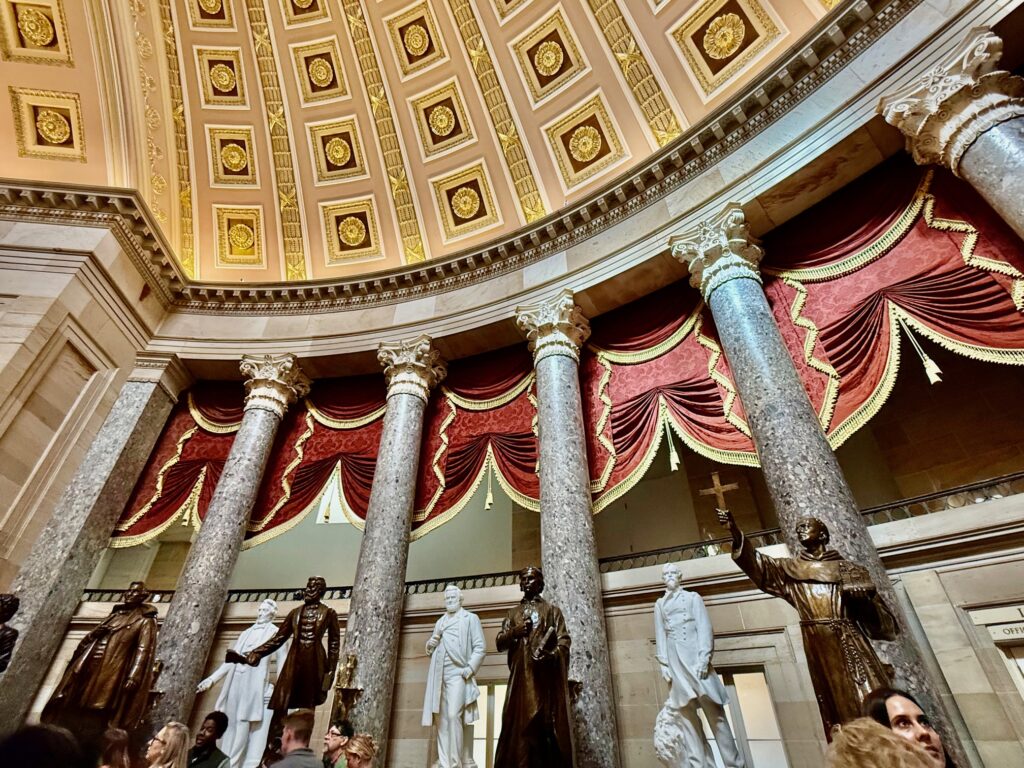
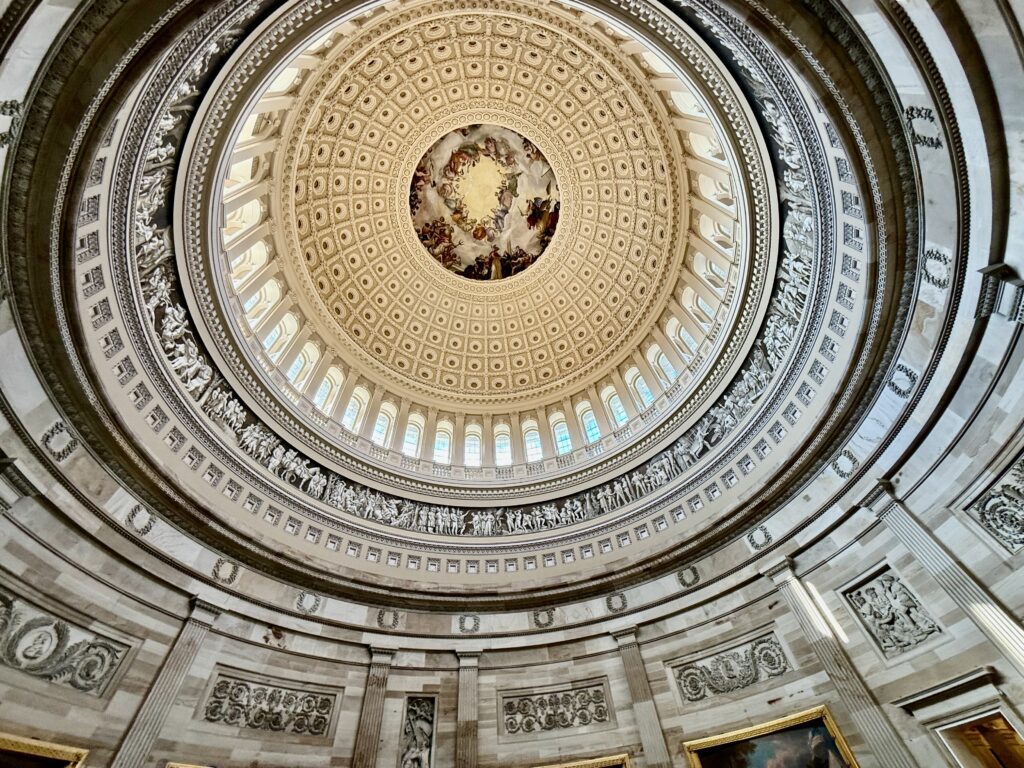
In addition to the guided tour, you can freely explore the visitor centre and the associated museum. Highly recommended, as the museum is quite interactive. You can even submit your own bill, for example, making it fun for children too. That’s probably why it was packed with school trips – something to keep in mind when you visit. Many school visits to Washington, D.C., and the Capitol echoes, so we were exhausted after our visit.
Tip: If you want to visit the Capitol, set aside an entire day. That way, you’ll have time to wait in line and explore the building. If you finish earlier, book immediate access to the Library of Congress, so you can spend the whole day on Capitol Hill.
Walhalla of books and art
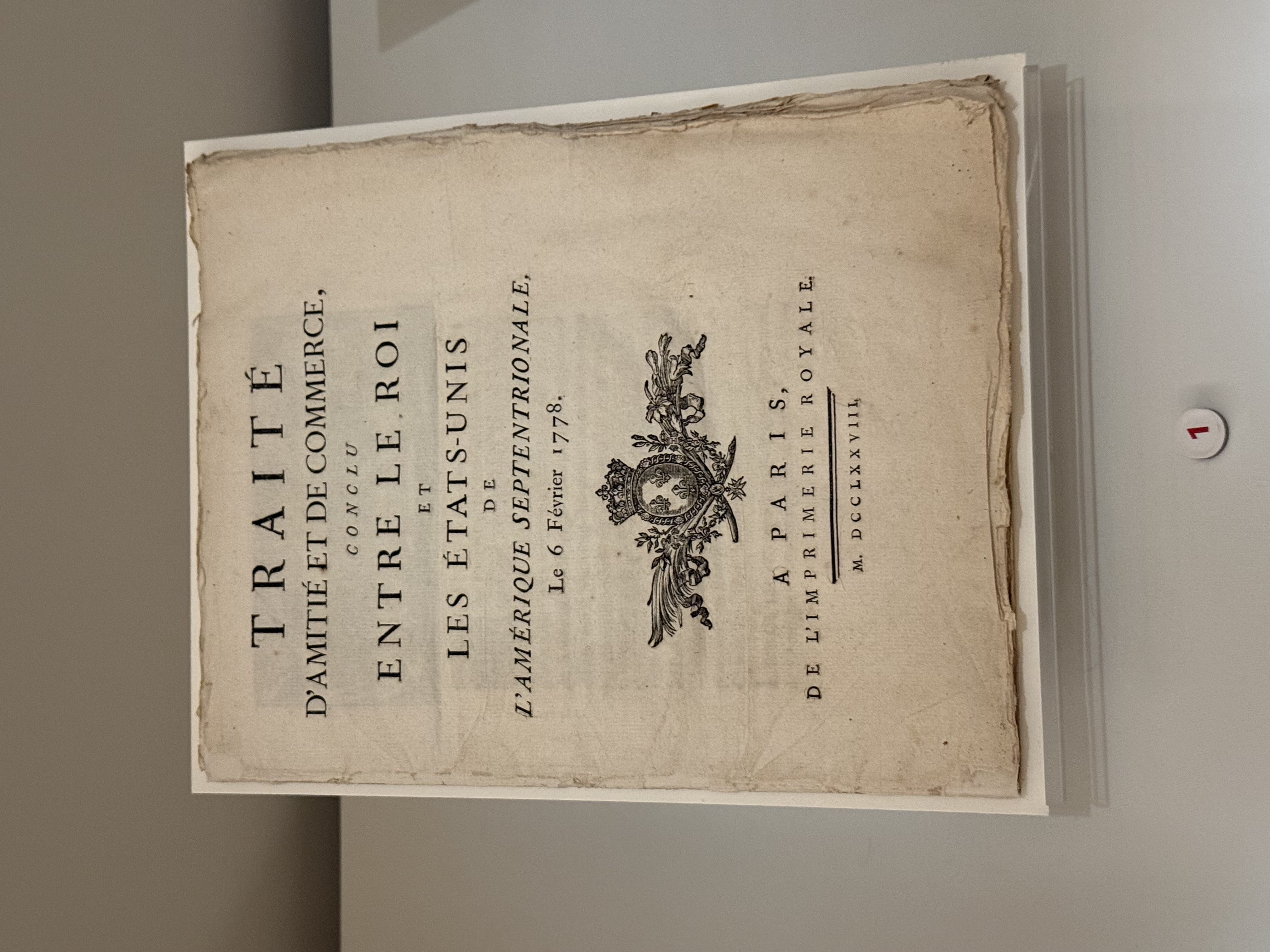
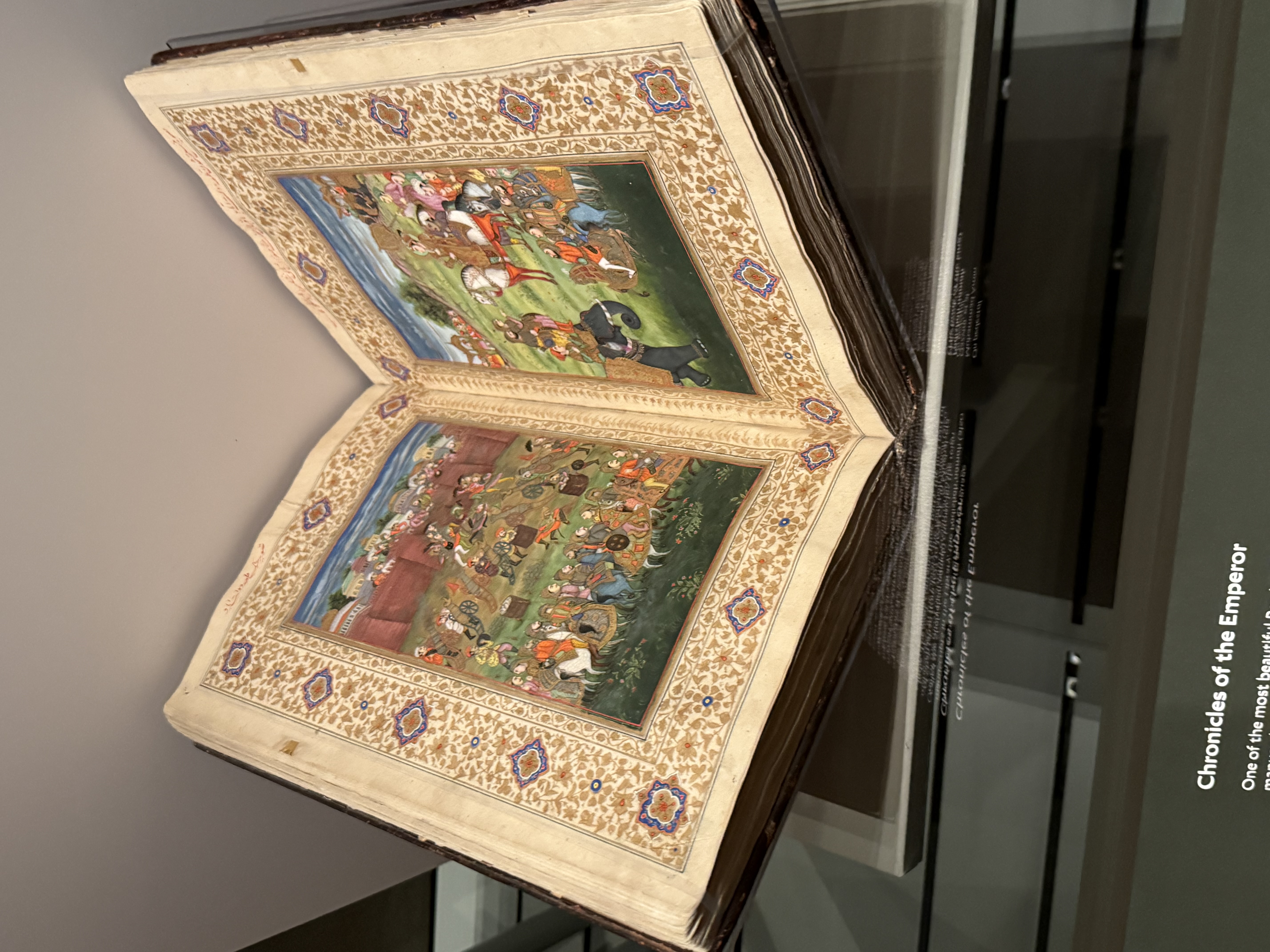
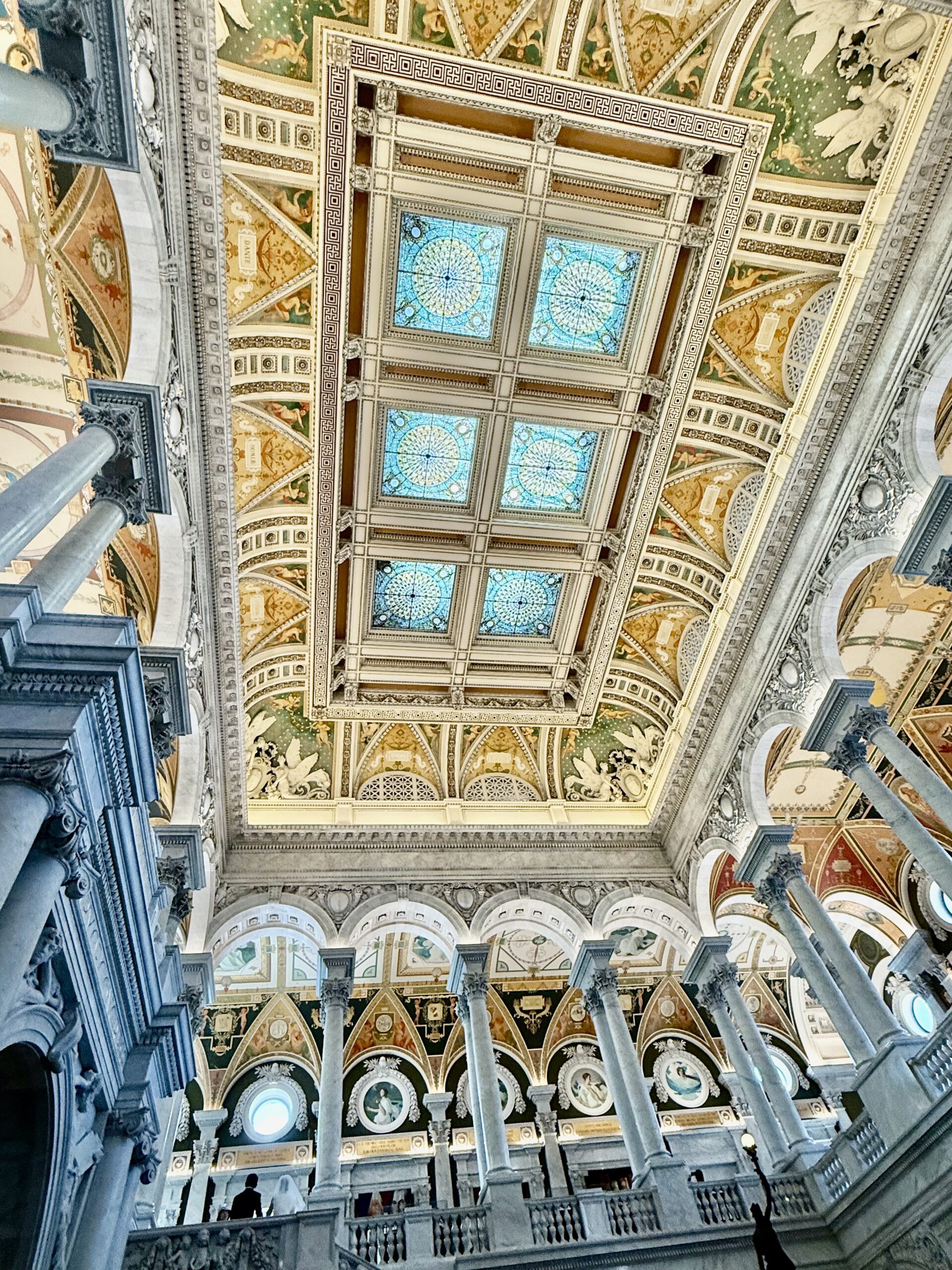
Thanks to our lovely guide in the Capitol, we discovered that you could reserve a time slot for the adjoining Library of Congress. He even helped us get the tickets, after which we headed to this must-see in Washington. From the moment we entered, I knew this was my Walhalla. First of all, the beautiful Renaissance-style art on the floors, walls, and ceilings. We walked around the gallery overlooking the central hall several times, trying to capture nearly perfect photos of the lavish artwork.
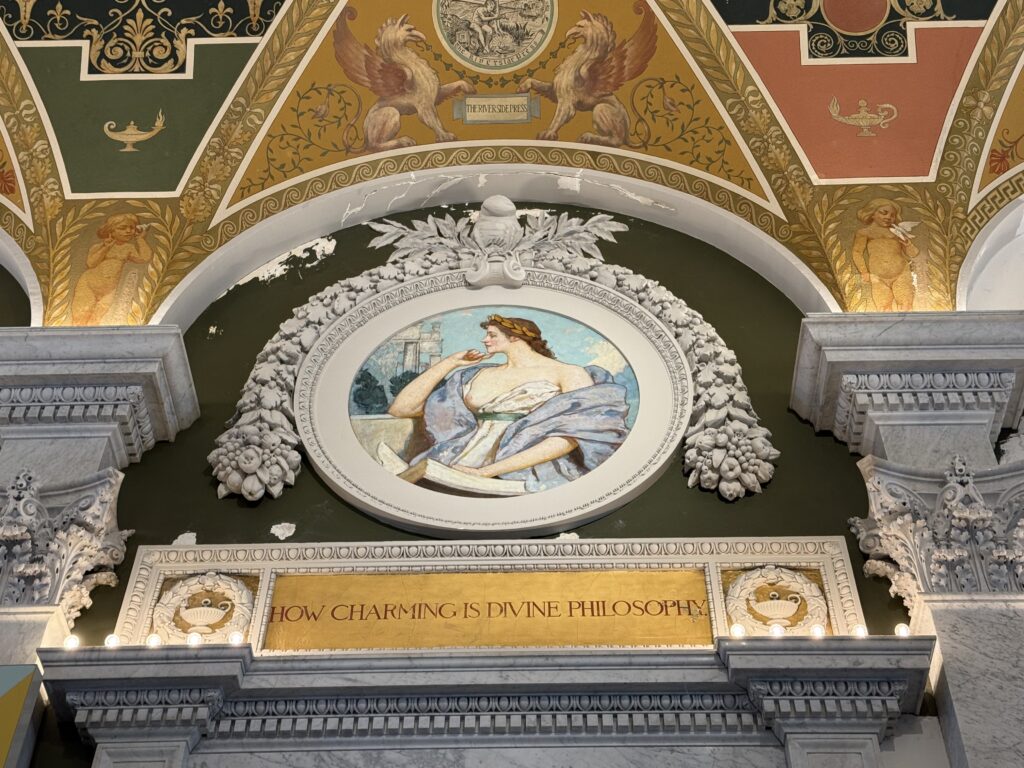
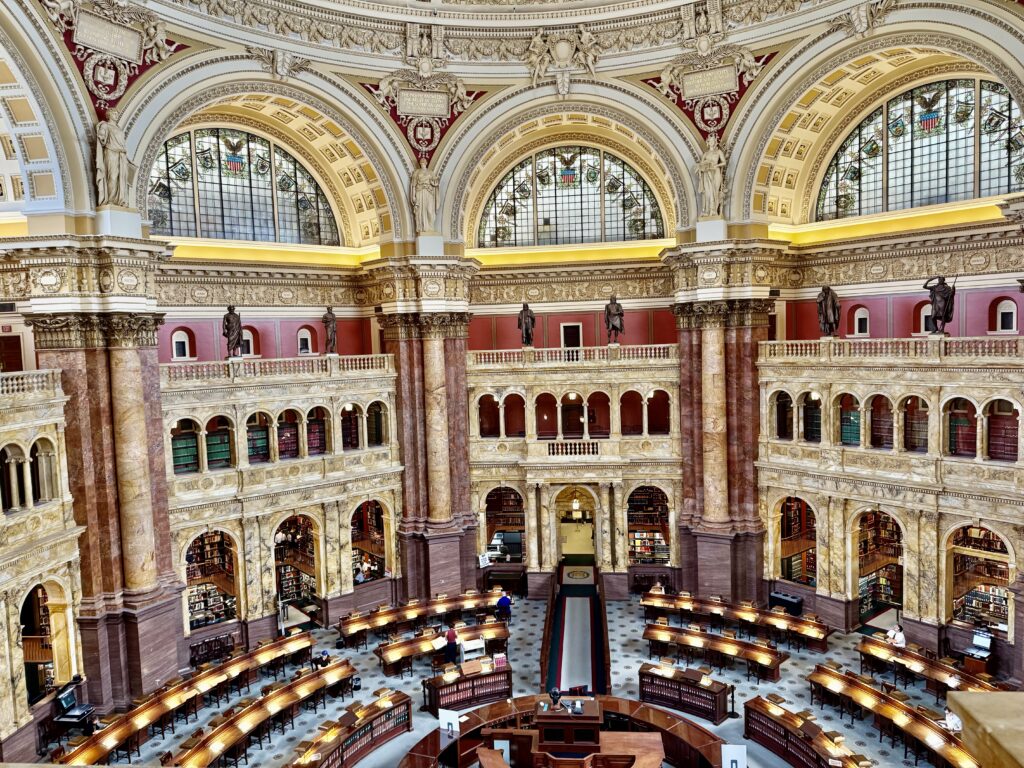
Fun facts: The Library of Congress was founded in 1815 as a federal research library. The first collection belonged to President Thomas Jefferson and comprised nearly 6,500 works. Today, the library is one of the largest in the world, with no less than 170 million prints, manuscripts, and sound recordings.
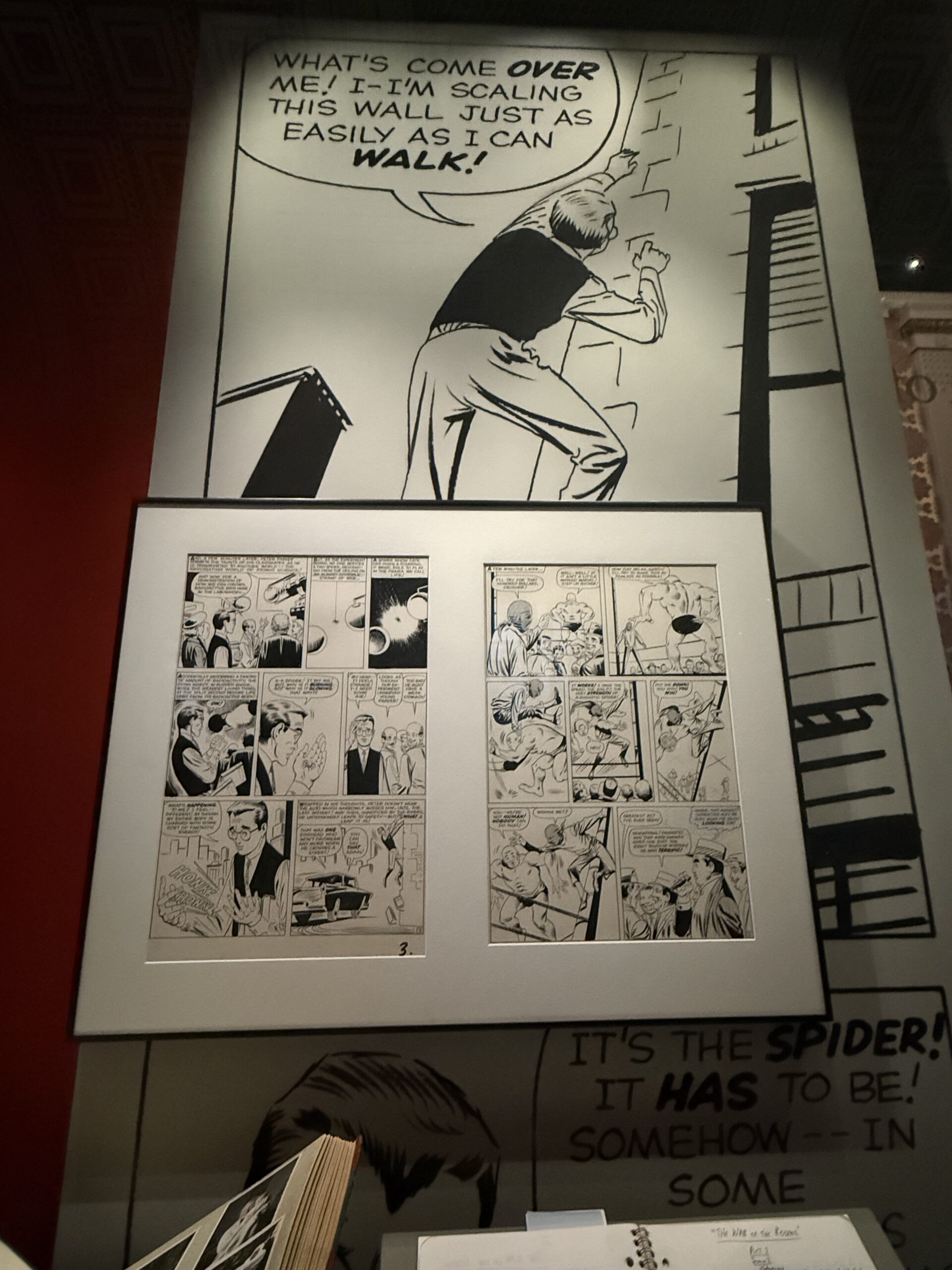
But besides the beautiful paintings, you obviously come here for the books and manuscripts. We were not allowed into the official reading room, but we could take the stairs to the upper floor for a view and photos of the main reading room. There were also two exhibitions you could visit, where you could see things such as official documents (Jefferson’s 1776 Declaration of Independence), letters, first editions of famous books (the original 15th-century handwritten Mainz Bible), maps (a 1507 world map that first used the name ‘America’), and even the first drawings of Marvel’s Spider-Man.
360° view of the National Mall
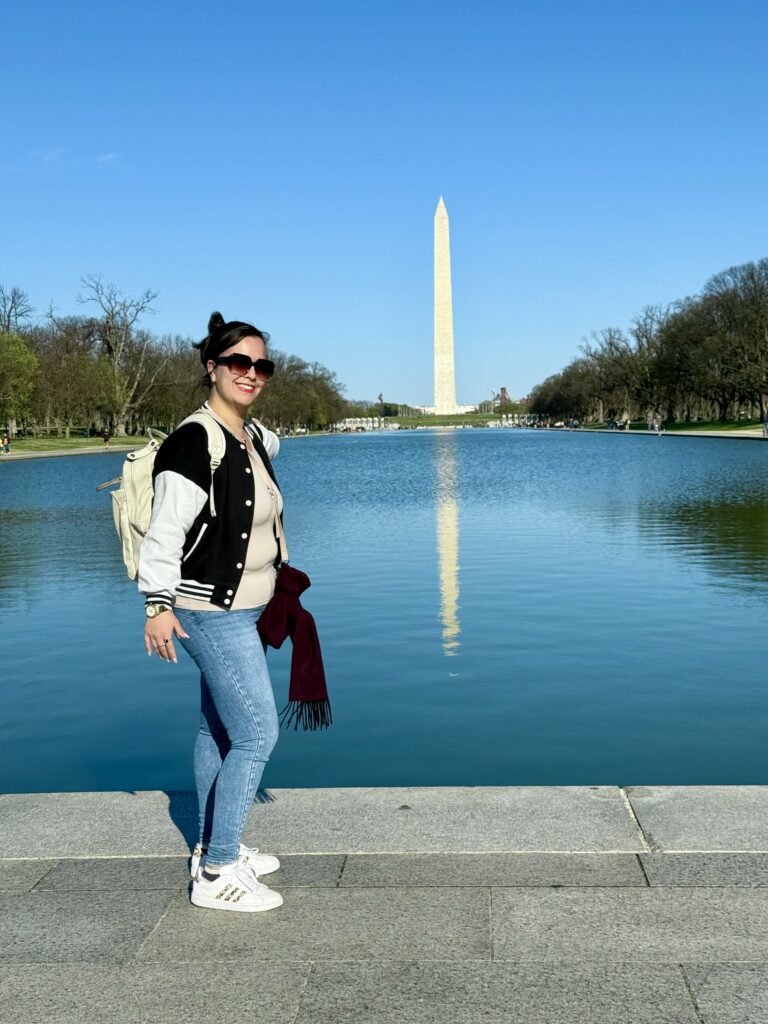
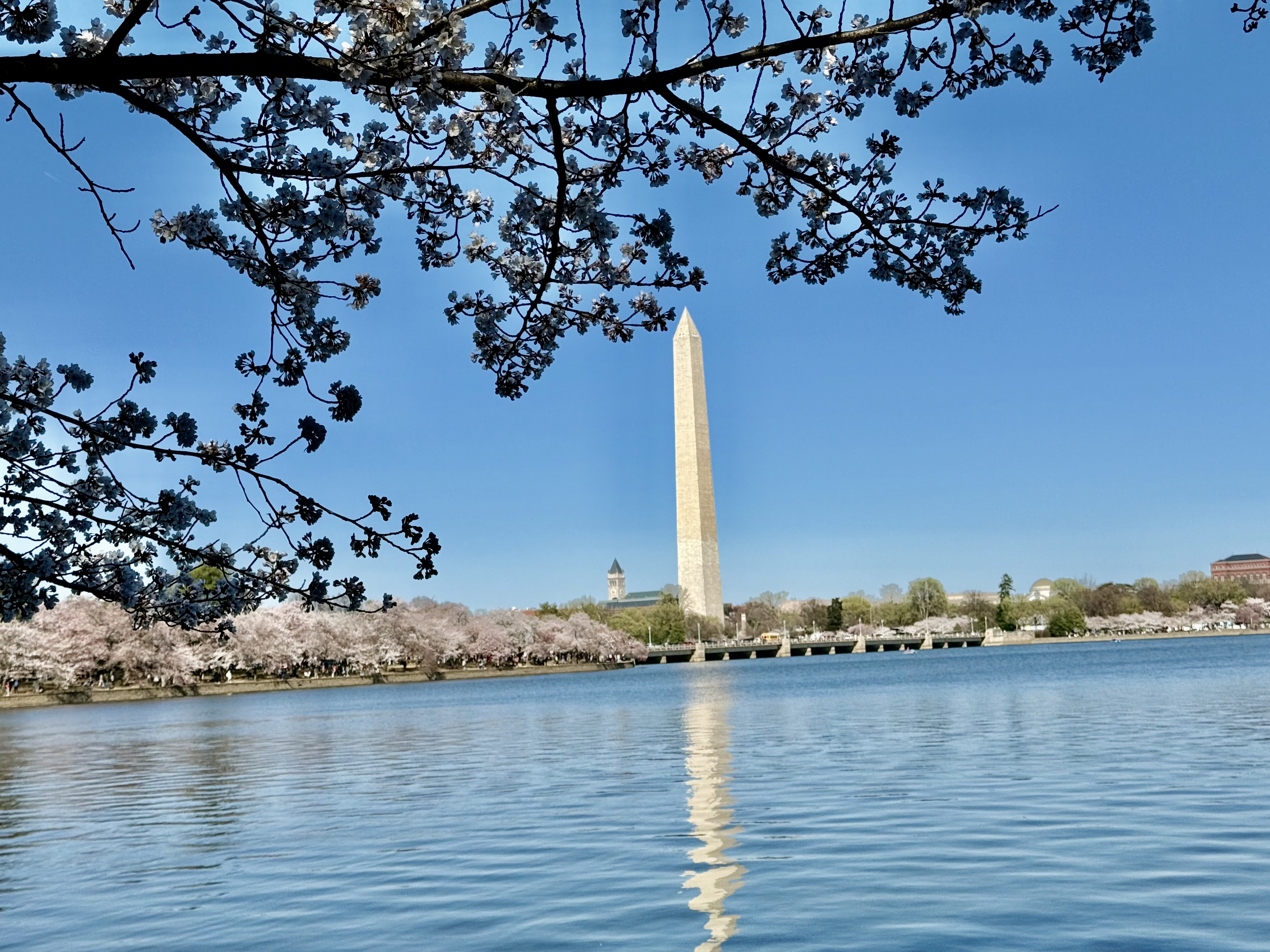
I could list the National Mall as a single tourist attraction, but that wouldn’t do justice to all the individual monuments and memorials. That’s why I’m highlighting them one by one, starting with the Washington Monument. This famous obelisk is no less than 169 metres high and dates from 1884. The monument stands freely on a small hill, making it visible from almost anywhere, and from the monument itself, you can look in any direction. On the west side of the National Mall, you will find it, with the 618-metre-long Reflecting Pool behind it, leading to the Lincoln Memorial. On the other side, you face Capitol Hill, and to the west, the White House.
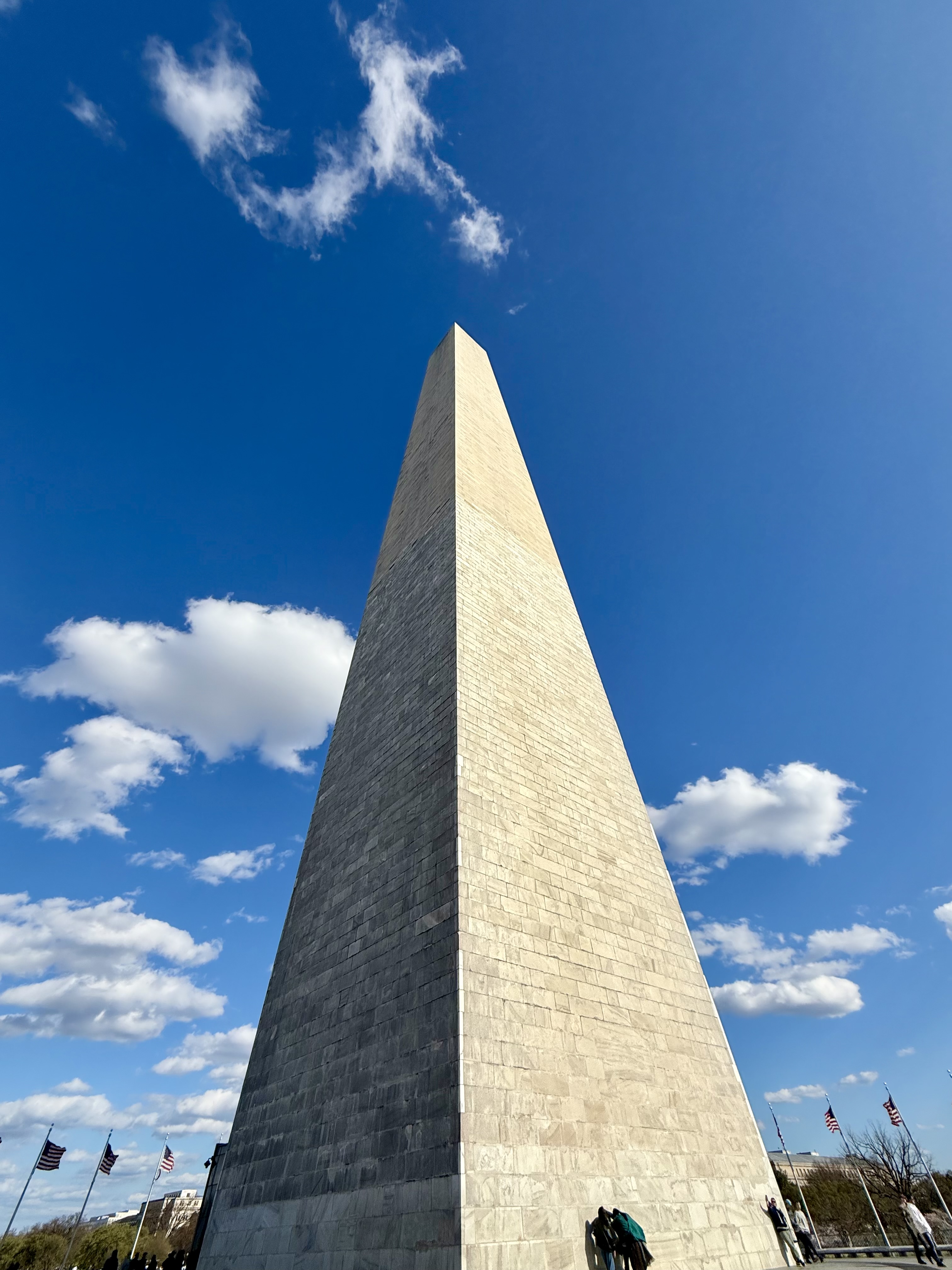
Note: You can also go inside the Washington Monument, but there are only a limited number of tickets available. These tickets can only be booked via the official U.S. government website, so act quickly – they are gone within a minute (I speak from unfortunate experience). Maybe that’s also because, just like at the Roosevelt Tramway in New York, people hope Tom Holland will crawl up the Monument as Spider-Man.
Great artists in Washington DC
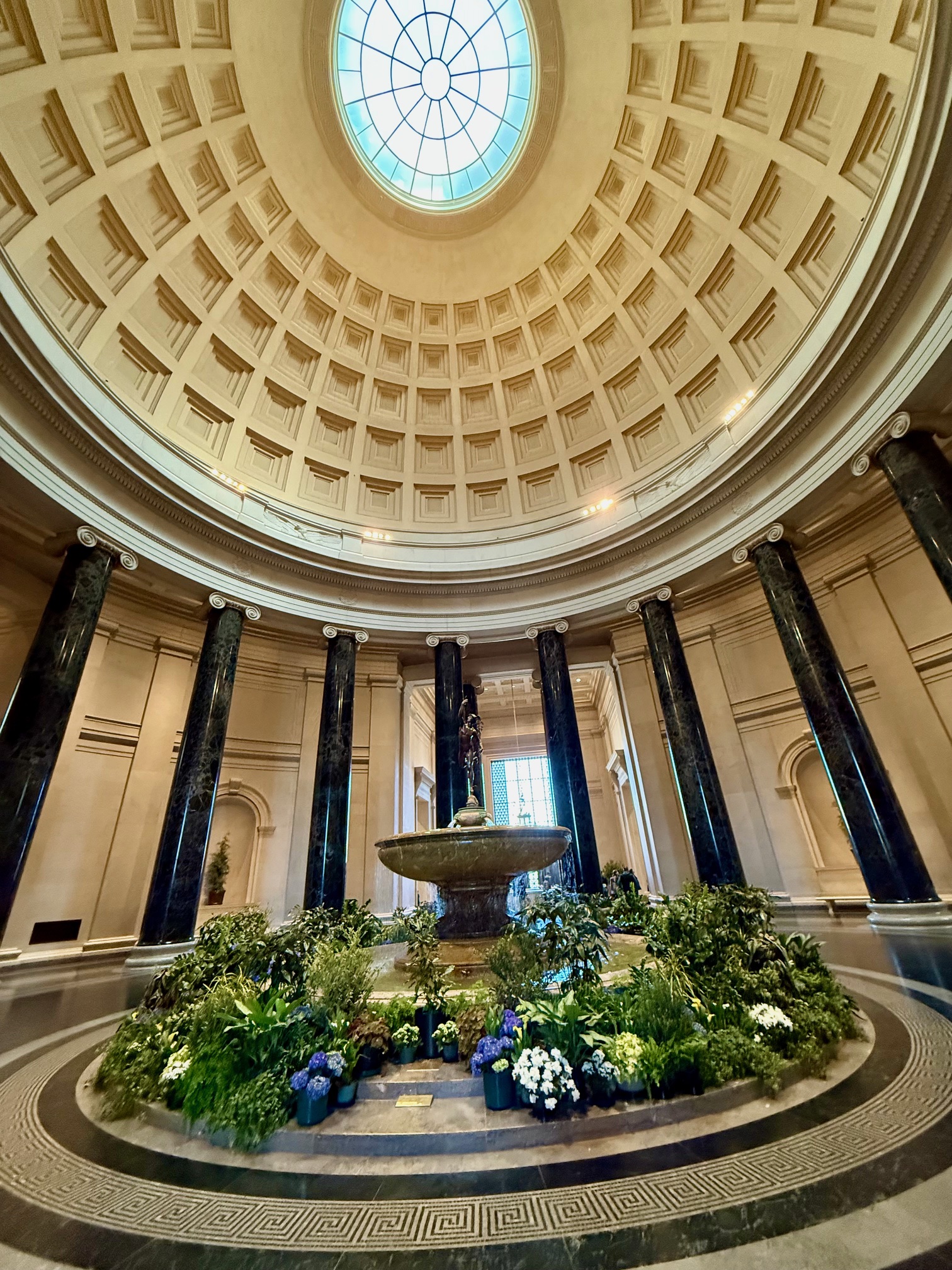
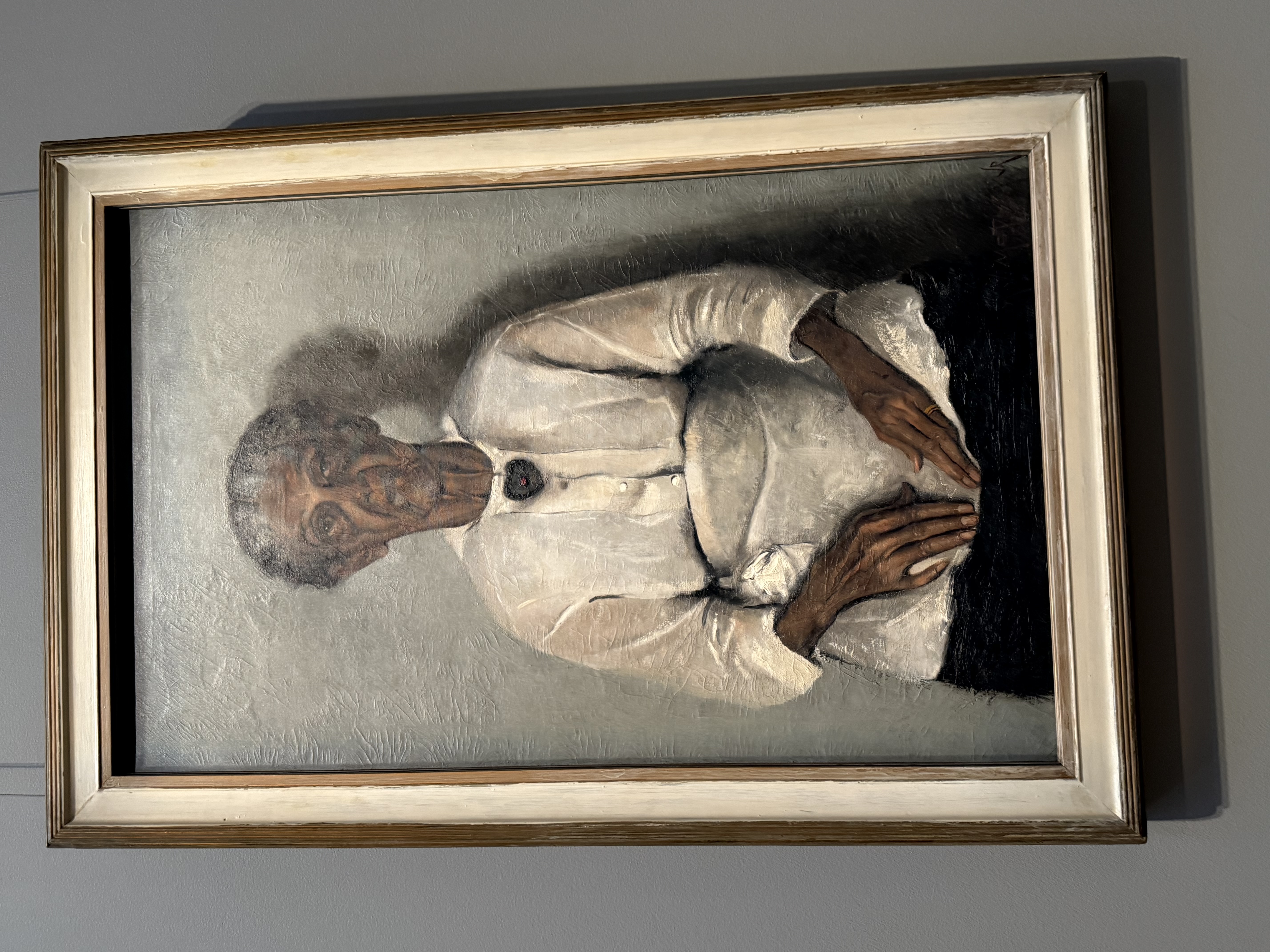
When you first see the main building of the National Gallery of Art (1941), you find yourself totally flabbergasted. It feels as if I have ended up in Rome or Greece, staring at a temple of some deity. And inside, the wonder does not stop, with the grand reception hall featuring a fountain and plants, and the high dome above your head. We did not visit the East Wing (1978) anymore, but this building has more of a geometric look.
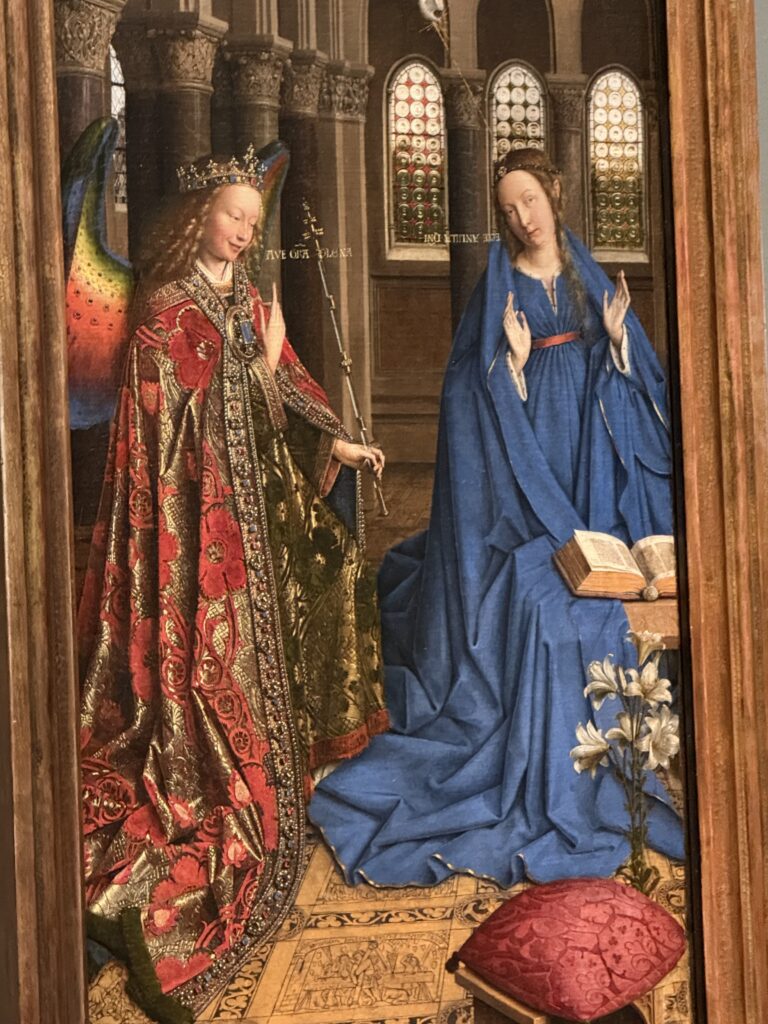
The National Gallery of Art contains around 150,000 works of art, ranging from paintings to sculptures, spanning from the Middle Ages to modern art. And… all free to view. As we only had a few days in DC and wanted to tick off the entire National Mall on this day, we limited ourselves to the masterpieces on display here. But you could easily spend hours enjoying famous names such as Da Vinci, Rodin, and our very own Mondriaan. You can also walk underground via a special tunnel illuminated with many LED lights to reach the East Wing.
If you’re a fan of Da Vinci, you should also book a trip to Florence, Italy. I think it’s fair to call that place the city of Da Vinci.
Night at the museum in Washington DC
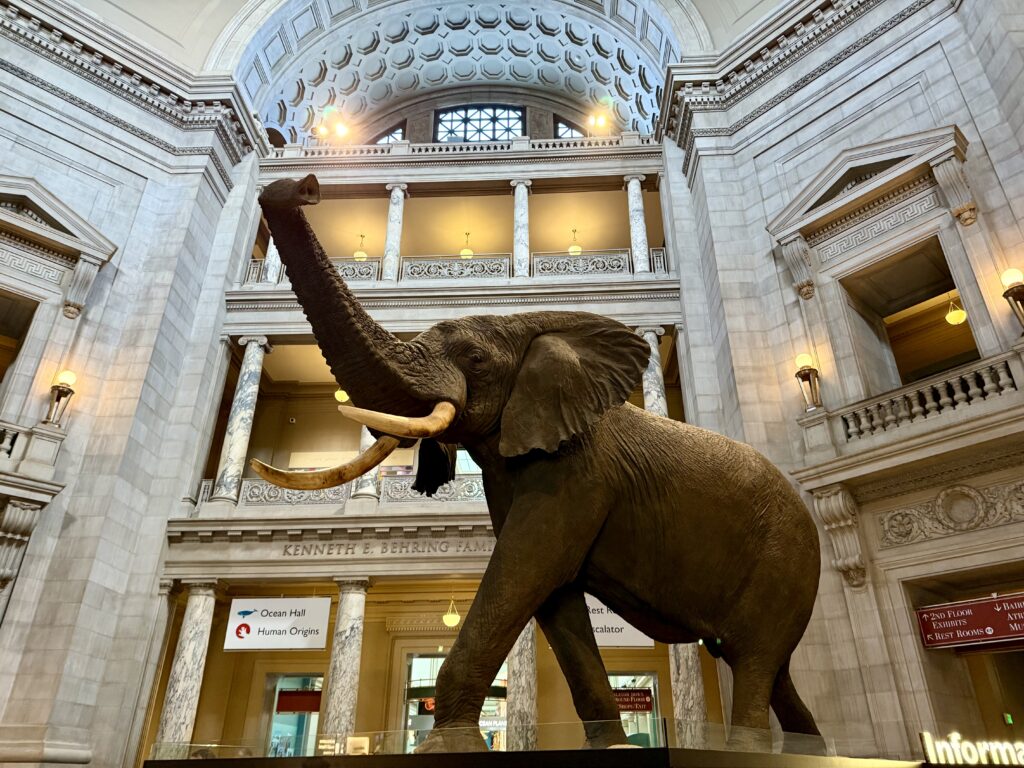
Although its little brother in New York became famous thanks to Night at the Museum, the second part of this popular film starring Ben Stiller is set in the National Museum of Natural History in Washington! The National Museum of Natural History is part of the overarching Smithsonian and is, once again, free to visit. The museum opened its doors back in 1910 and also has a neoclassical touch, resembling the Pantheon in Rome. Only this dome has a greenish hue (spot the differences).
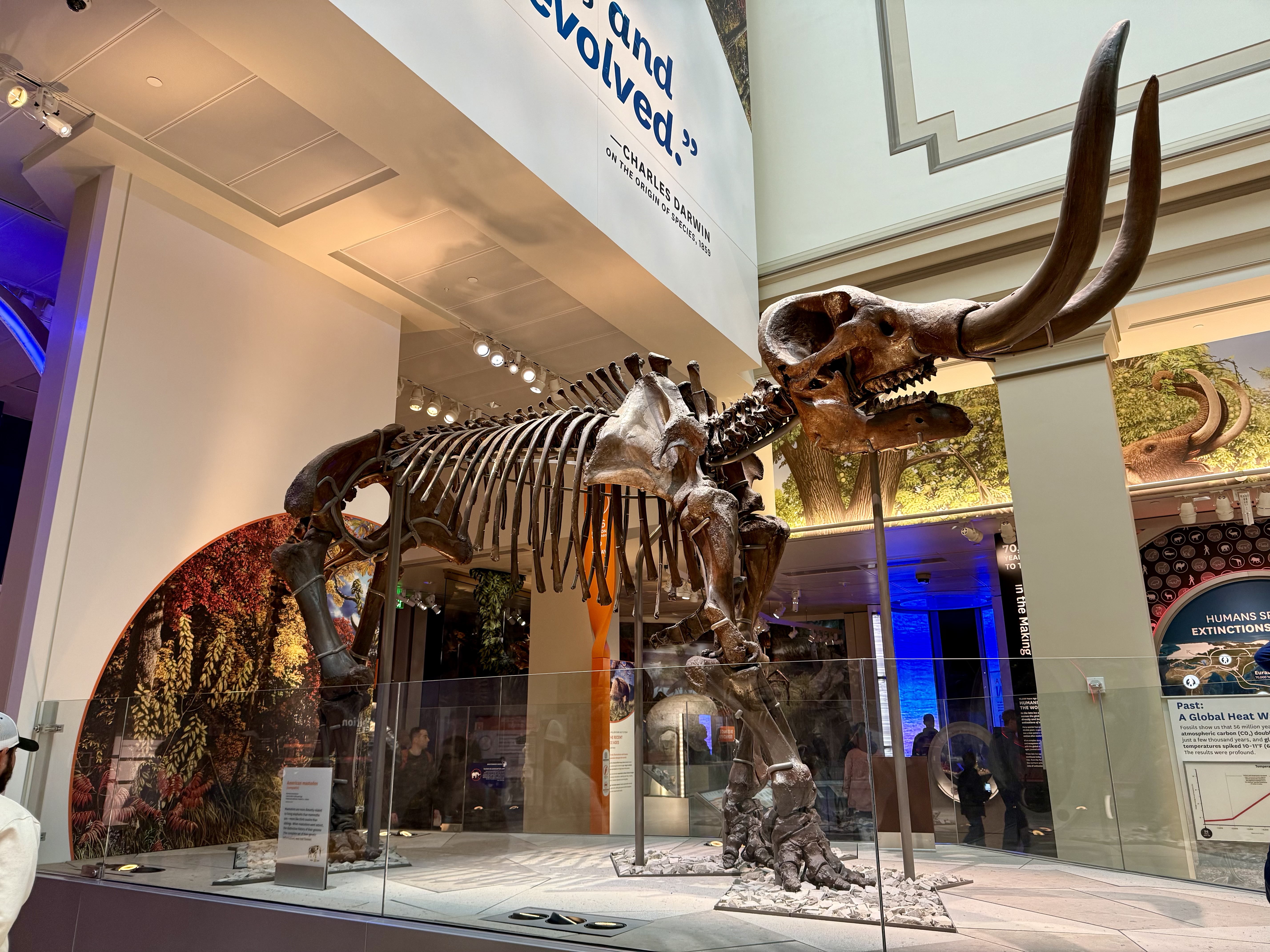
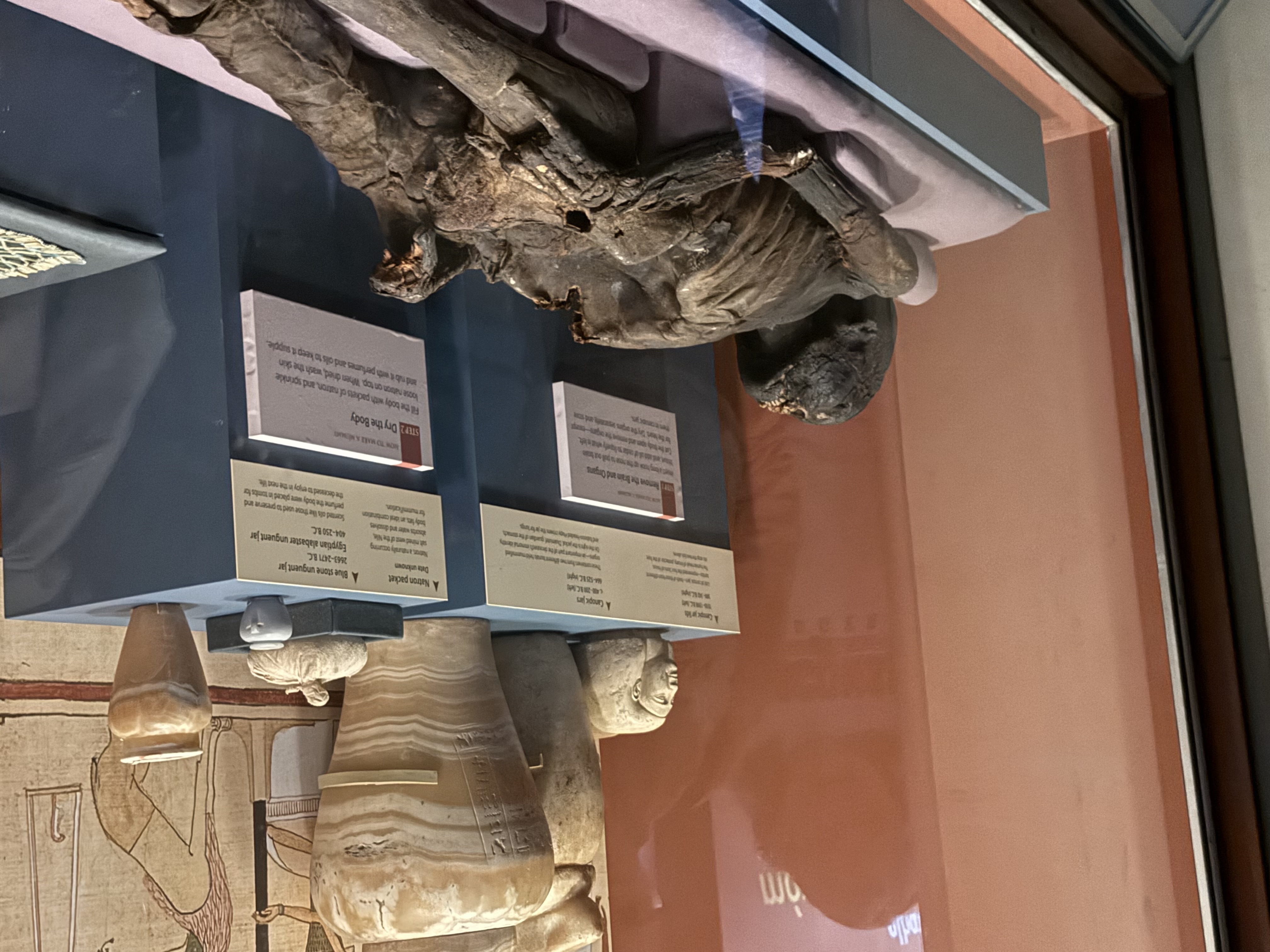
At the National Museum of Natural History, a big mounted African elephant greets every visitor, and there are many more mounted animals – in fact, there is an entire section dedicated to them. But you will also find stunning gemstones, diamonds, and minerals (I would never get my mother to leave this place), dinosaur skeletons, plant fossils, insects, and even mummies.
Tip: enjoy lunch in the museum. I noticed there are few lunch or coffee spots on or directly around the National Mall. Granted, we were there at the end of March, so maybe that played a role. But as my travel companion has diabetes, it was handy to make use of the museum restaurants. The one at the National Museum of Natural History is especially recommended.
56 states of America?
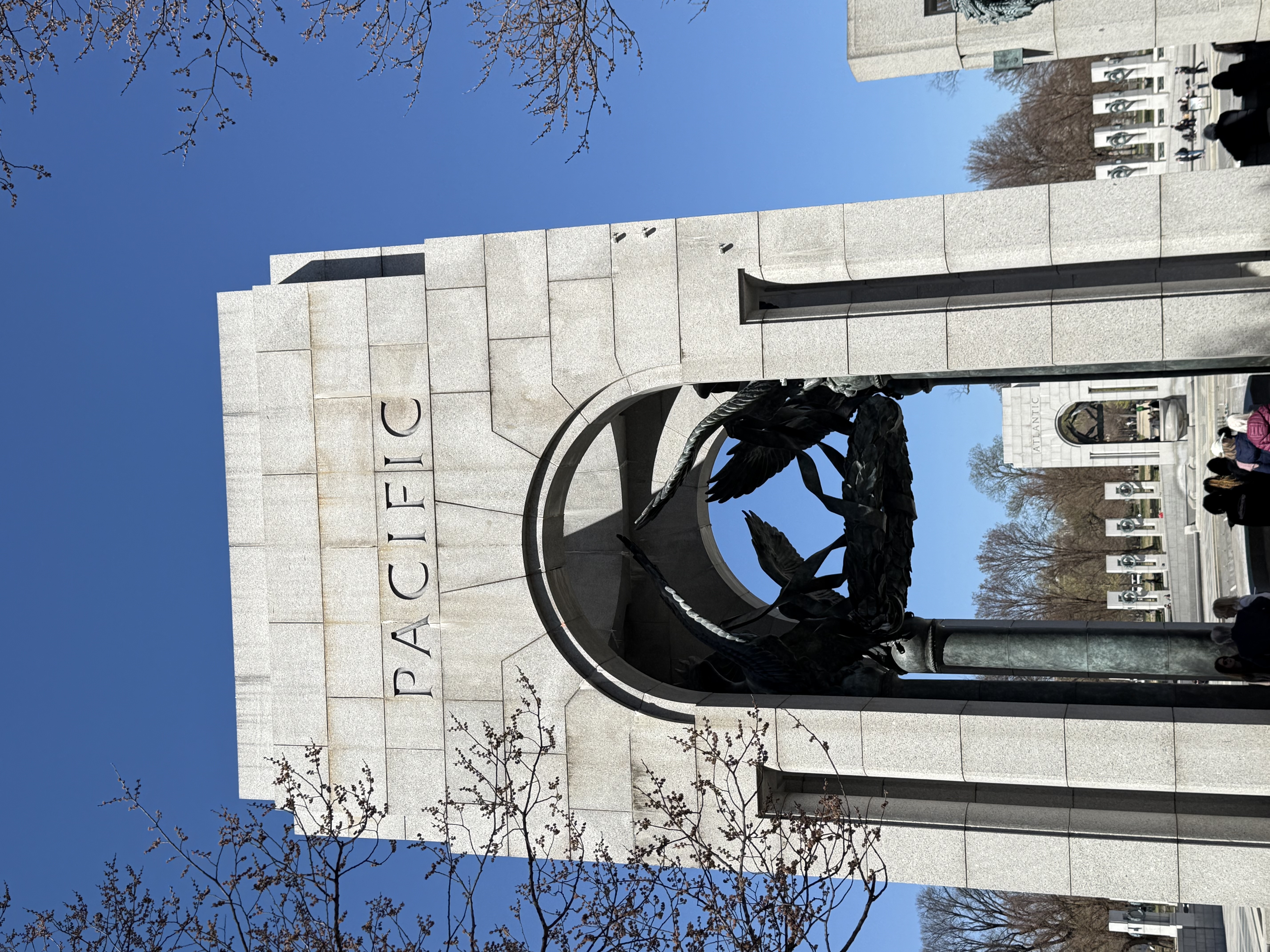
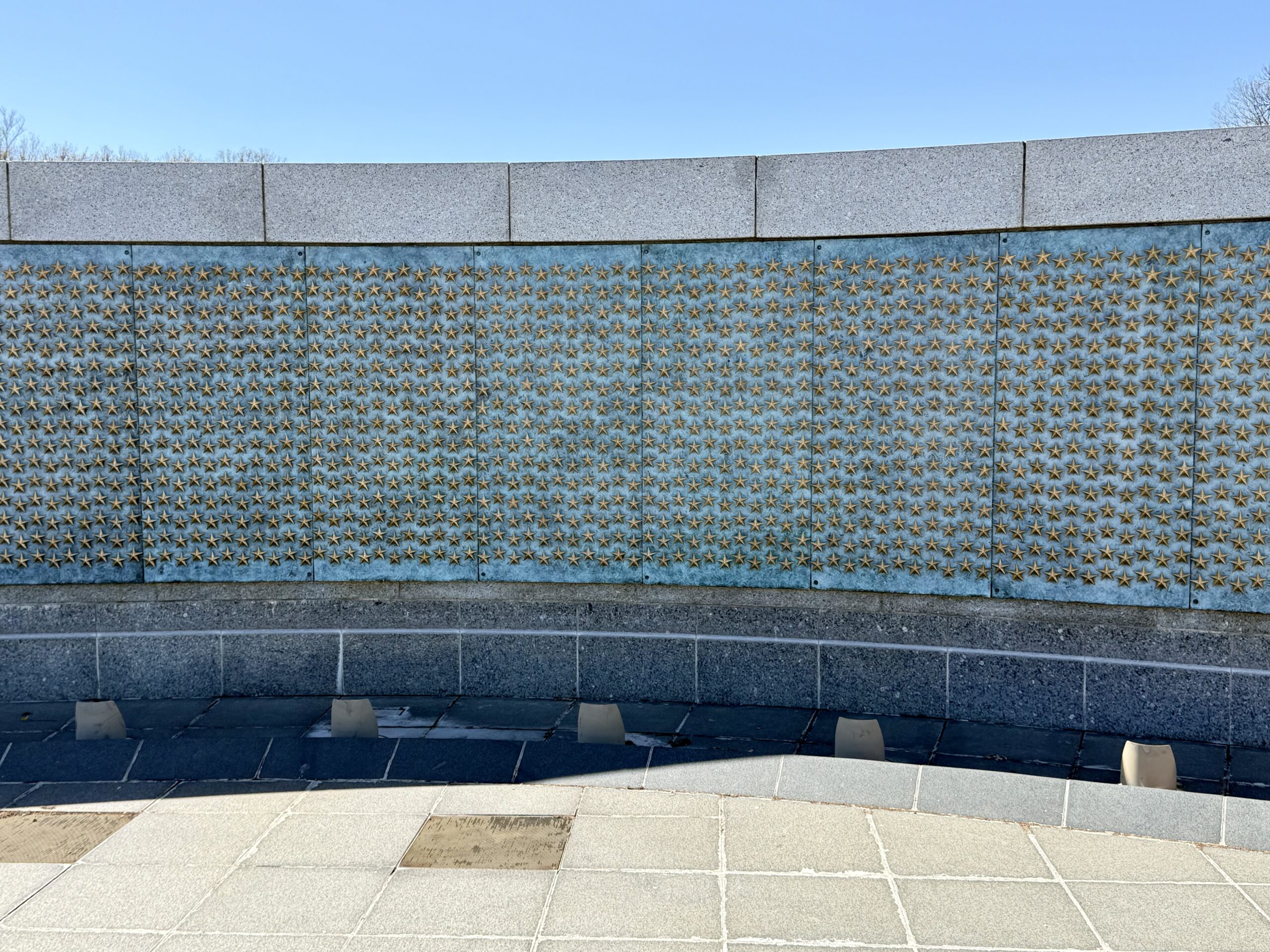
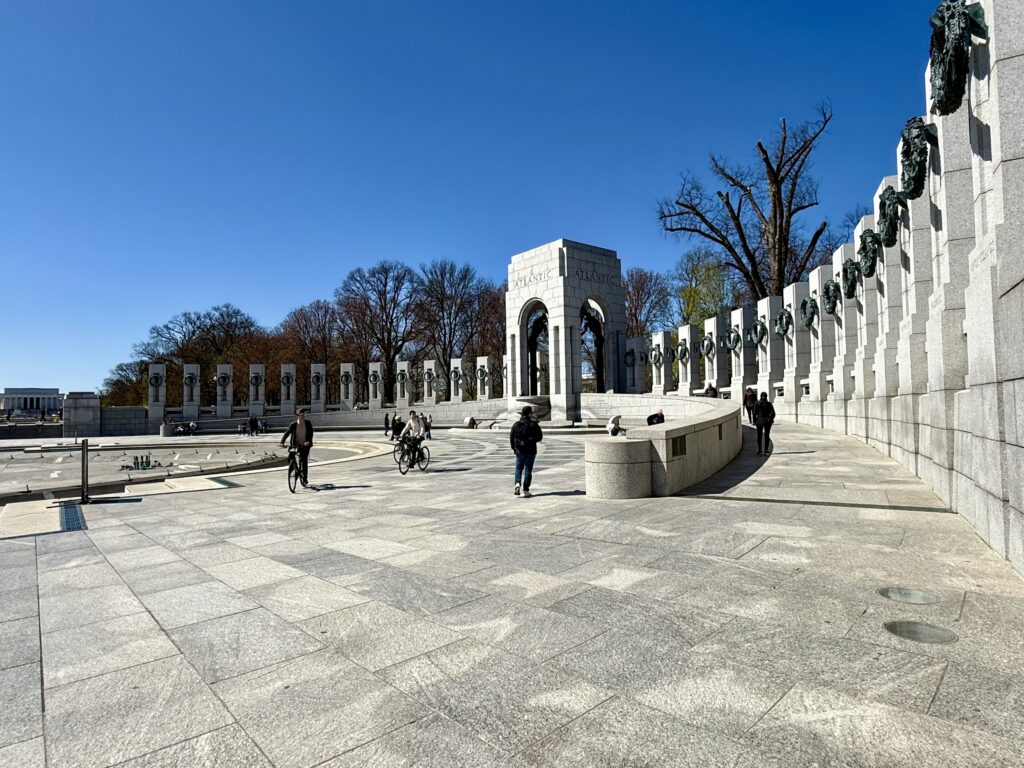
And then, walking from all the museums, you almost end up in an outdoor museum: the World War II Memorial. Again – it was larger than expected. I always imagine a memorial or monument like we have here: a statue with a commemorative plaque and an inspiring quote. But as with everything in America: a memorial or monument is huge and over the top. The same goes for the World War II Memorial. It is essentially one large circle consisting of 56 pillars: representing the 56 states of the United States at the time. The impressive fountain and small waterfalls offer you a moment of calm and reflection.
Look with President Lincoln over the Reflecting Pool
When I talk about memorials on the National Mall, most people will probably name the Lincoln Memorial first. Between the Washington Monument and the Lincoln Memorial lies the famous Reflecting Pool, a long pond measuring 618 metres in length (see? Big really is big in America). In the Reflecting Pool, if the sun is at the right angle, you will see the Washington Monument beautifully reflected – perfect for that photo opportunity.
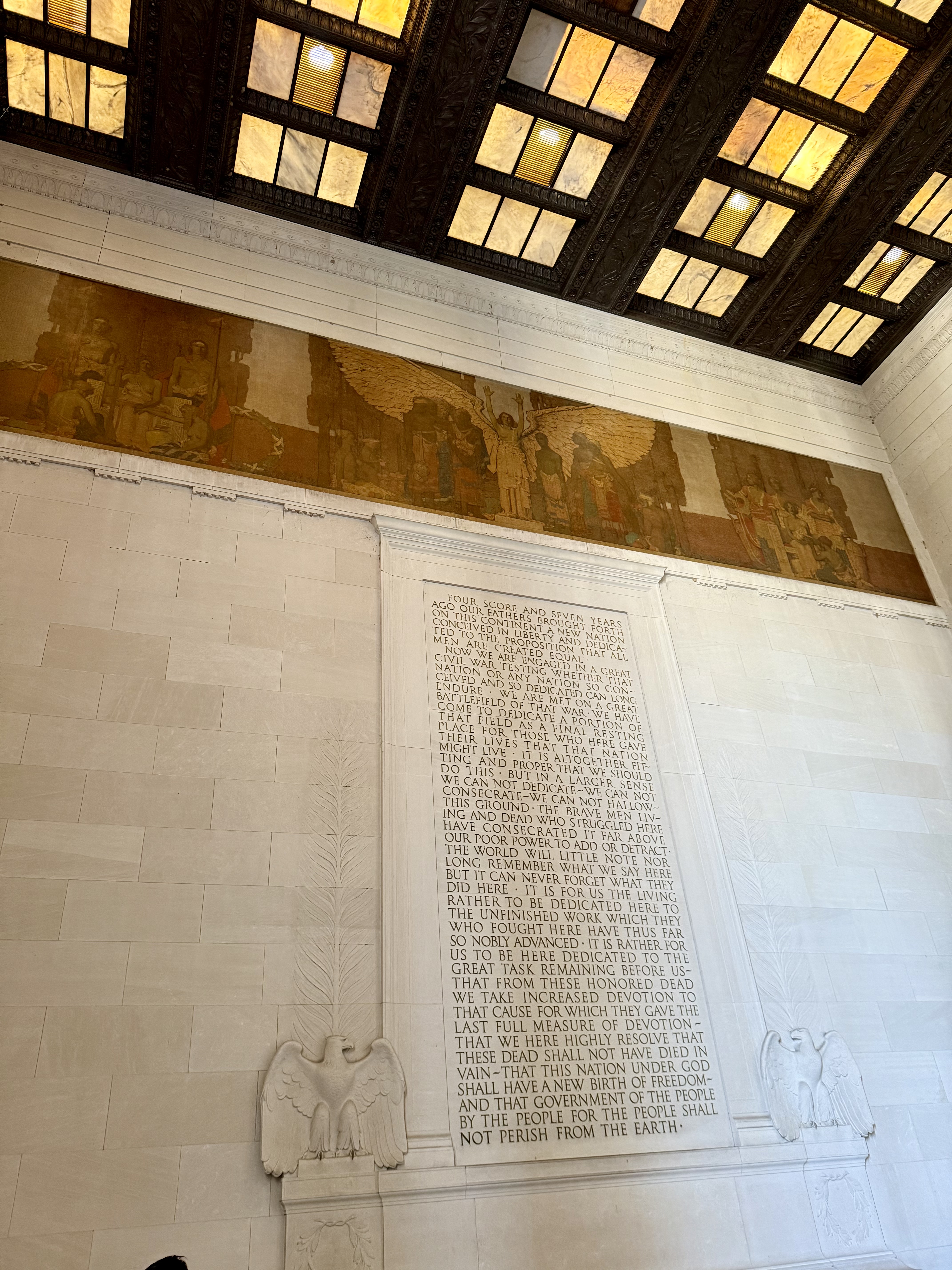
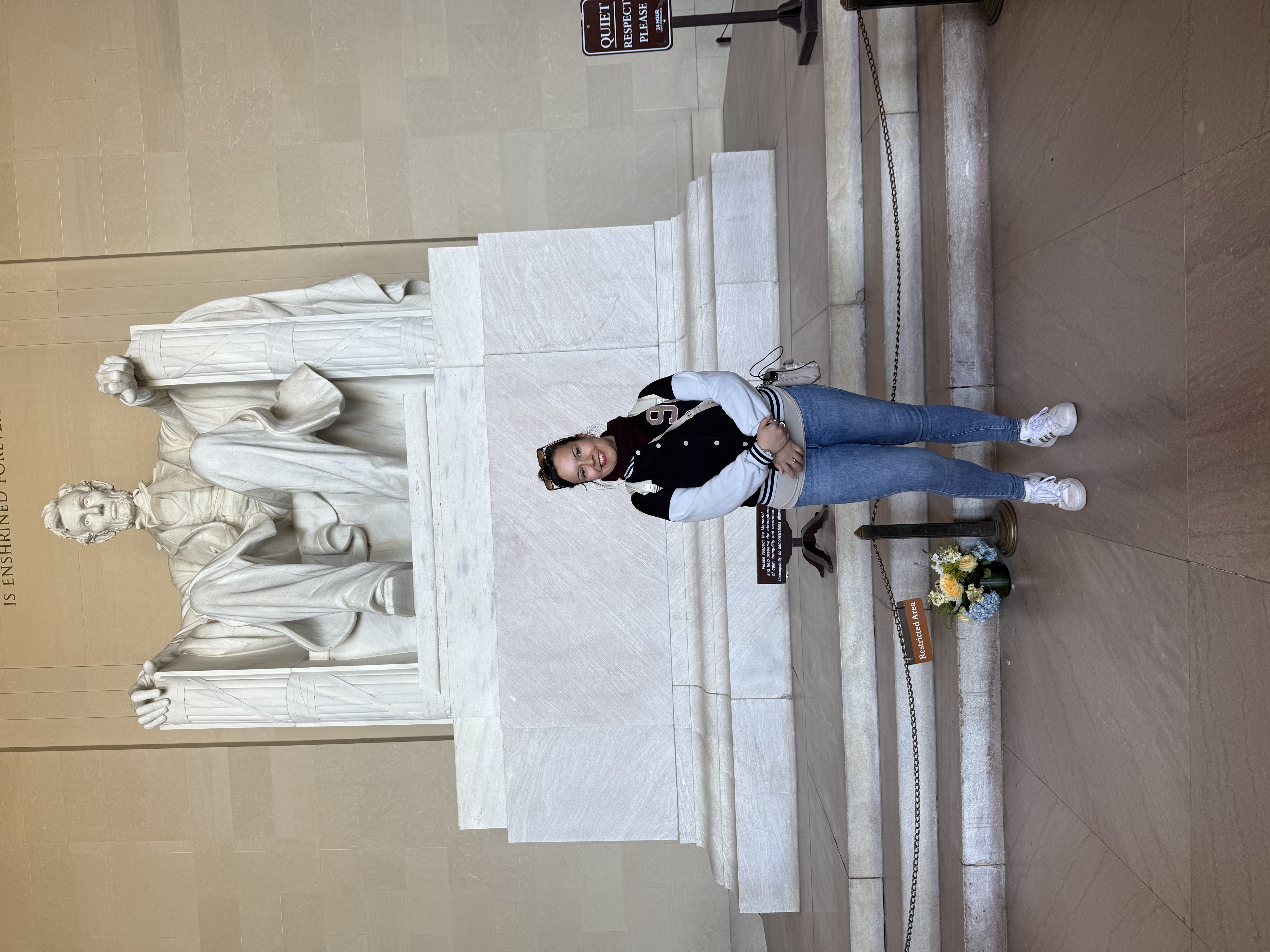
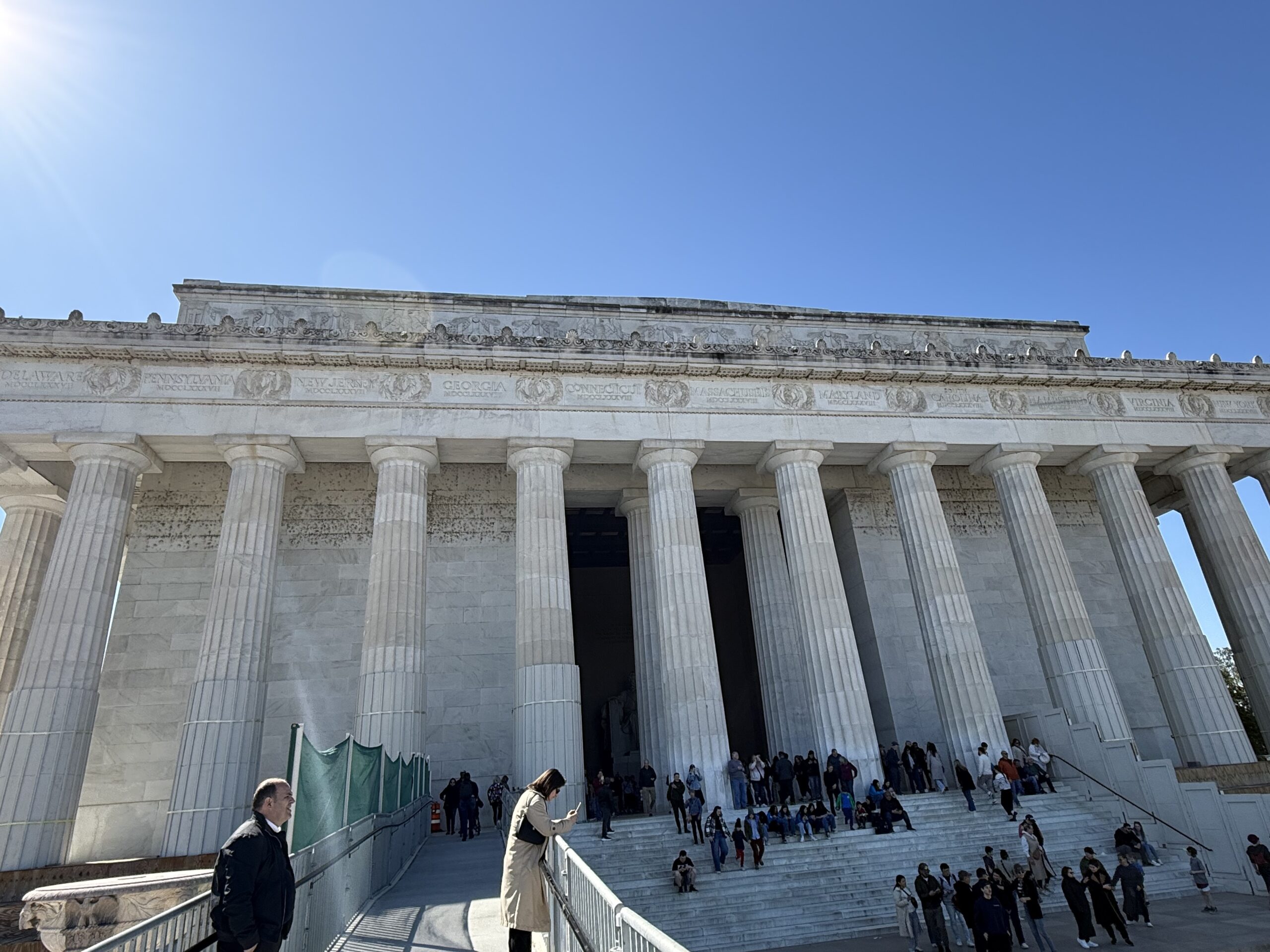
Back to the Lincoln Memorial. That this Memorial is the most famous on the National Mall is not surprising, as President Lincoln was important to the US on two fronts. He reunited the divided country after the Civil War and abolished slavery. No wonder that in the temple-like space (which resembles the Parthenon in Athens) you can admire an enormous statue of a seated and contemplative Lincoln, with inspiring quotes from his speeches engraved on the walls.
Remember both men and women of the Vietnam War!
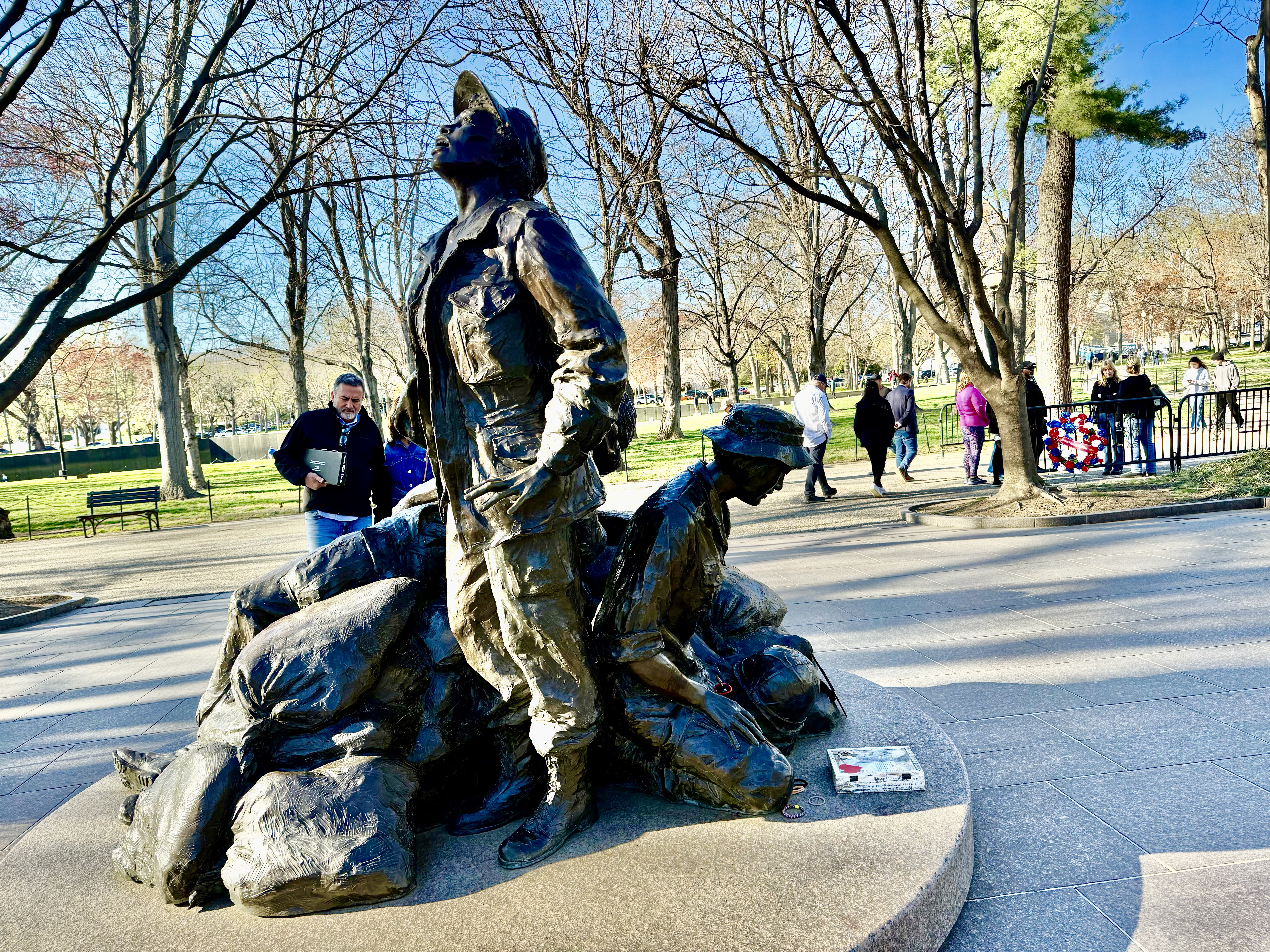
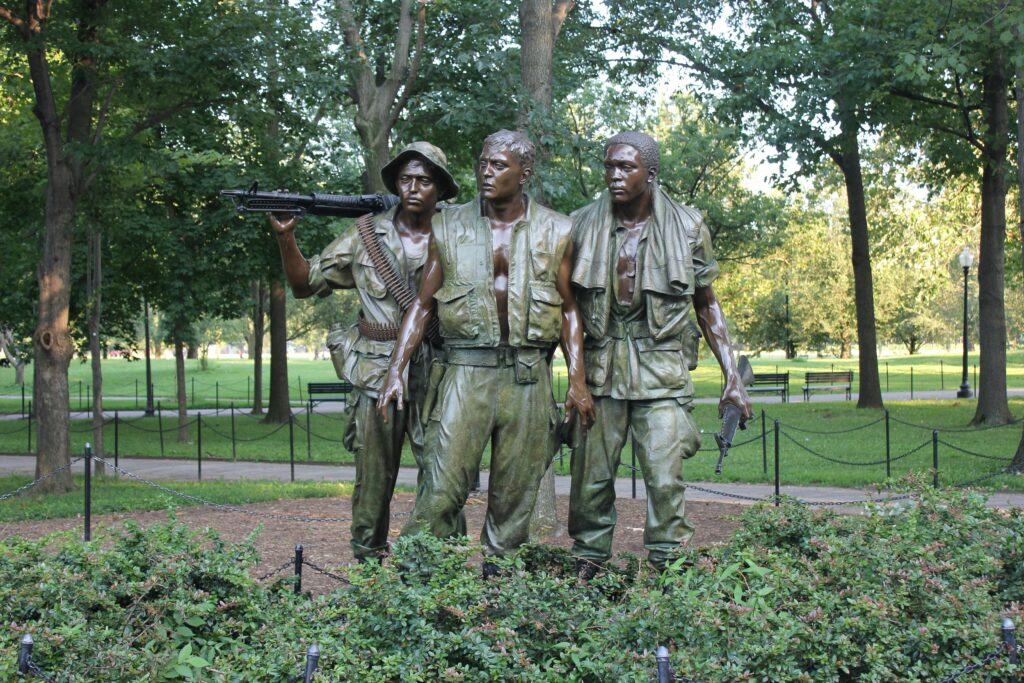
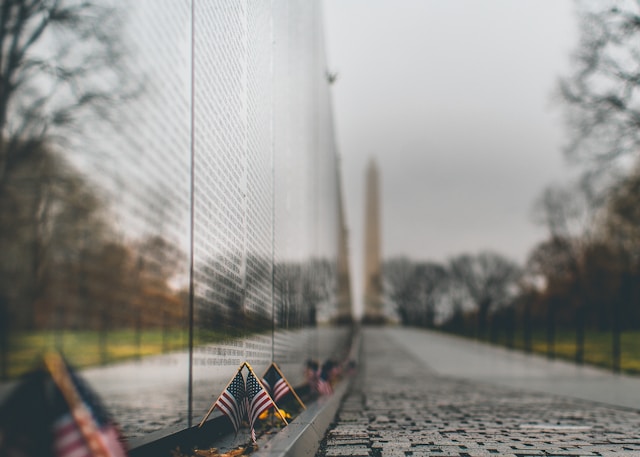
The Americans, of course, played a huge role in the Vietnam War, where many soldiers lost their lives. Another memorial I want to highlight is the Vietnam Memorial, which actually consists of two parts: the Vietnam Veterans Memorial (which most people know) and, a little further on, the Vietnam Women’s Memorial. The Vietnam Veterans Memorial is striking in its simplicity and consists of a long black granite wall with the names of the 58,318 fallen American soldiers. The memorial is located next to the Lincoln Memorial, so you can hardly miss it. The wall is 75 metres long and, at its widest point, 3 metres wide. At this widest point, the wall forms an angle of 125 degrees, creating the letter V for Vietnam.
The Vietnam Women’s Memorial, built in 1993, is a one-minute walk from the Veterans Memorial and was created to honour all 265,000 female civilians and soldiers who played a role in the Vietnam War. It is the first and only memorial on the National Mall dedicated to female military personnel.
Freedom is not free
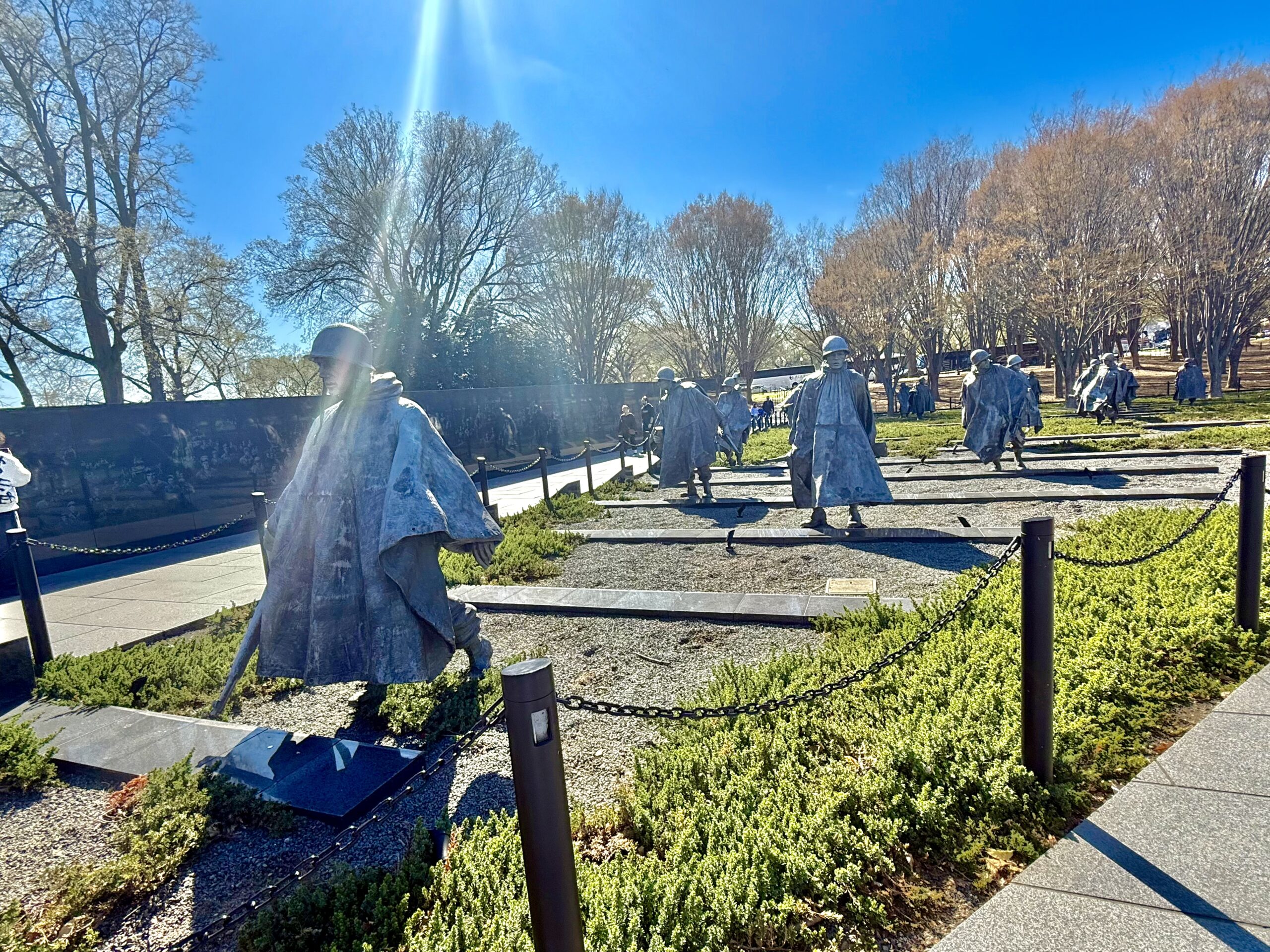
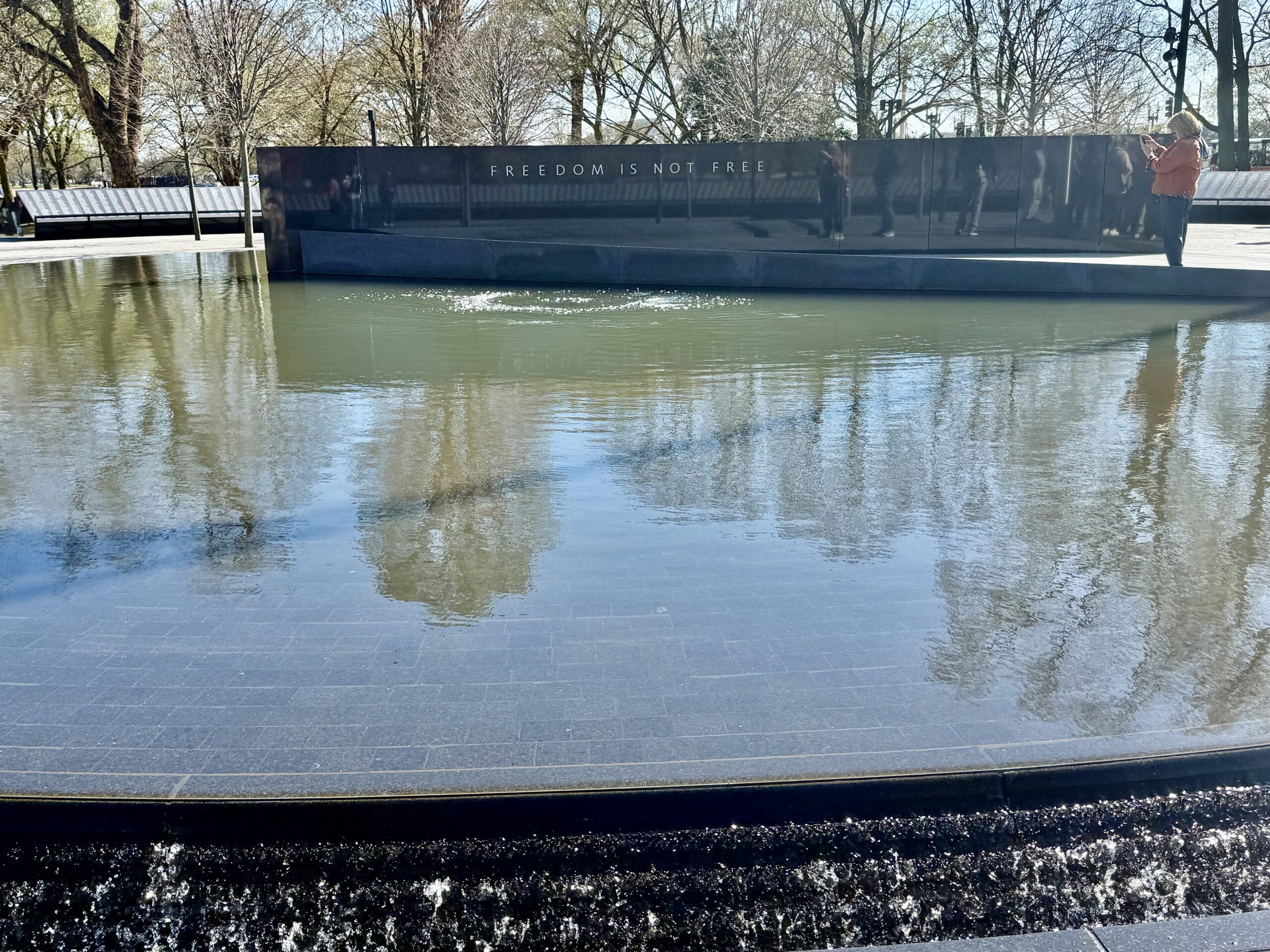
A war-loving nation, those Americans, because we found yet another war memorial: the Korean War Veterans Memorial. This memorial is located east of the Lincoln Memorial and commemorates all American soldiers who fought in the Korean War. It was established in 1995, after the Congress approved it in 1986. From above, the monument forms a triangle (with marching soldiers) intersecting a circle. The circle contains the Pool of Remembrance: a shallow pond with a diameter of 9 metres. At the back wall of the pool you’ll see the numbers of American dead, wounded, missing, and prisoners of war inscribed in the black granite border.
Note: “Freedom is not free” is inscribed on the Korean War Veterans Memorial, and perhaps we should reflect on those words more often these days.
A memorial amidst blossoms
President Thomas Jefferson also has his own memorial on the eastern side of the National Mall. It stands by the large Tidal Basin, which (lucky us) was filled with pink blossoms when we visited. Jefferson’s memorial has a dome-shaped structure and can be seen shining from the other side of the Tidal Basin. Thomas Jefferson was the third president of the US. He played a key role in the Declaration of Independence, which he wrote.
Did you know? The monument is made from six different types of white stone, sourced from six different states connected to Jefferson’s presidency.
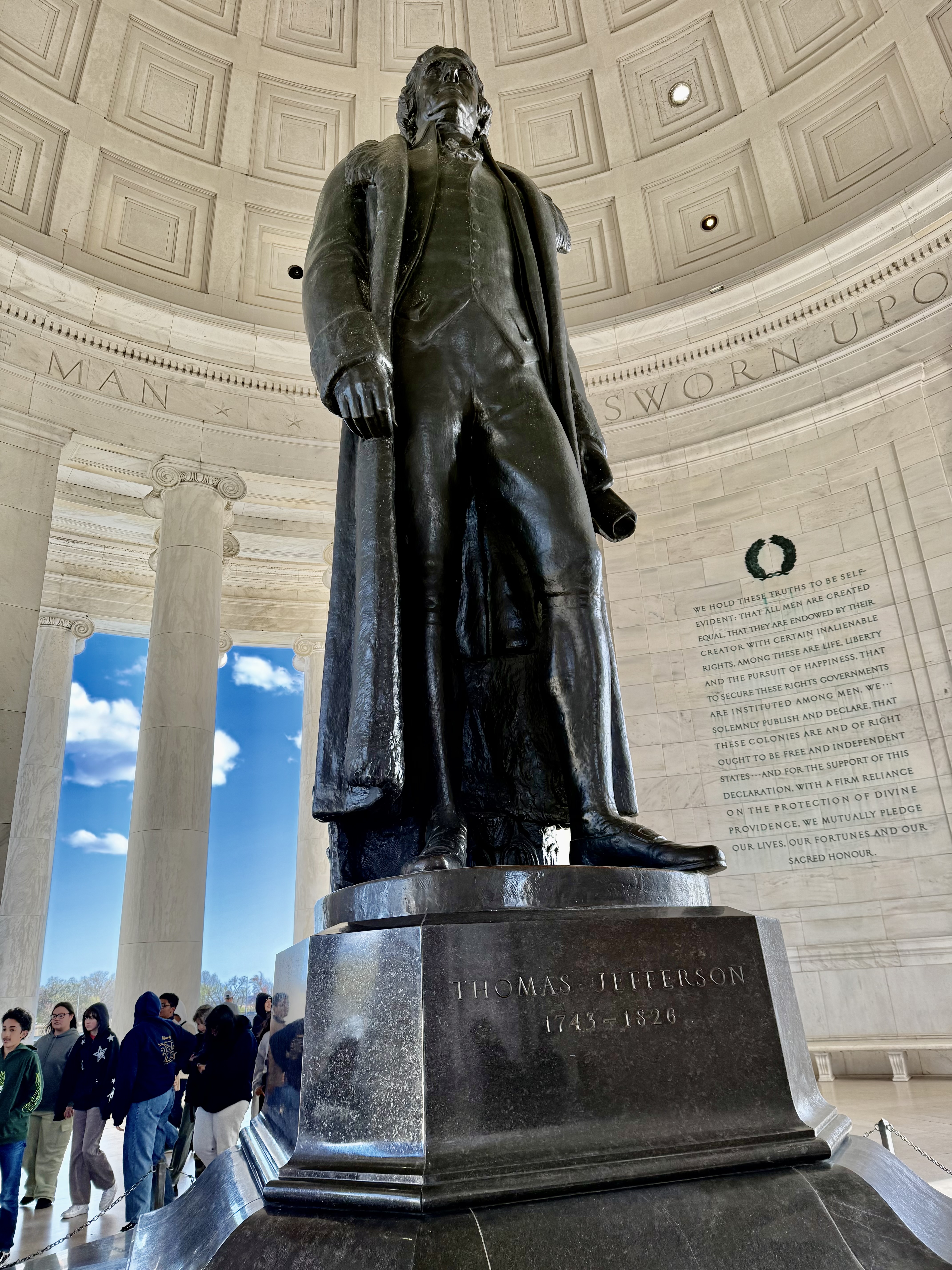
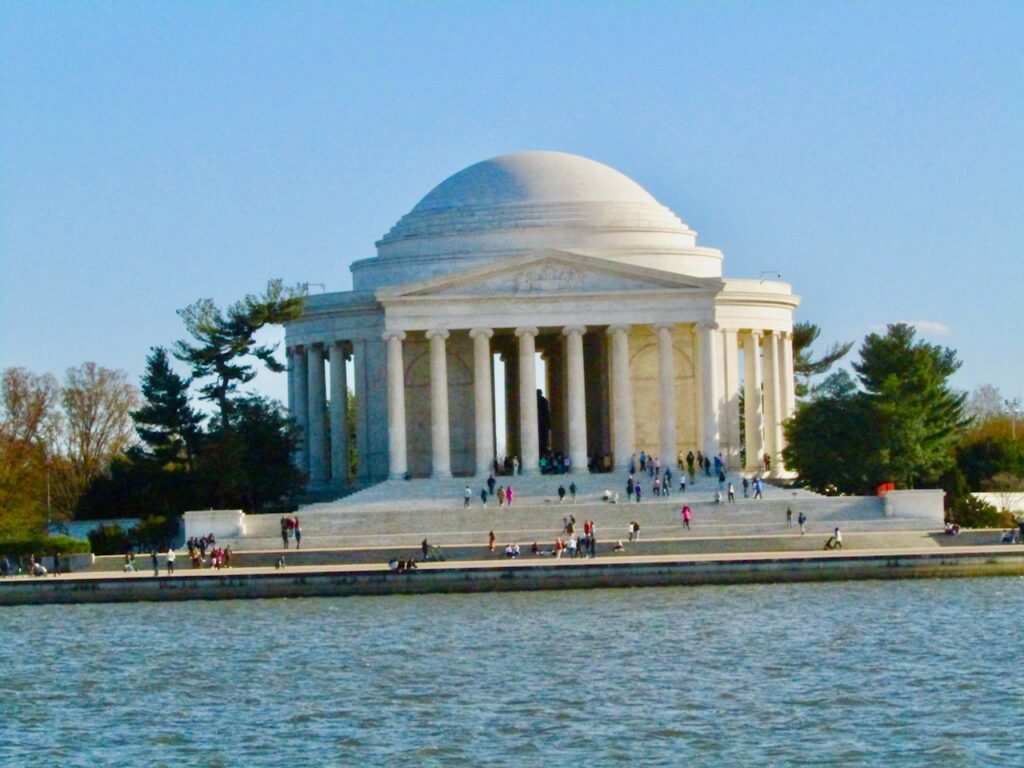
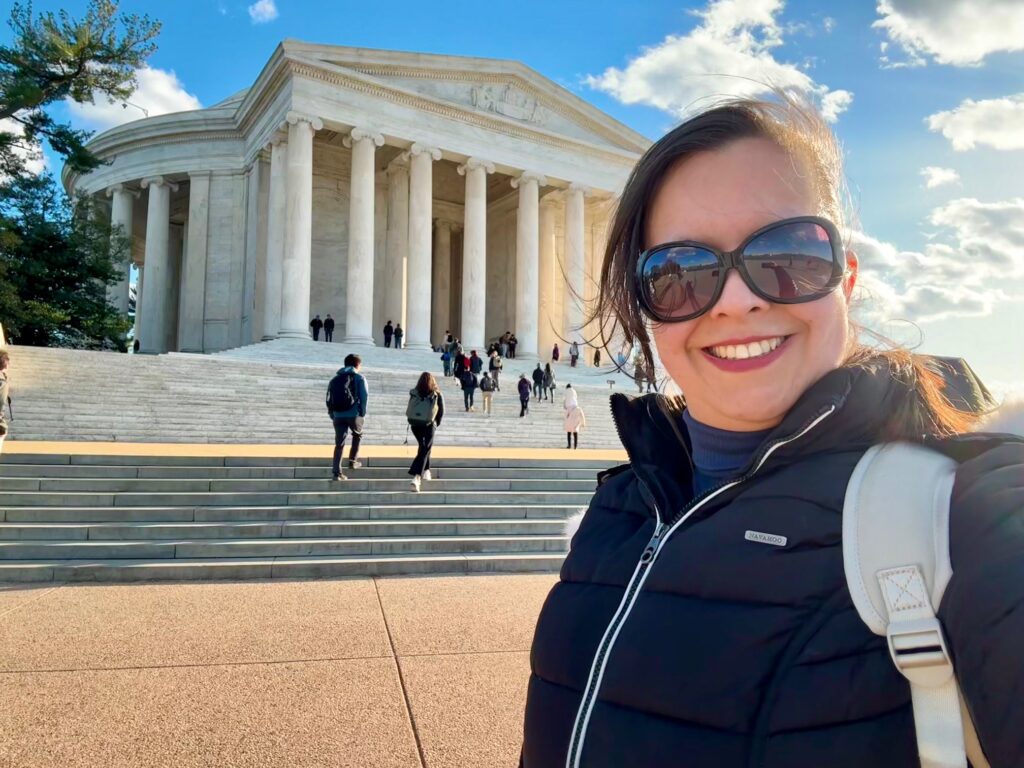
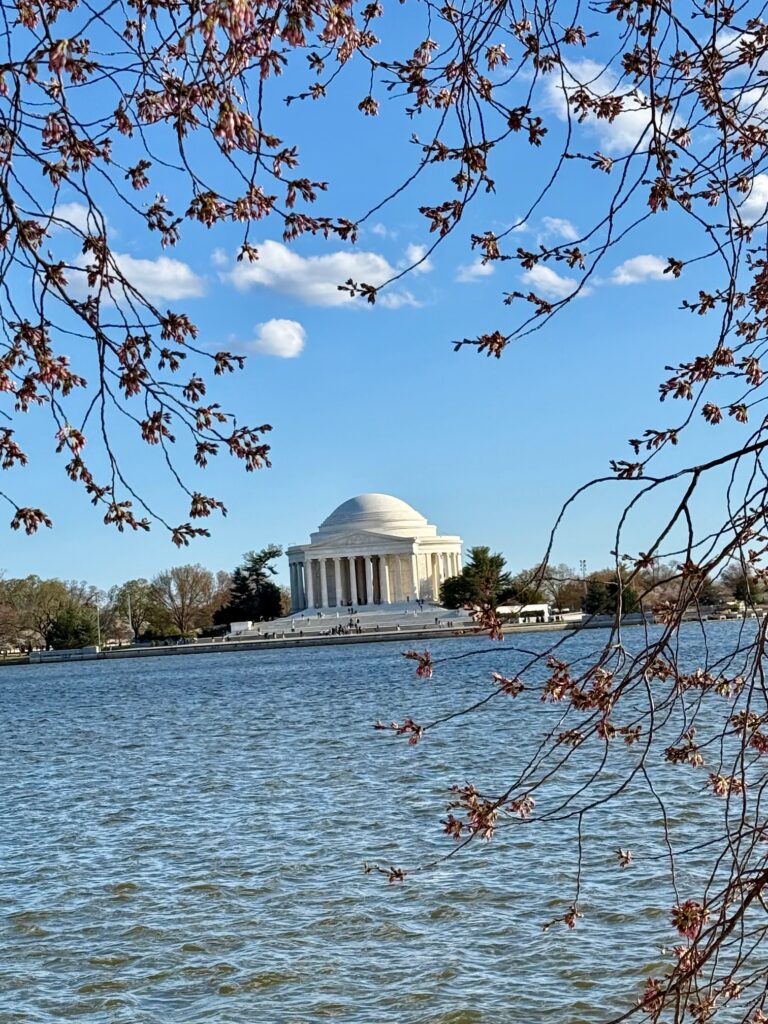
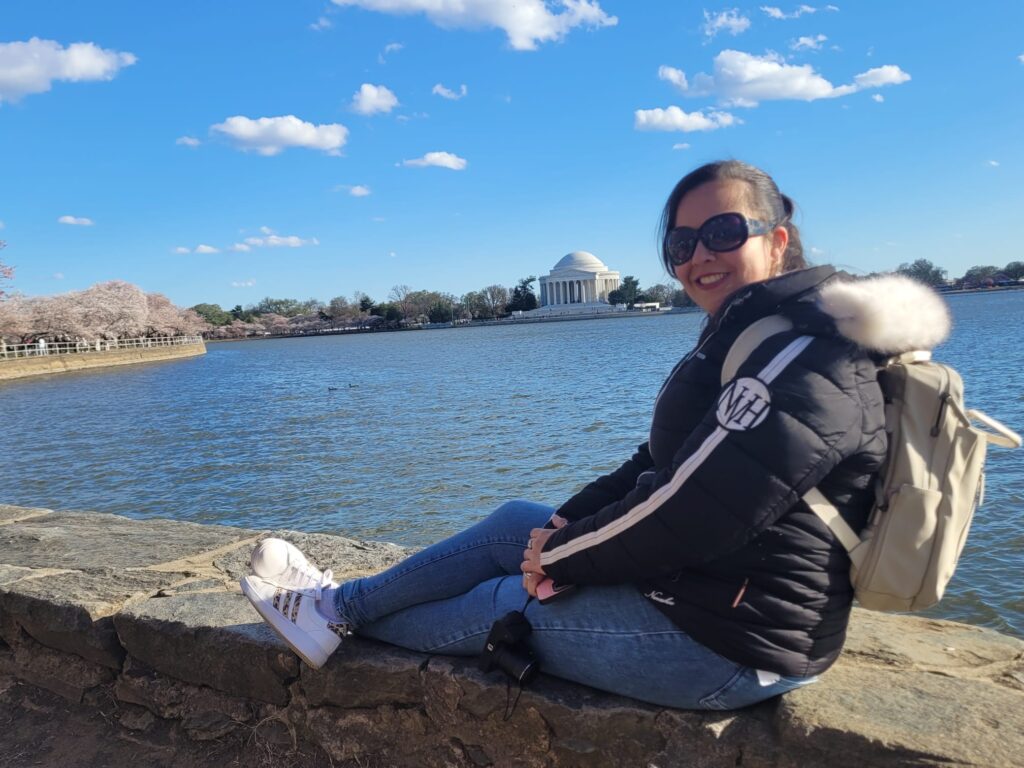
As you enter the memorial, you see a bronze statue of the president. He holds the Declaration of Independence in his hand. Parts of the declaration you’ll see engraved on the wall. Don’t walk straight out afterwards . You can also take stunning photos here of the Washington Monument above the blossoms, reflected in the Tidal Basin.
It’s all about the dog really
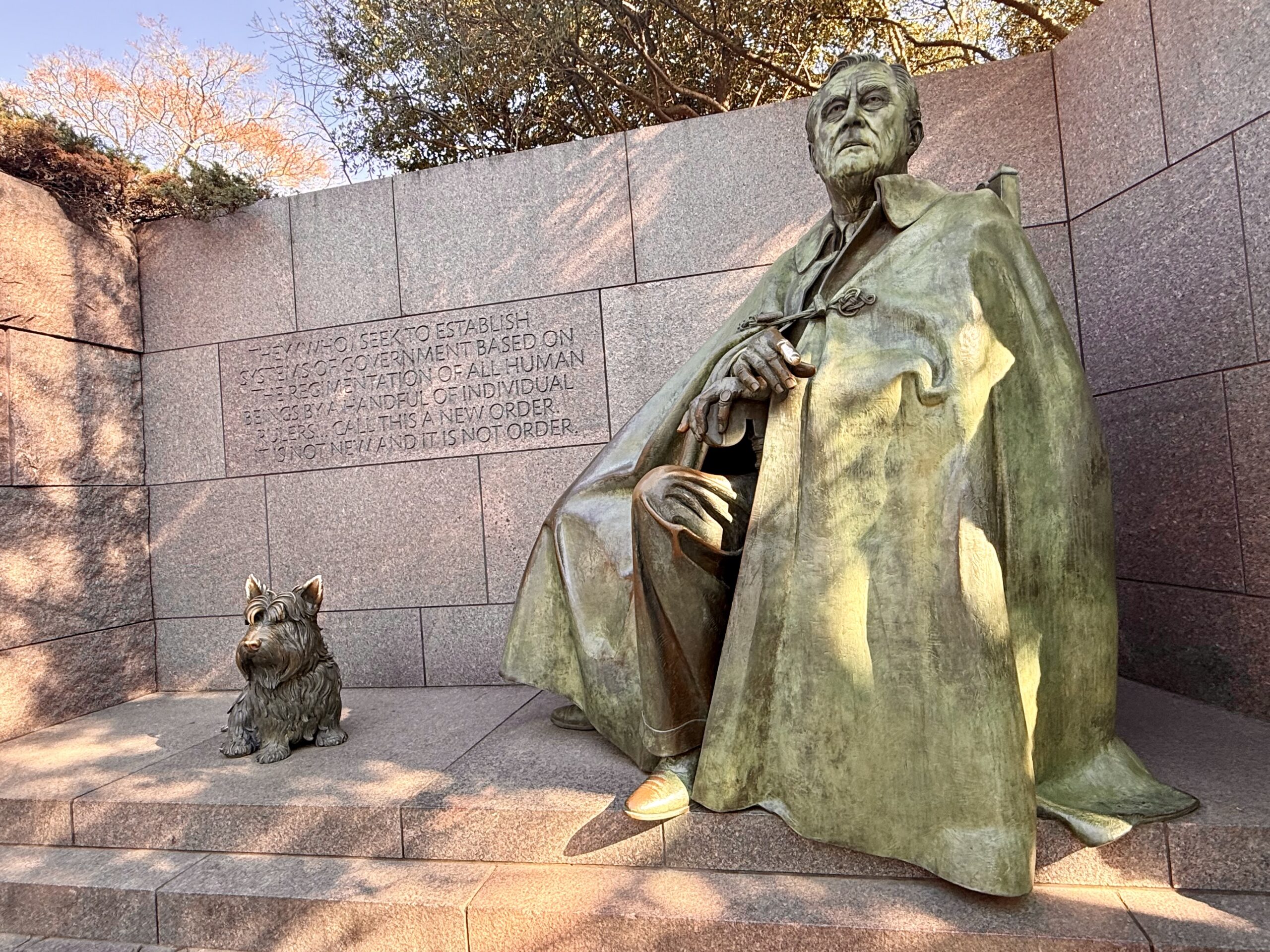
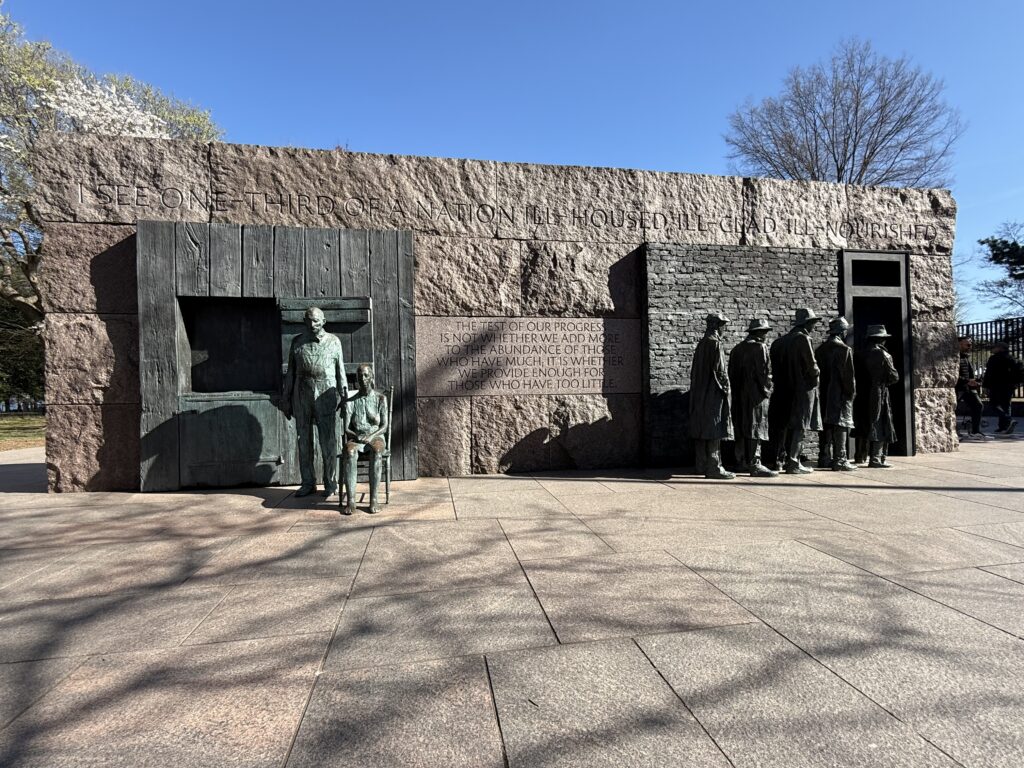
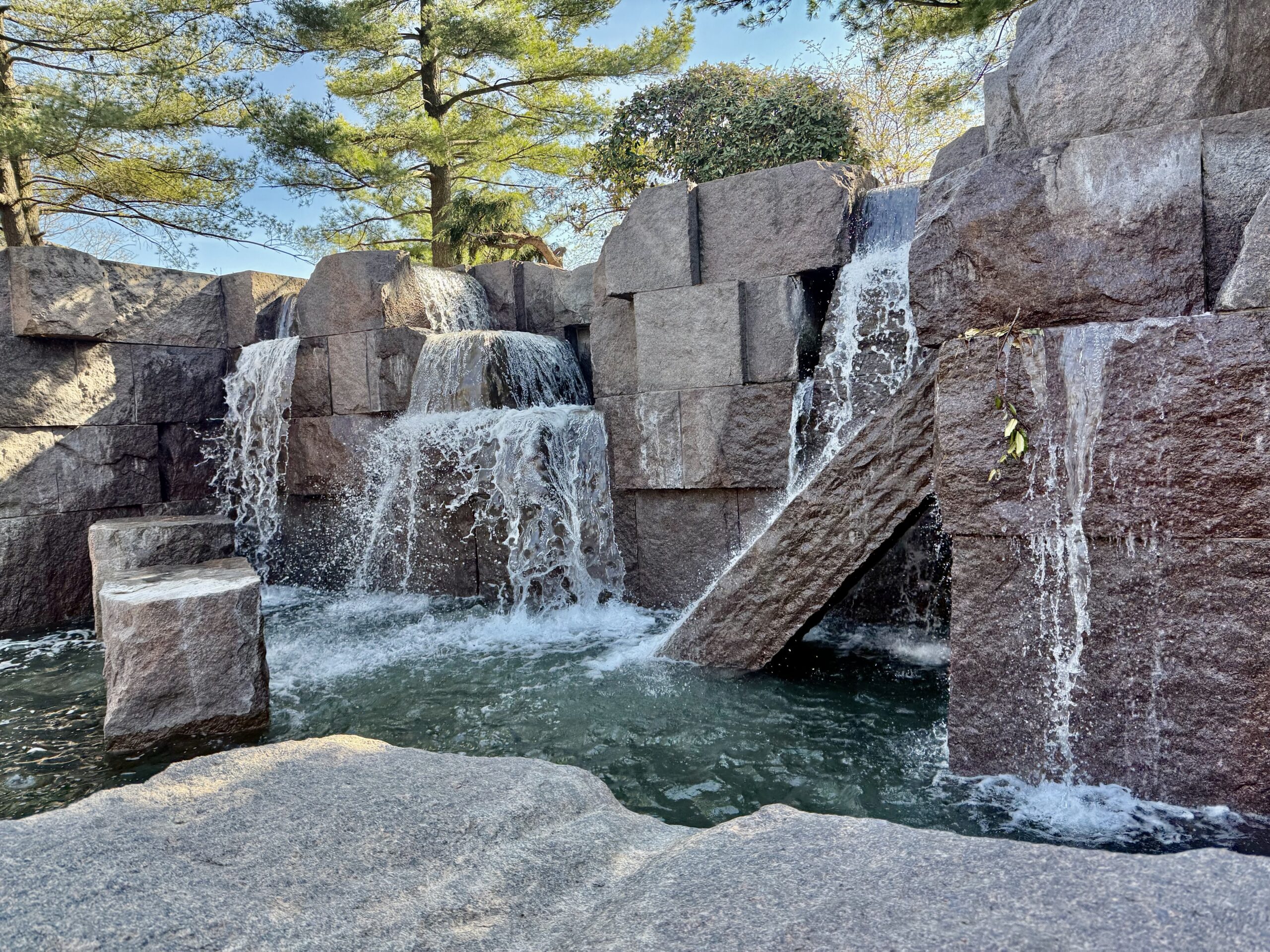
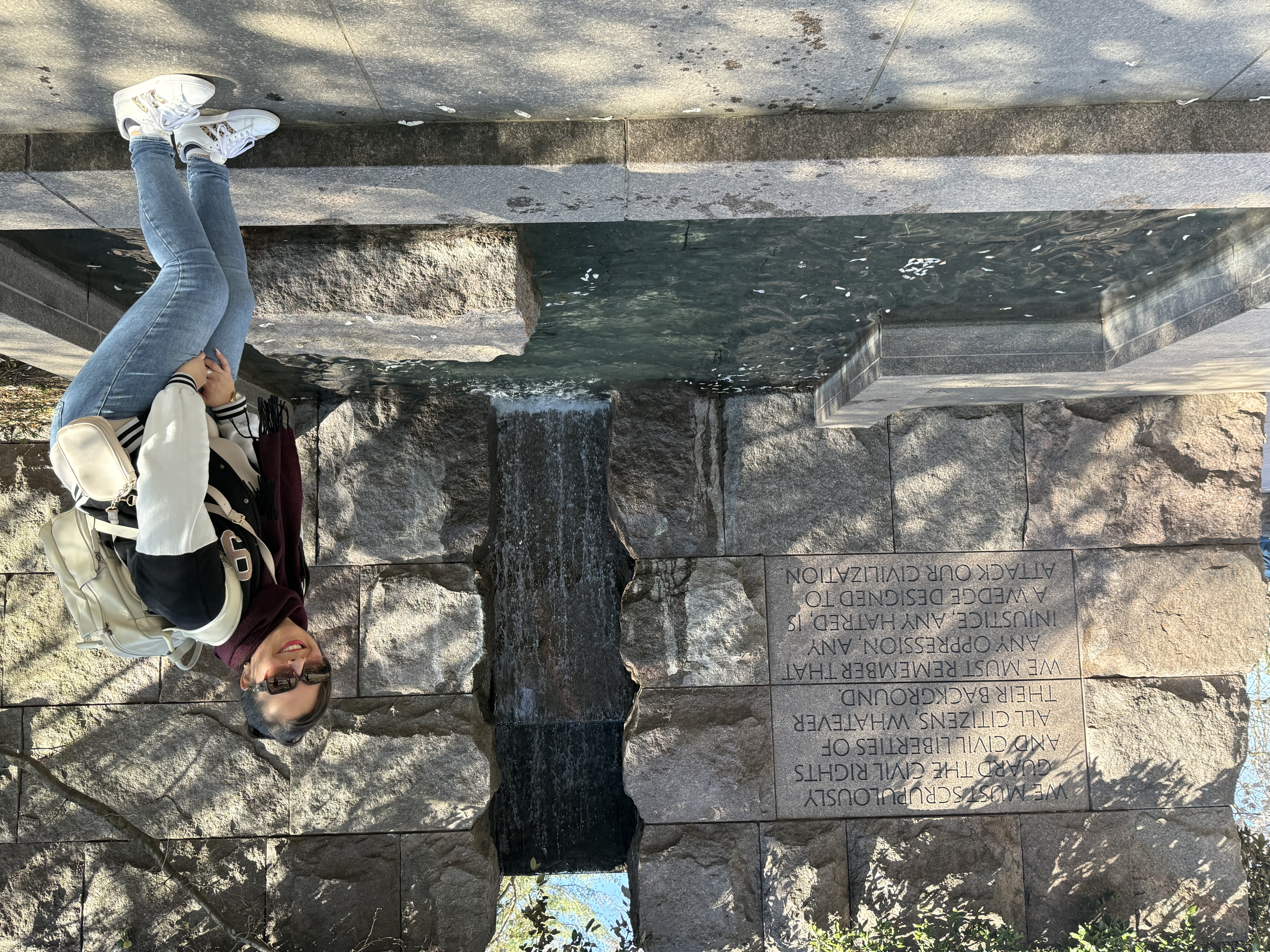
On the other side of the Tidal Basin, you will find two important memorials: the Franklin Delano Roosevelt Memorial and the Martin Luther King Memorial. The Franklin Delano Roosevelt Memorial consists of several sections, all with calming waterfalls to create a sense of peace and reflection. The monument is made up of four rooms, together covering twelve years of American history during Roosevelt’s presidency.
“Considering Roosevelt’s disability, the memorial’s designers intended to create a memorial that would be accessible to those with various physical impairments. Among other features, the memorial includes an area with tactile reliefs with braille writing for people who are blind.”
Franklin himself is not depicted in a wheelchair, but in a stately chair symbolising the wheelchair. Next to him sits his adorable little dog, Fala, watching over him.
A stone full of hope
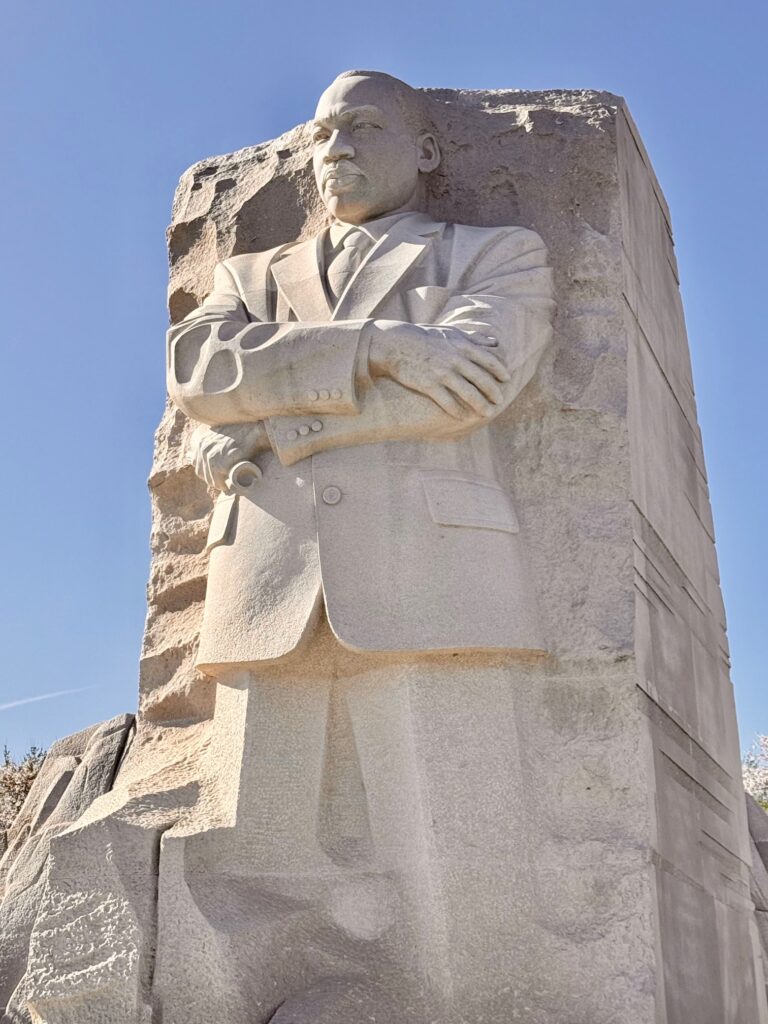
The second memorial on the southwest shore of the Tidal Basin is the Martin Luther King Jr. Memorial. Everyone knows his famous “I have a dream” speech from 1963. Now you can see his greatness (literally) in his 9.1-metre-tall statue… or should I say rock? The statueconsistsfrom white stone and still partially embedded in it (think of the faces of Mount Rushmore). This striking design originates from the famous 1963 speech in which Martin Luther King said: “Out of the mountain of despair, a stone of hope.” On the other walls, you will find quotes from King’s other speeches.
Margraten is nothing compared to this
A little way from the National Mall (but not too far, as you can still see the Washington Monument and Lincoln Memorial on the horizon) lies Arlington National Cemetery. It is the most famous cemetery in the United States and was established in 1866 to provide a final resting place for all American soldiers who had ever fallen in war. As of 2025, there are more than 300,000. It is a hilly area where all you can see are rows of white graves.
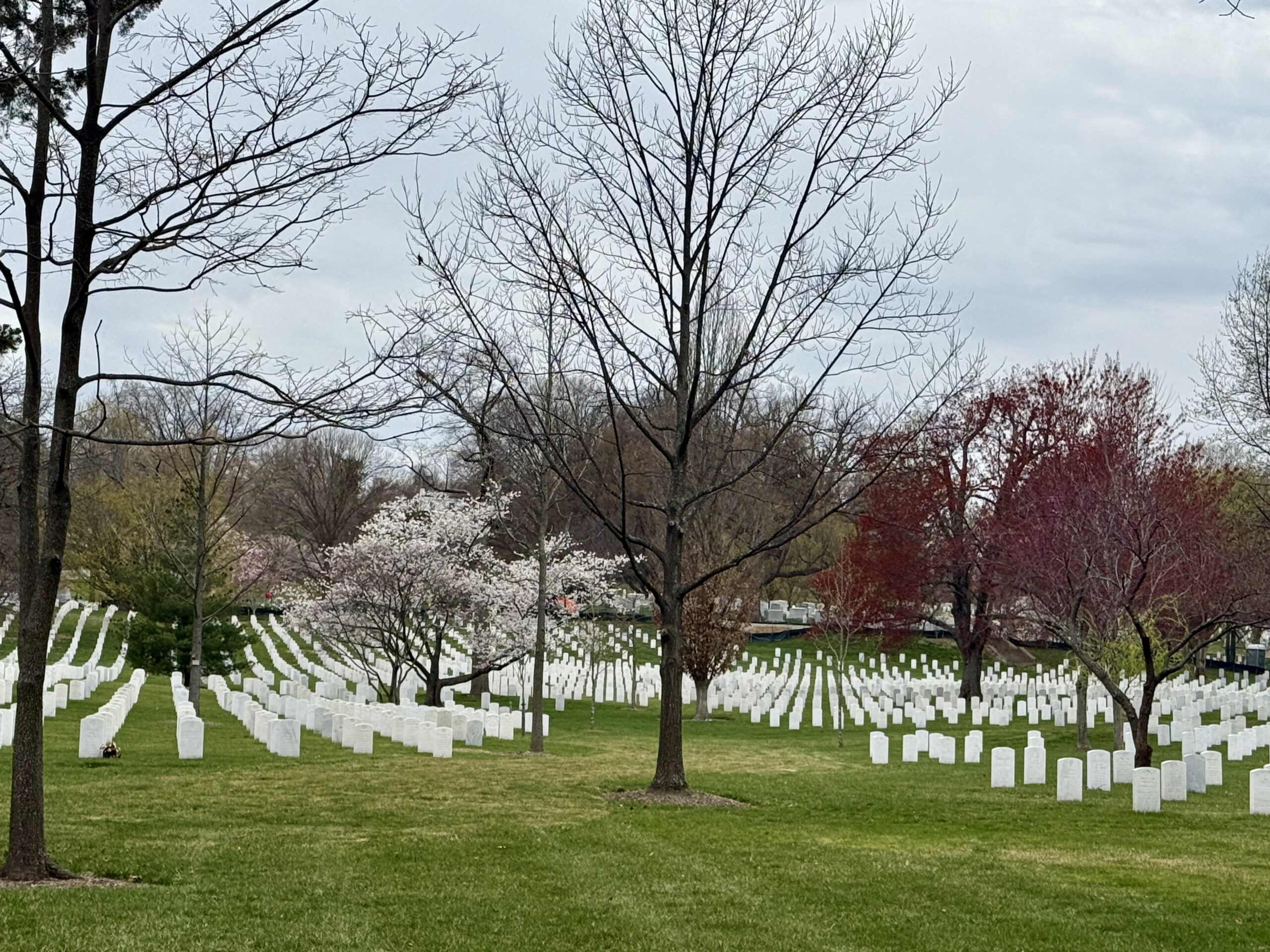
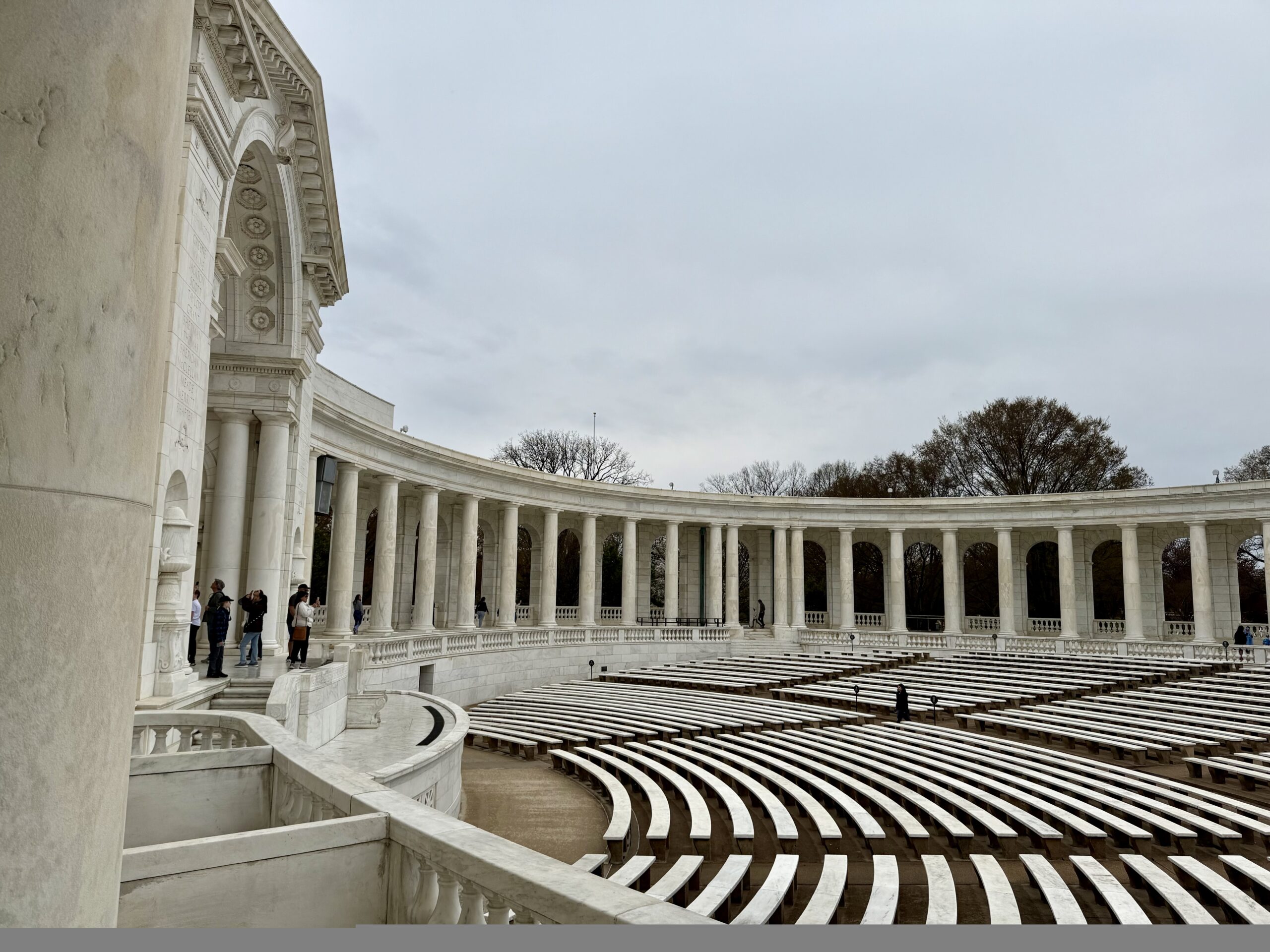
Still, I recommend (if you have the energy after walking the National Mall) climbing up to the sights of the cemetery (it almost feels disrespectful to write that). Firstly, you must visit the grave of J.F. Kennedy and his wife, where an eternal flame burns. Also, walk on to Arlington House. On another hill, you will find the amphitheatre-like monument at the Tomb of the Unknown Soldier. You can watch a ceremony every day at 3 o’clock.
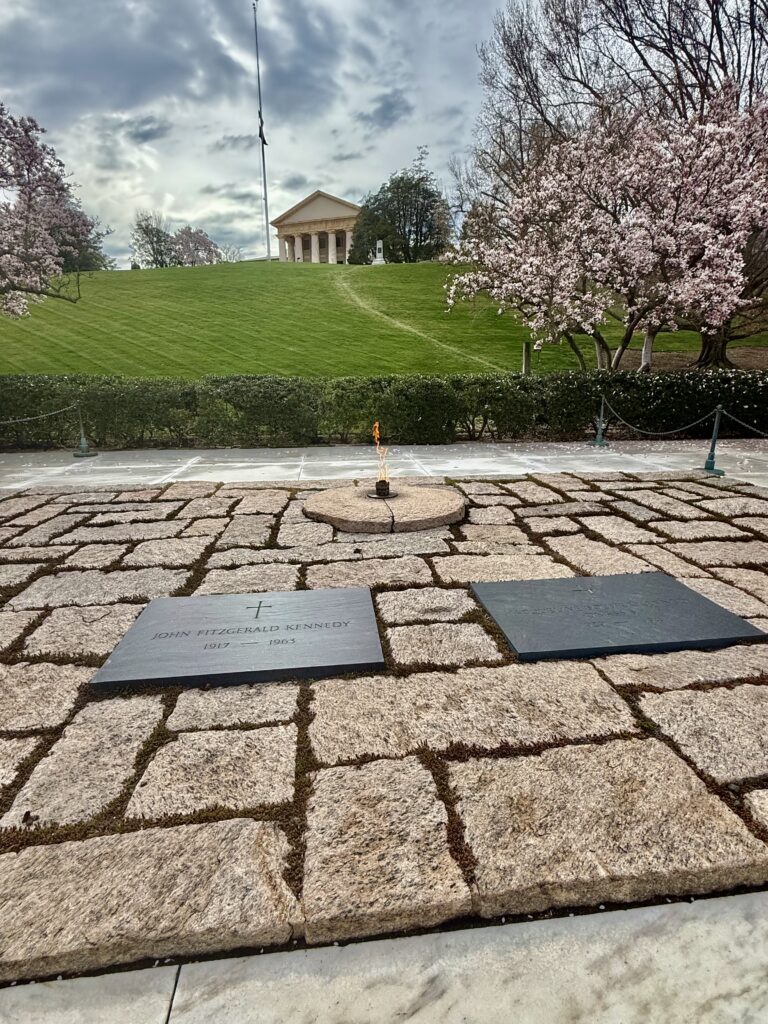
Tip: time your visit so you can witness the ceremony. We had shit lot of luck and arrived just as it was happening. It was the most impressive thing I experienced in Washington DC! A true must-see in Washington DC (and no, that rhyme was unintentional).
He’s hiding, but he’s there
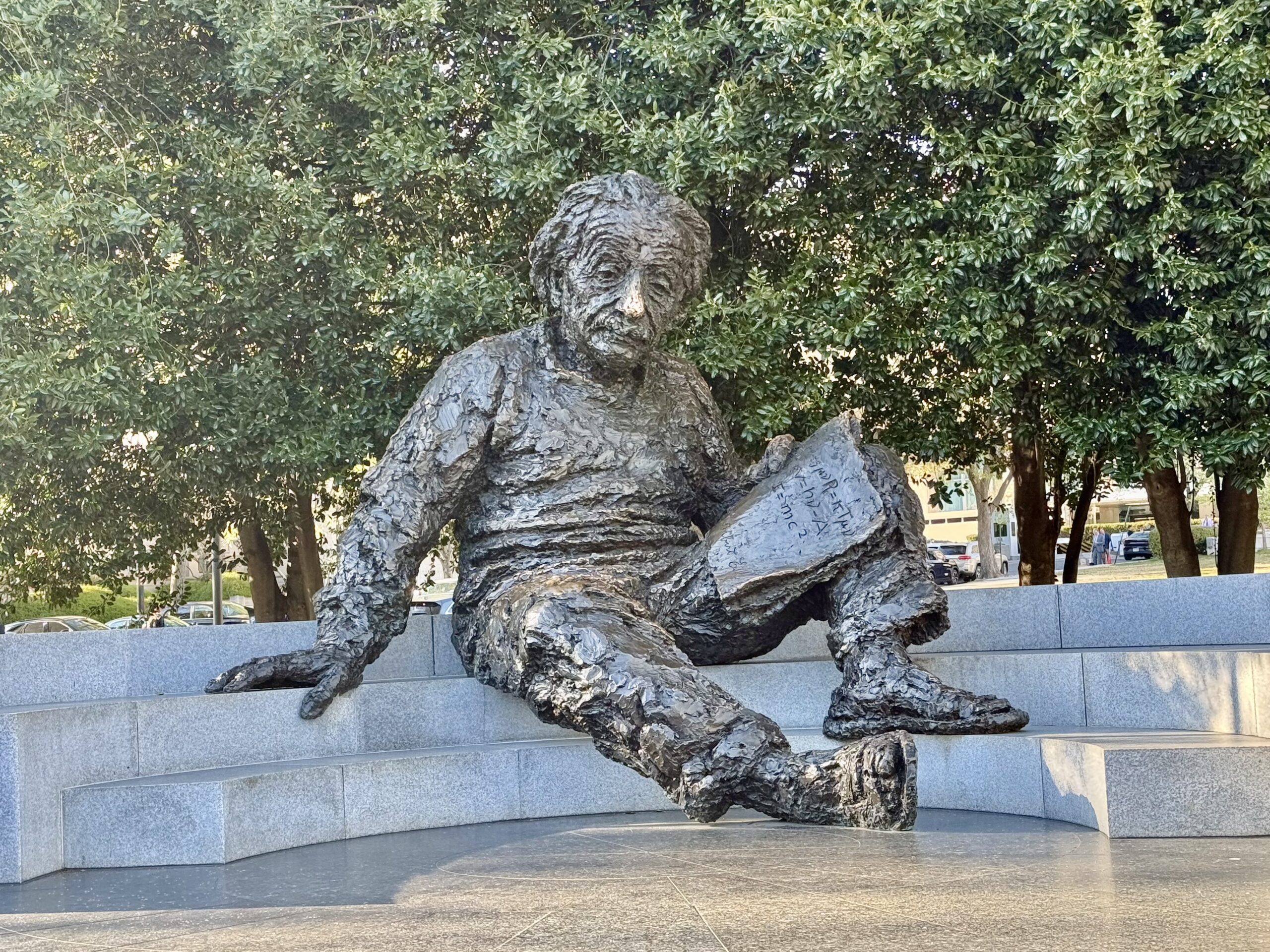
Albert Einstein in Washington? Indeed – just behind the Vietnam Museum (technically already outside the actual National Mall) lies a statue of Albert Einstein. It is not as imposing as many other statues on the National Mall, but if you are there anyway… it’s still a Washington DC sight to see. It is a bronze statue by Robert Berks from 1979, depicting a seated Einstein clutching manuscript papers in his hand. You have to look closely, as the statue is hidden among some trees on the grounds of the National Academy of Sciences.
The Grand Central of DC
When we travelled by train from New York Penn Station to Washington DC, we of course arrived at Union Station. This is the most important train station in Washington DC. It is made of granite and marble and looks almost as luxurious as Grand Central in New York. Moreover, to me it also felt just as big: we honestly got lost three times before finally ending up, luggage and all, at Union Square’s metro station. Afterwards, I had to look it up, but Union Station is no less than 183 metres long, and the many high arches you see are an impressive 29 metres tall.

Touch a real stone from the moon
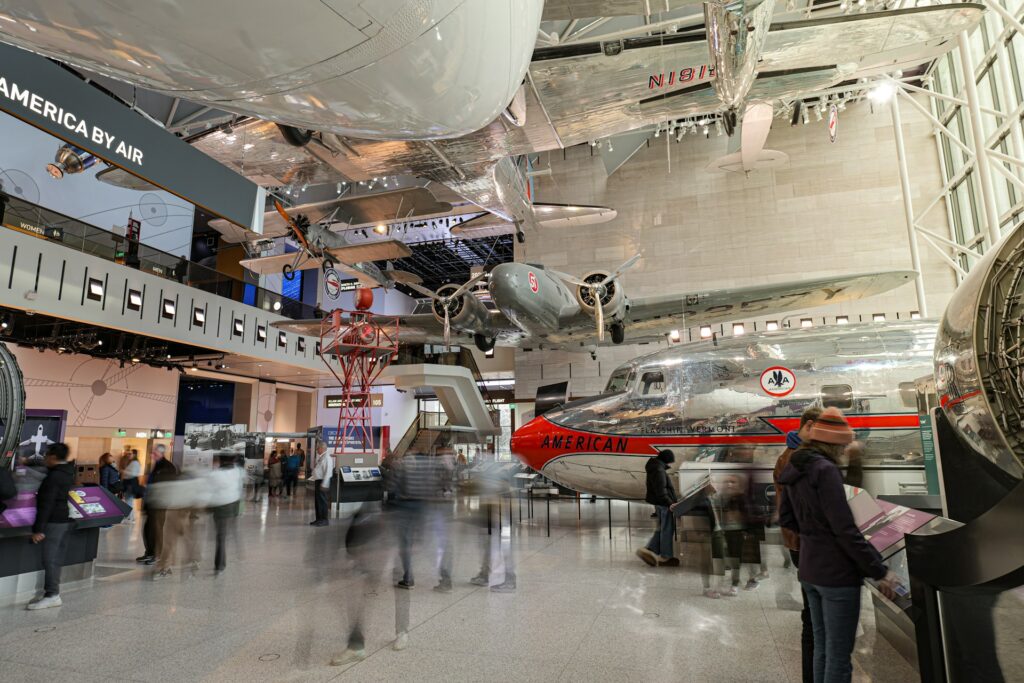
Now I briefly want to mention some Washington DC sights we unfortunately didn’t have time for, but which really should be on this list of must-dos in Washington DC. Opposite the National Gallery you’ll find the Air and Space Museum, which dates back to 1976. The name gives it away of course, but in this museum you will find everything related to aviation and space travel. It covers history from the first balloon flights to modern-day space missions, such as stories about the Mars Rover. Moreover, you can touch the moon rock that Apollo 17 brought back to Earth, see Neil Armstrong’s space suit (you know: the first man on the moon), and see the Wright brothers’ aeroplane.
History and college life combined
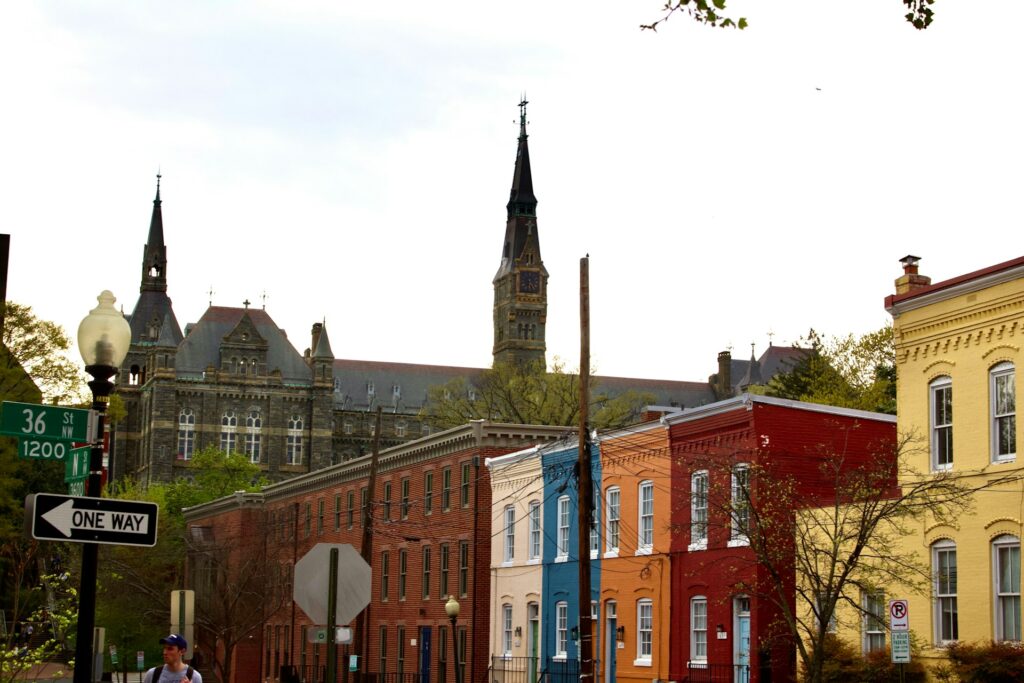
The next Washington DC sight I personally regret missing is the historic settlement of Georgetown, now a trendy neighbourhood in DC. Georgetown exists since 1751 and is therefore older than DC itself. A famous landmark within the settlement is Georgetown University, established in 1789 (it is actually the oldest university in Washington). The buildings you find in Georgetown have a European touch due to their Victorian and Georgian architecture. Because of its location by the Potomac River, you can also take wonderful walks through Waterfront Park and the nearby Harbour.
You can also enjoy a meal in one of the many restaurants and eateries here (apparently they skipped the National Mall and all settled here instead).
The highest point of Washington DC
The National Cathedral of Washington DC is another landmark I would have liked to see, but like Georgetown it was quite a way out of the way. It is accessible by bus, but I hadn’t properly checked if our metro cards were also valid on above-ground public transport. Besides, the National Mall already offered so much that even with three full days in DC, time was scarce.
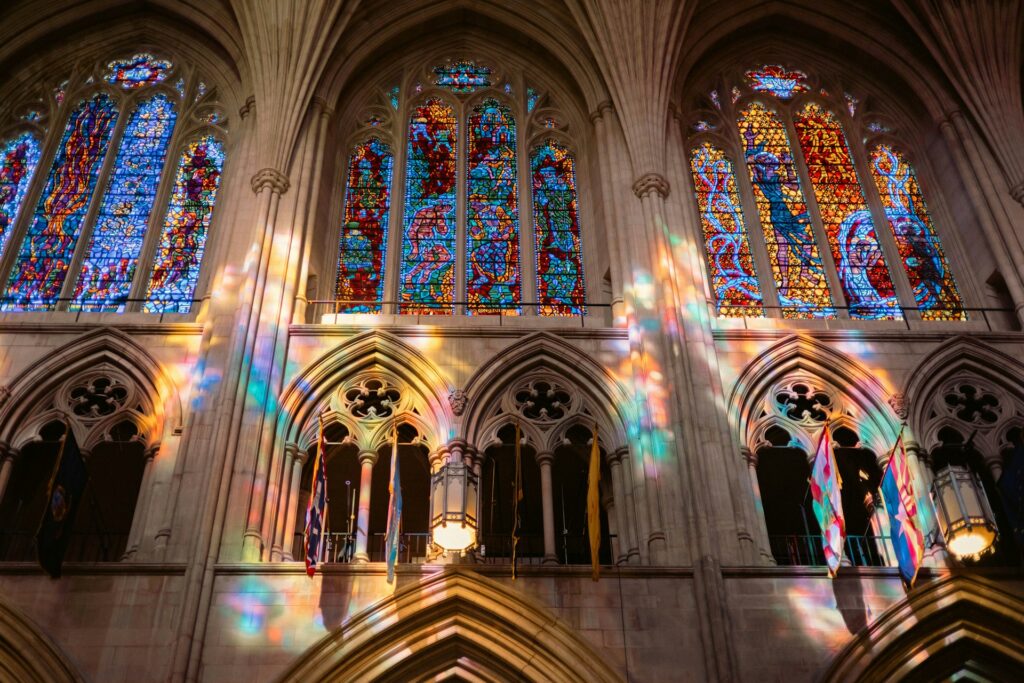
If I ever return, the National Cathedral will certainly be high on my Washington DC must-sees. The cathedral has a neo-Gothic style and therefore resembles Westminster Abbey in London more than the rest of Washington’s buildings, which mostly display neoclassical architecture. The cathedral only opened in 1990 and its tallest tower reaches 92 metres into the sky (making it the highest point in DC). Inside the cathedral, you’ll find no fewer than 215 stained-glass windows and pillars made of white limestone. You can also see the pulpit from which Martin Luther King gave his final sermon.
Note: This church has also hosted several important presidential funerals, including those of Ronald Reagan and George Bush Senior.
An oasis of peace in the capital
Do you want to enjoy nature without the hustle of the National Mall? Then walk or cycle through Rock Creek Park. This is a public city park dating back to 1890 and covering no less than 7 km². Not only do the various species of trees make you feel as though you’re in a forest, but also the wildlife that lives here (ever wanted to see a raccoon in the wild?). Walking is easy here, with no fewer than 52 kilometres of paved paths. Be sure to stop during your trip at the Peirce Mill from 1829 and the Nature Center.

A Catholic service in a baseball stadium
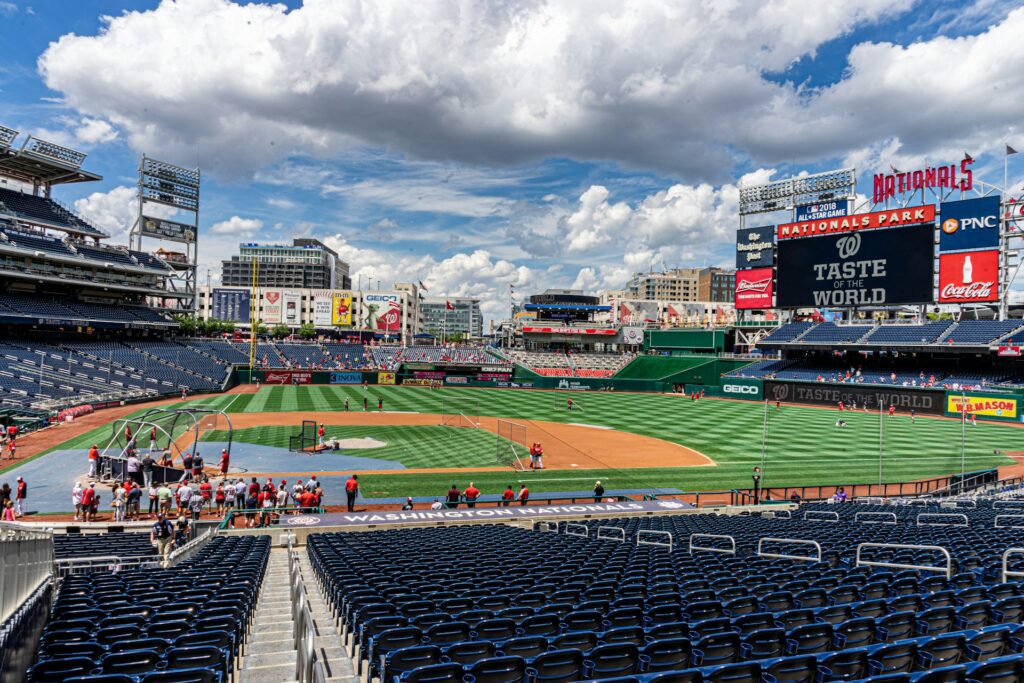
Baseball is the sport of the United States, I dare say. In NYC you of course have the Yankees, but Washington has its own baseball team: the Washington Nationals, who play in Nationals Park. Nationals Park holds more than 40,000 spectators and only opened its doors in 2008. The stadium is nicknamed “The Sea of Red” and was even visited in 2008 by Pope Benedict XVI, who held a mass there for no fewer than 47,000 people.
Walking over tree tops
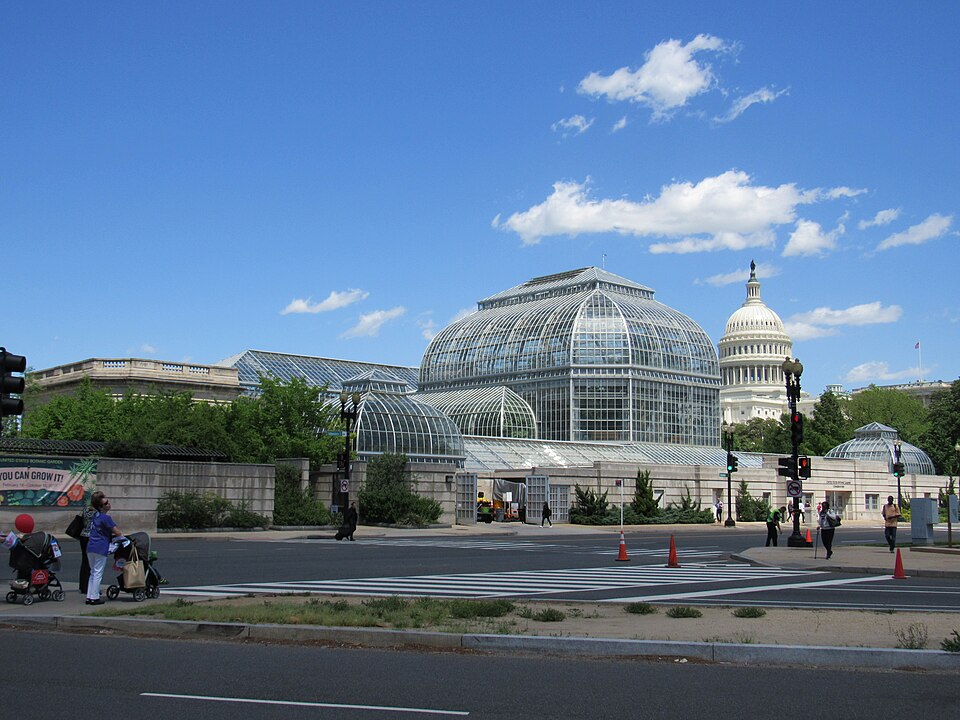
The Smithsonian also includes the United States Botanic Garden. This is an indoor garden of 14 hectares, where you can even walk over the treetops via a bridge. In total, there are no fewer than 44,000 plants, including:
“economic plants, medicinal plants, orchids, carnivorous plants, cacti and other succulents, aroids, plants of eastern North America, bromeliads, cycads, and ferns. Historic specimens include several that date from the 1842 U.S. Exploring Expedition.”
You can find the United States Botanic Garden opposite Capitol Hill (you cannot miss it due to its enormous glass-domed structures).
White Guilt, Black Pride
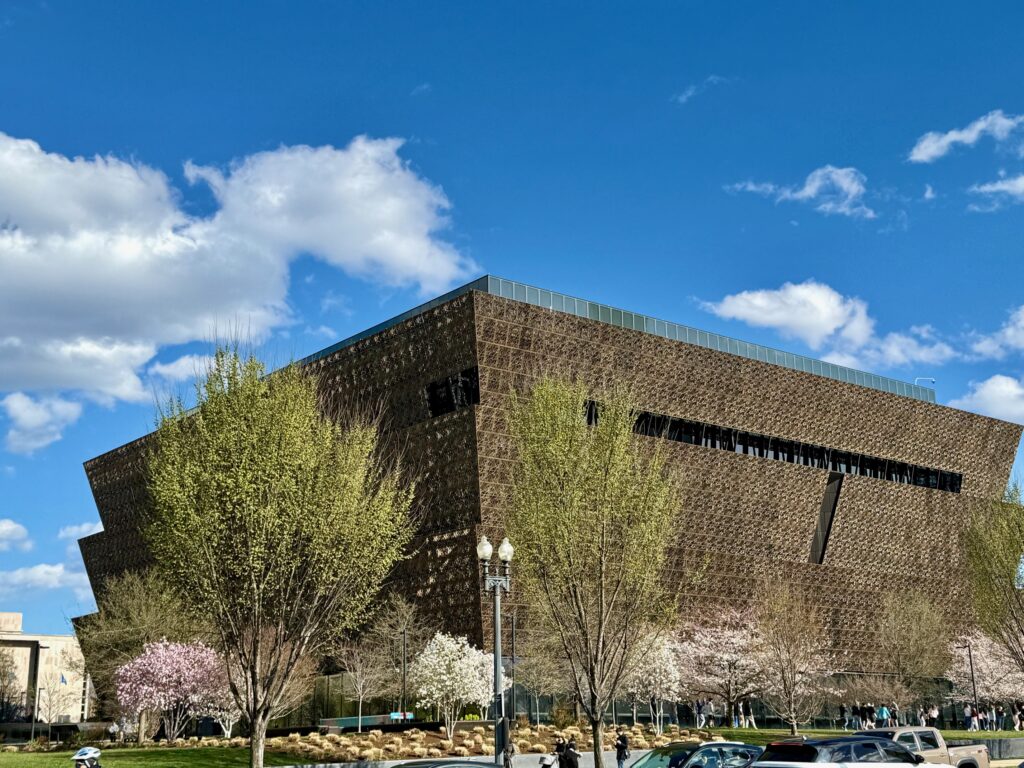
Opposite the Washington Monument, a grey/black-coloured building immediately catches the eye. In this uniquely designed building is the National Museum of African American History and Culture (quite a mouthful indeed). This is the museum on African American history and culture. The National Museum of African American History and Culture is part of the Smithsonian and emphasises the struggle against slavery and for equality, while at the same time highlighting the cultural contributions of African Americans in the US.
A lonely castle in DC
Although you cannot visit the Smithsonian Institution Building (also known as the Castle) right now, because due to renovation it is closed, I still want to highlight this castle in Washington DC (you can always visit it virtually). Located on the National Mall, opposite the National Gallery more or less, the building dating from 1855 is “the signature building” of the Smithsonian. It is the first and thus oldest building of the institution. The Castle houses the Smithsonian Institution’s administrative offices and information centre. It is made of Seneca red sandstone and therefore stands out among the predominantly white museum buildings on the National Mall.

The Ritz? No, it’s the Washington Post
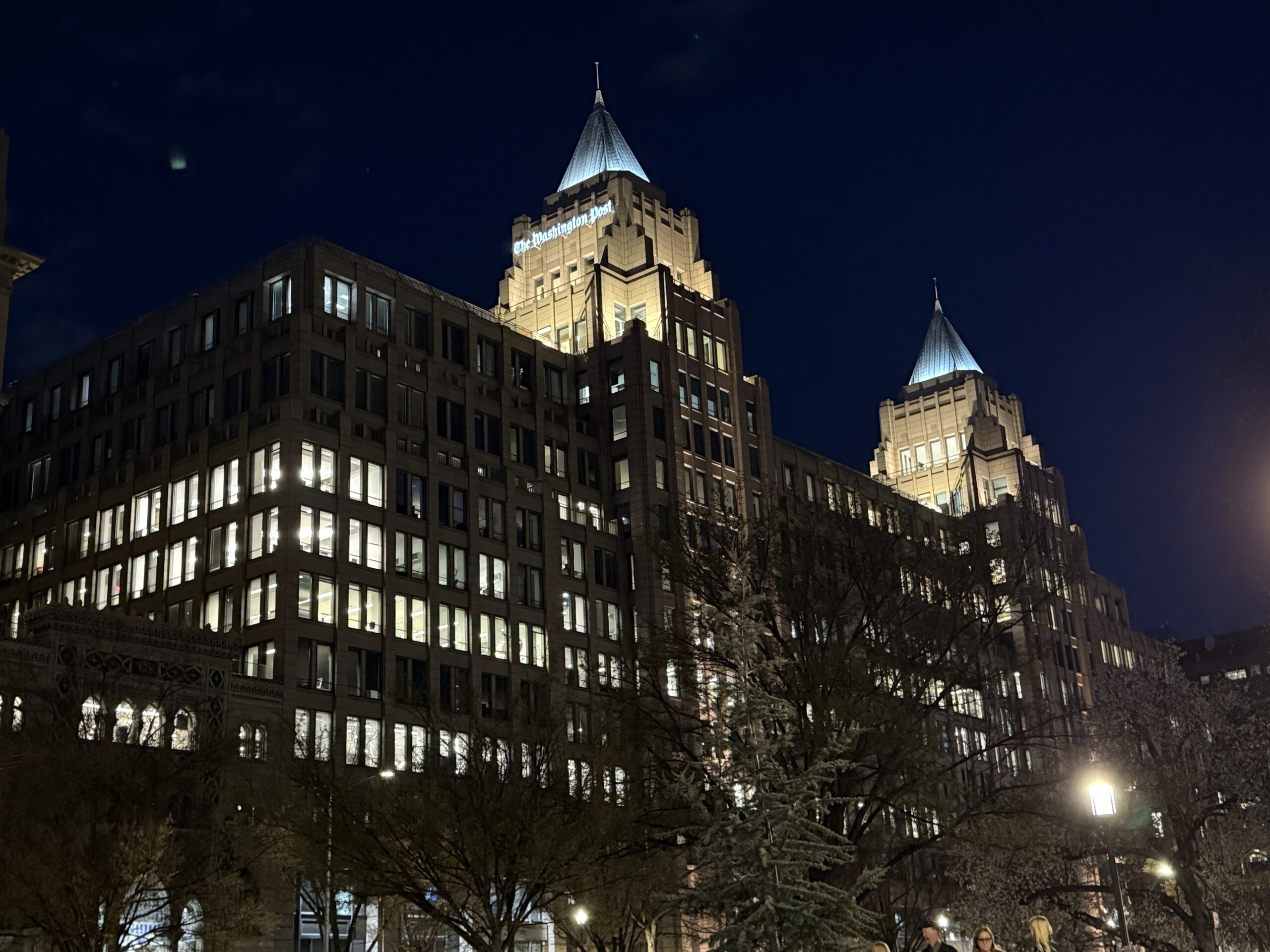
When we walked from the National Mall to our hotel, we always passed a small park with a castle-like building behind it. It was so large and grand that we assumed it must be a luxury hotel chain, like The Ritz or the Waldorf Astoria. Can you imagine our surprise when, after a lot of zooming in, we discovered that it was in fact the headquarters of the newspaper The Washington Post? The building’s name os One Franklin Square and you can visit it at 1301 K Street NW. The building was completed in 1990 (but The Washington Post only moved in in 2015; IBM was there first) and is 12 storeys tall and 64 metres long, making it the largest commercial building in DC.
Smithsonian’s department of animals
The Smithsonian, famous for all its museums, also has a National Zoological Park near Rock Creek Park. The zoo dates back to 1889 and covers 163 hectares. In the zoo you can see no fewer than 2,100 animals from 400 different species. Some highlights of this Washington DC zoo are:
- Giant pandas
- Asian elephants
- Sumatran tigers
- Aldabra tortoises
- Panamanian golden frogs
- Sea lions
- Orangutans
Tip: if you visit the zoo, make sure to also attend the daily animal demonstrations. They are very entertaining and educational to watch.

Historical and genealogical documents of all times
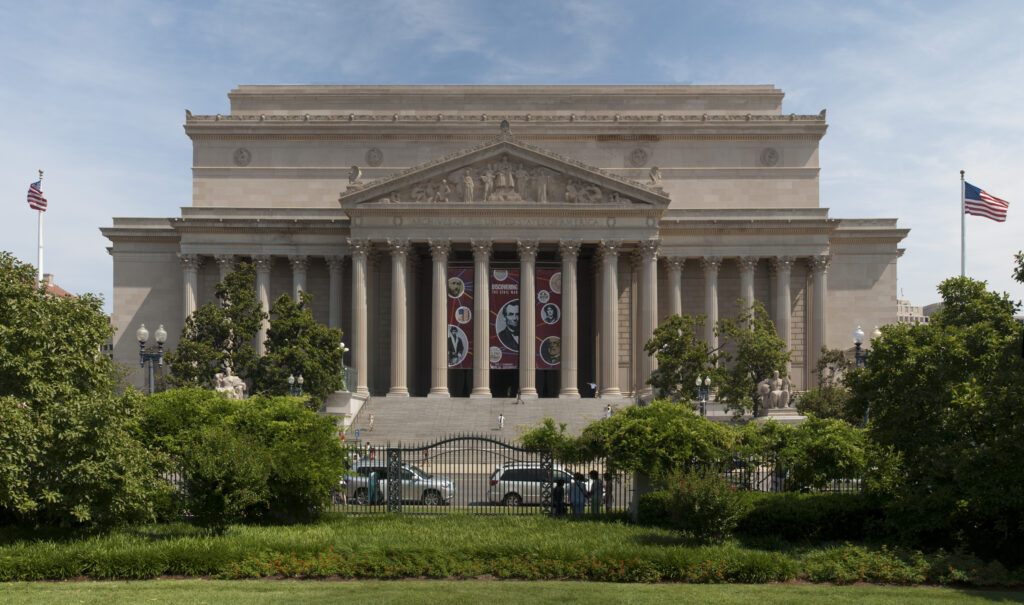
The National Archives Museum is part of the Smithsonian and is also a free museum, where you can see important documents such as the Bill of Rights and the Declaration of Independence. In addition, you will find a collection of documents approved by the U.S. Congress, U.S. Supreme Court, Federal District Courts in the District of Columbia, and selected Federal Agencies. You will also find important papers predating WWI, Civil War Records, Land Records, American Indian Records, and genealogical/historical research.
Broadway of Washington DC?
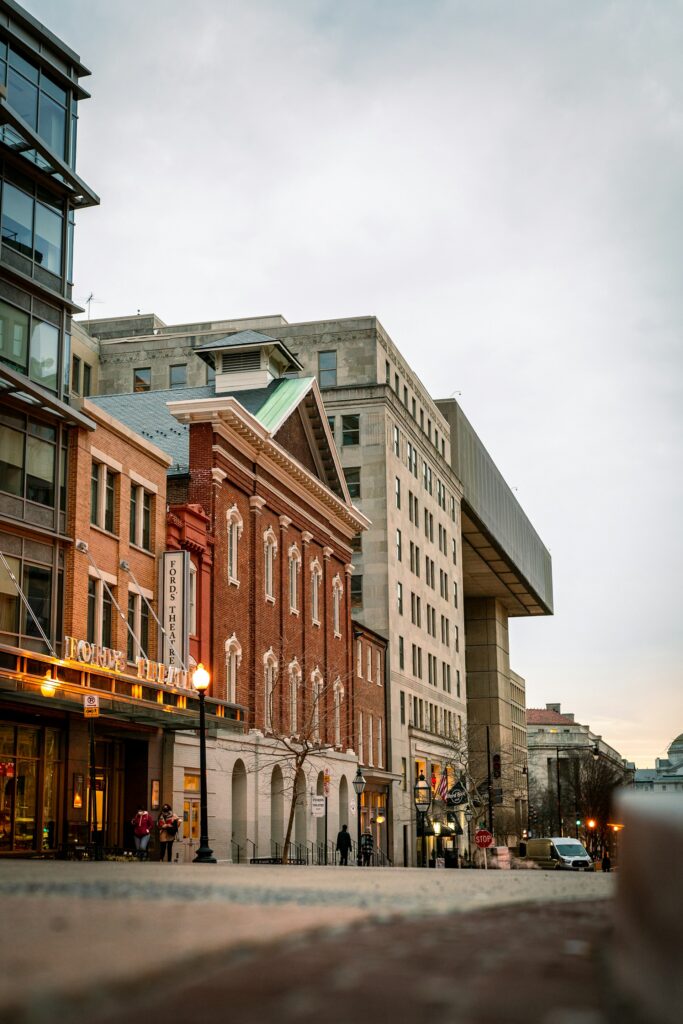
Ford’s Theatre is a historic theatre in Washington DC dating back to 1833. Initially, the theatre was a Baptist church, after which it officially became a theatre in 1861. In 1865, on Good Friday, Abraham Lincoln was shot here, after which he died of his wounds in a nearby house. Performances are still given in the theatre, but it now mainly serves as a museum. The theatre is still furnished as it was in 1865; in short, it has become a memorial museum dedicated to the assassination of Lincoln.
Statues of war heroes
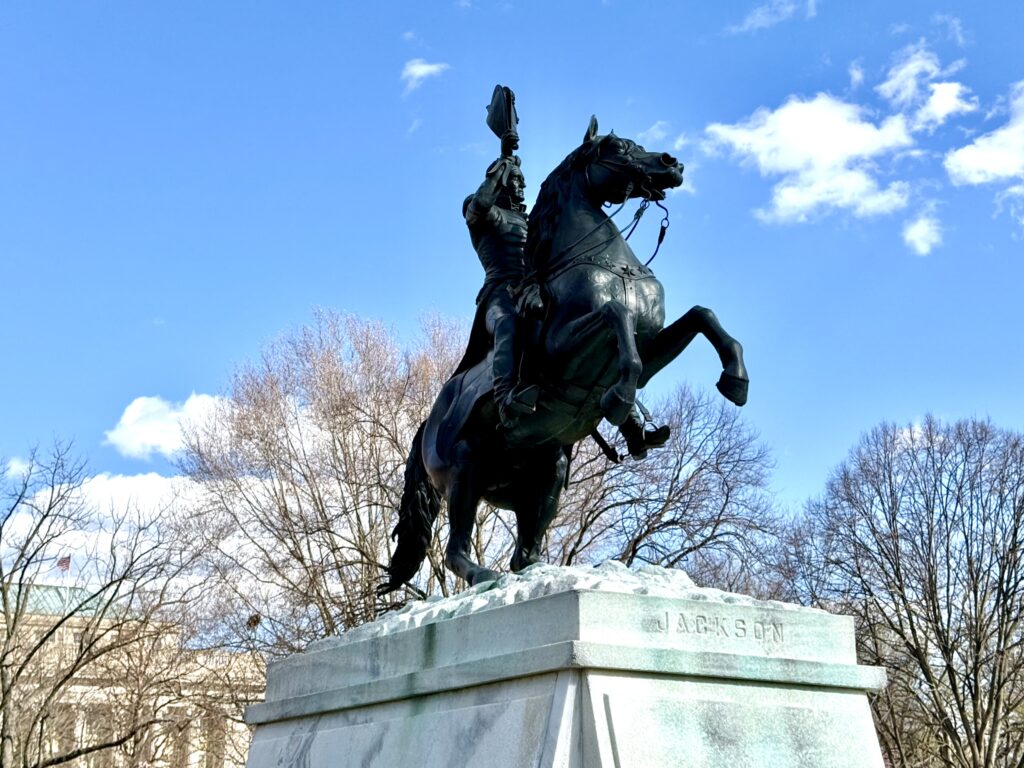
Lafayette Square is a park covering 7 hectares and is part of President’s Park in Washington DC. Lafayette Square (1970) is located near the White House (to the north) and is named after the French nobleman General Marquis de Lafayette. This general was a true hero of the American Revolutionary War. In the park, you will find several statues of war heroes, including Lafayette. The largest attraction (literally) is the equestrian statue of General and President Andrew Jackson.
Most heavily guarded place in DC
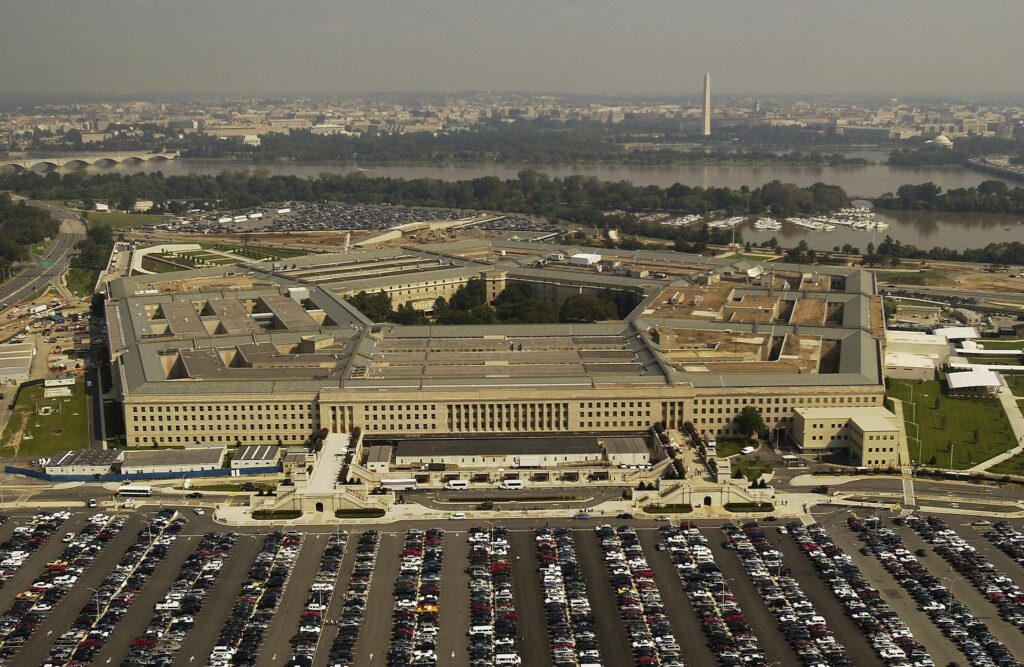
Everyone knows the Pentagon by name. It is the second-largest office building in the world, one of the most heavily guarded places on Earth, and the third building targeted during the 9/11 attacks. The pentagonal building houses the U.S. Department of Defence and dates back to 1943. You can even do a tour here with real US military personnel, something I would very much like to experience during my next visit to DC.
Near the Pentagon and Arlington Cemetery is also the Airforce Memorial from 2006. This memorial commemorates the service of the personnel of the United States Air Force and its heritage organisations. The monument consists of three stainless steel spire-like towers rising to a height of 402 feet above sea level. These soaring towers symbolise flight and the three core values of the Air Force: “Integrity First, Service Before Self, and Excellence in All We Do.”
So, what is there to do in Washington DC?
In short, there is plenty to do and see in Washington DC. To be honest, I still prefer NYC, as for me it is a warmer, more vibrant city than DC. In New York, for example, you can even get breakfast somewhere at eight o’clock on a Sunday, while in Washington on a Saturday around the same time we really struggled to find a place that was open. Also, in NYC you can eat practically anywhere and hop on the subway whenever your legs give up, whereas in Washington that is more difficult (a bike is genuinely recommended for getting around).
But absolute don’t: don’t fall for those one-day trips, because Washington DC in a single day – that is something I absolutely do not recommend! And this political capital certainly deserves more than that!
That said, it is quite an experience to walk around the capital. I thought it was a wonderful trip and I saw and learned a lot. On top of that, it is refreshing for your wallet that you can do so many things without immediately paying top prices. And as my article has made clear: there is more than enough to see and do. Looking back, I could easily return for a few more days and discover new things all over again (even though at first I said I’d had enough of DC – but that was probably more due to lack of sleep). So yes: I would love to see DC again one day, and I can definitely recommend everyone to go there at least once.
Natasja Bartholomé
Fantasy author & travel blogger